
Edwin Díaz to the Dodgers Hurts — But the Mets’ Trumpets Aren’t Playing Taps, and Here’s Why

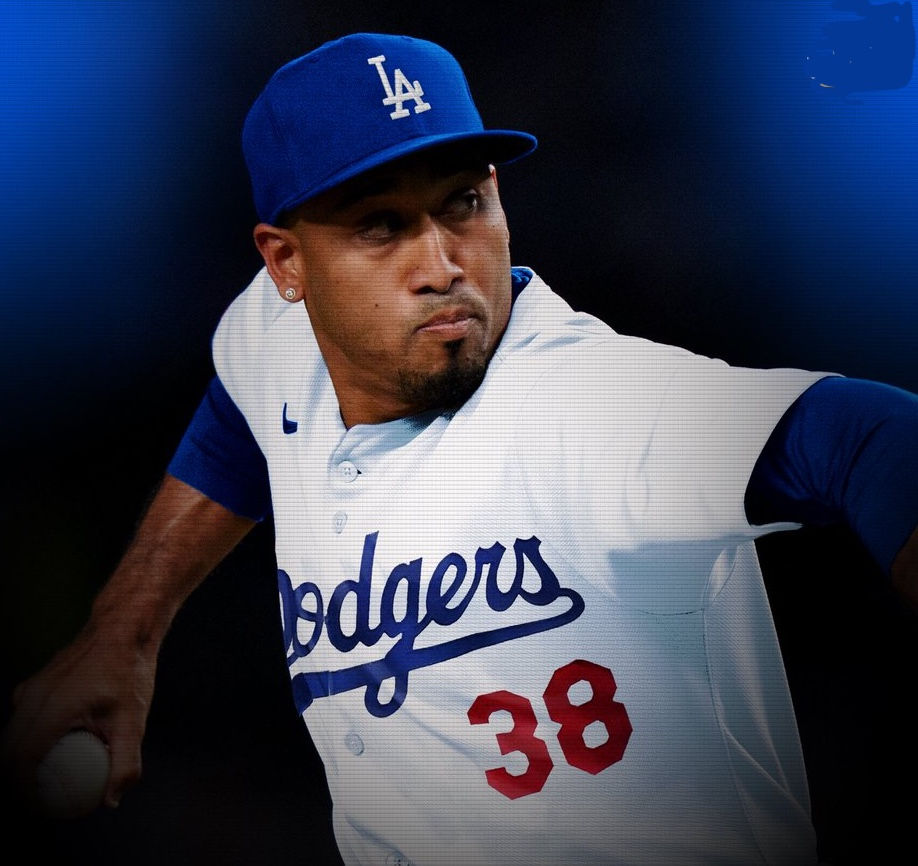
Losing Edwin Díaz hurts. It hurts emotionally, spiritually, musically, and in that little spot right behind your left rib that starts throbbing every time the Mets lose a late-inning lead. And look, this is personal too, because I genuinely love Edwin. He was always accessible. He was a stand up guy. He never once ducked a camera, a microphone, or a tough question after a meltdown inning. In New York, that matters. In New York, that is gold. And on a personal note, celebrating on the field with him after the Mets beat the Phillies in the playoffs in 2024 is something I will never forget, one of those rare, perfect baseball moments that stays with you like the smell of Shea Stadium popcorn or the sound of the Kiner’s Korner theme song. The trumpets are gone, the swagger is gone, and the one closer in baseball who could turn Citi Field into a nightclub with a single footstep is suddenly wearing Dodger blue. But if we pause before throwing ourselves into Flushing Bay, there is an argument, a statistically solid, emotionally inconvenient, but intellectually undeniable argument, that maybe this loss is not quite the baseball catastrophe it feels like. There were a lot of factors that went into the offer the Mets made, including the very intentional, preemptive signing of Devin Williams. And when you line those factors up, the picture looks a little different.

For starters, Díaz’s career has followed the most consistent pattern this side of the tides. It goes like this: one great season, one mediocre-to-poor season, repeat, repeat, repeat. His ERA unfolds like an Adam Sandler catalog, mixing unexpected masterpieces with head-scratching flops. In 2016 he was terrific, in 2017 merely solid. In 2018 he was unhittable, in 2019 he was “hide your children.” In 2020 he was dominant again, in 2021 Meh. In 2022 he reached baseball nirvana, in 2024 he drifted back toward earth, and in 2025 he soared again. It’s a rhythm, a cycle, a cosmic force at this point. So if history holds and with Díaz, it usually does the Mets were realistically staring at two down years and one good year over the next three. That’s not prophecy. That’s math.
The deeper analytics echo the same tune. His whiff rate is still elite, but no longer the intergalactic level that made his 2022 season look like a cheat code. His velocity, while still excellent, isn’t what it once was. The hard contact rate has crept upward. The strikeouts remain impressive, but have slipped from “historic” to “merely terrifying.” And when Díaz begins giving up loud contact, it has typically been the warning tremor before the earthquake. None of this means he’s washed up. It simply means the days of assuming a 1.31 ERA are probably over, and the odds of the roller-coaster version reappearing grow higher as the odometer ticks up.
Speaking of odometers, Díaz enters the next stage of his career with 519.1 innings on his arm and that’s high-stress, 100-mile-an-hour, max-effort reliever mileage. He will be 32 next season, which in closer years is when the warranty expires and the “Check Engine” light starts flickering. Some relievers age gracefully, reinventing themselves with craft and guile. Some go off a cliff so quickly you need a crime-scene team to find the remains. The more innings you’ve logged by your early thirties, the more likely regression becomes, and Díaz has logged a lot.
Then there’s the Rafael Soriano comp which, according to Baseball Reference’s similarity scores, is Díaz’s closest statistical twin. Soriano was a terrific closer, occasionally dominant, frequently unpredictable, and ultimately the poster child for volatility aging badly. His performance from ages 32 to 35 tells the story: a great season, two decent seasons, and then a ghastly 6.35 ERA at 35 that ended his career.

Edwin Díaz was still electric in 2025, but his usage patterns revealed some very real limitations that complicated the Mets’ decision-making. His absolute best work came on zero days’ rest, where he posted a ridiculous 0.63 ERA, a 0.628 WHIP, and a 7.00 strikeout-to-walk ratio in 13 outings. But the Mets could only deploy him in that back-to-back sweet spot a handful of times, and once he drifted out of that rhythm, the volatility kicked in fast. With one day of rest his ERA rose to 2.08, and with two days it climbed to 3.68 with a swollen 1.227 WHIP. His batting average against jumped from .136 on zero days to .162 on one day, .214 on two days, and all the way up to .286 when he had six or more days off. Opponents’ OPS bounced all over the map as well — .372 on zero days, .538 on one day, .647 on two days, dipping to .386 on three days, then spiking again to .643 on five days — a pattern that shows how dependent he was on routine and rhythm. The longer he sat, the less sharp he became, with his strikeout-to-walk ratio dropping steadily as the rest days increased. Nothing here says Díaz wasn’t still an elite talent, but it all paints the picture of a closer who needed a very specific, carefully controlled usage window to remain dominant, and who wasn’t the kind of “use him whenever you need him” fireman that modern bullpens increasingly require.Nobody is saying Díaz is destined for the same fate, but when your closest comp shows a trajectory of “strong, okay, okay, disaster,” it’s not the blueprint you want to invest elite money into when building a roster around sustainability.
So yes, losing Díaz is painful. Of course it is. You don’t easily replace the trumpets, the energy, the intimidation factor, or the sense that a game is suddenly over the moment the bullpen door slides open. But what the Mets didn’t lose is certainty. They didn’t lose four fully stable seasons. They didn’t lose a perfectly predictable arm entering his prime. They didn’t lose Mariano Rivera. They lost a historically streaky closer heading into an age and workload zone where streaky relievers often get streakier. And while it stings now, the long-term baseball logic may prove much kinder than the emotional reaction.

Devin Williams is a different kind of weapon, and the numbers tell a story of consistency, dominance, and careful management. Over seven major-league seasons, Williams has posted a 2.45 career ERA, a 1.045 WHIP, and a 14.1 strikeouts per nine innings rate, averaging roughly 68 innings per 162 games. Unlike Díaz, his career has largely been marked by stability, with the only noticeable deviation occurring between 2024 and 2025. In 2024, Williams missed roughly three months with two stress fractures in his back, limiting him to just 22 appearances, 21.2 innings, 38 strikeouts, and 14 saves for Milwaukee. He returned on July 28 and was electric, posting a 1.25 ERA and a 0.969 WHIP over that short stint. In 2025, his innings jumped back to 62, an increase of 40.8 innings from the previous year, or roughly 190% more work than 2024, which coincided with a spike in ERA to 4.79, a WHIP of 1.129, and a drop in strikeout-to-walk ratio. This suggests that the transition from a low-usage, injury-shortened season to a more normal workload may have temporarily affected his effectiveness, rather than a true decline in skill.
Looking at his days-of-rest usage, Williams appears less sensitive than Díaz to workload patterns. His ERA on zero days’ rest was 4.09, and it generally stayed in the 3.93–5.68 range for 1–3 days off, with very small sample sizes at four or more days of rest. Even with a higher workload, his WHIP and strikeout rates remained solid, indicating he can tolerate a more flexible deployment schedule. There are a few outliers, like a 36.00 ERA in one two-inning 5-day-rest appearance, but that is clearly a statistical blip in a tiny sample. Overall, Williams’ career usage suggests he is more resilient to irregular rest than Díaz, who needed very specific windows to dominate.
The key takeaway is that while losing Díaz stings emotionally, Williams offers a high-ceiling, more durable arm who can be used in a variety of high-leverage situations, provided the team carefully manages him and ramps up innings gradually.I get it, Mets fans are emotional, so our knee-jerk reaction is one of doom and gloom, and anger at management. But let’s be honest — the Mets offered, per Anthony DiComo, three years and $66 million (with slight deferrals) and indicated there was some room to improve that figure. Díaz chose the Dodgers’ offer of three years and $69 million instead, without coming back to the Mets.
Conversely, Devin Williams signed with New York not even knowing if he would be a setup man or the closer, despite every other team he spoke with wanting him in the ninth.
In my opinion, this is not a reason for the trumpets to be playing taps. Time will tell how the Mets add to a bullpen that already has three nice pieces in Minter, Raley, and Williams, so let’s all take a deep breath, come back in off the ledge, and let the offseason play out. Give the guy who wants to be here over the guy who doesn’t. Remember, Edwin didn’t even give the team that paid him $21,250,000 in 2023—watching him sit out rehabbing an injury he got playing in the WBC—a chance to match. Sometimes the heart has to meet the wallet—but the soul of the team, and the clubhouse, belongs to the guy who shows up for it


Interesting take. Tough loss, not just because of his talent. But he also brought a smile to our faces when he came in. You may be right. Time will tell. Would you feel similarly about Pete if he leaves? Anyway, Sugar is gone. I’ll root against him. Now, what big moves will Stearns make? Buxton and Ryan from Twins would warm my heart.