
Eric Wagaman: The Long Road, a First Swing in Queens, and the Art of Not Following the Script


If baseball life were tidy, predictable, and well-organized, Eric Wagaman would not be here.
Not in the philosophical sense. In the literal sense.
He would’ve been somewhere back in Low-A Staten Island, hitting .194, wondering if the next stop was coaching, scouting, or a very honest conversation with a real estate agent.
Instead, he’s in Queens.
And not just in Queens—he’s in the Mets lineup, where his first at-bat famously turned into a home run, which is baseball’s way of saying, “We have no idea what’s happening either, but enjoy the ride.”
But the real story isn’t the home run.
It’s everything that came before it.
That was the opening line in our on-field conversation before the Mets faced the Cubs. And it wasn’t a question as much as a diagnosis.
Wagaman didn’t flinch.
“I think I believed in myself,” he said, “and then also some of the underlying stuff throughout my career. I feel like I did hit the ball hard, whether it was just being unlucky or whatnot. But just kind of always finding something to get better at.”
That might sound simple. It isn’t.
Baseball didn't come to Eric Wagaman in a straight line. It came more like the TV show Manifest—the kind of story that gets written off a few times, changes homes, and somehow keeps finding another season because the people paying attention know there's still something there
Most just disappear.
Wagaman didn’t.
He got better. Then better again.
“Sometimes throughout my career, the first time I stopped somewhere, it wasn’t great. And then I improved,” he said. “It’s just having the confidence in yourself, the people around you giving you confidence, and just believing in yourself.”
Wagaman’s early development came in the Yankees system, where “patience” is usually something reserved for ticket holders, not prospects.
Still, he found something there.
“I think back when I was with the Yankees in the minor leagues… there might have been a few specific hitting coaches there that were always there for me,” he said. “They would just tell me, ‘you are a good player.’ And I just had to believe that myself.”

There’s something understated—and almost old-school—about that.
No biomechanical breakdown. No 3D swing overlay. Just: you’re good, now go prove it.
And slowly, he did.
The numbers started to move. The power came. The versatility showed up. The belief stuck.
Baseball people love to talk about “tools.”
Wagaman feels more like a multi-tool that’s been used a lot, maybe slightly scuffed, but somehow always exactly what you need in the moment.
When Wagaman got his Mets opportunity, he didn’t ease in.
He did what every player pretends they’re going to do in their first at-bat and almost never actually does.
He hit a home run.
“The opportunity here with the Mets… that was really cool,” he said. “And then we ended up winning that day, so it made it even better.”
Of course it did.
Because baseball has a sense of humor. And timing. And occasionally, cruelty.
But in this case, it was just pure scriptwriting.
First Met at-bat. First Met Home Run. First memory.
The kind you don’t forget even if everything after it gets complicated.
Wagaman’s value isn’t tied to one position, which in modern baseball is another way of saying he’s indispensable in a way nobody knows how to properly quantify.
“I’ve kind of bounced around a little bit position-wise,” he said. “Mainly at first base, but I believe I can be a solid outfielder, a solid third baseman.”
Then came the most honest line of all:
“I might not be making plays like A.J. and Benj on the regular, but I think I can contribute and be good out there.”
That’s the utility player’s creed right there.
Not perfection. Not highlight reels. Just: I can help you survive a Tuesday in June when somebody’s hamstring tightens up in the third inning.
Wagaman is also very aware of the larger Mets conversation—the one happening everywhere from talk radio to fan sections to the Cracker Jack vendor who has probably developed his own advanced metric for frustration.
The message inside the clubhouse, though, is simpler.
“I think he’s exactly right,” Wagaman said of the front office assessment. “There’s a ton of talent in here, and everybody knows it. It’s just our job to go play to it.”
Then the line that every team says at some point in a season like this:
“There’s no reason that this team can’t be the best in baseball.”
That’s either confidence or coping mechanism, depending on the week.
He wasn’t done.
“There’s nobody in there that doesn’t believe in this team. Nobody’s writing this off. There is a sense of urgency.”
Urgency is one of those words that sounds better when things are going well. When things aren’t, it starts to feel like it comes with an implied deadline.
Wagaman also credited manager Carlos Mendoza for keeping the message steady.
“Mendy’s been great,” he said. “He really believes in us too. He’s putting guys in spots to be successful.”
It’s a simple idea, but one baseball constantly struggles with: putting players where they can succeed instead of where the spreadsheet looks prettiest at 9:00 a.m.
Wagaman’s career numbers tell one story.
His path tells another.
Drafted in 2017. Multiple levels. Multiple organizations. A pandemic year lost like everyone else. A steady climb through Yankees affiliates. A breakout stretch in Double-A. A Rule 5 selection. A bounce to the Angels. Then the Marlins. Then Minnesota. Then waivers. Then Syracuse. Then back up again.
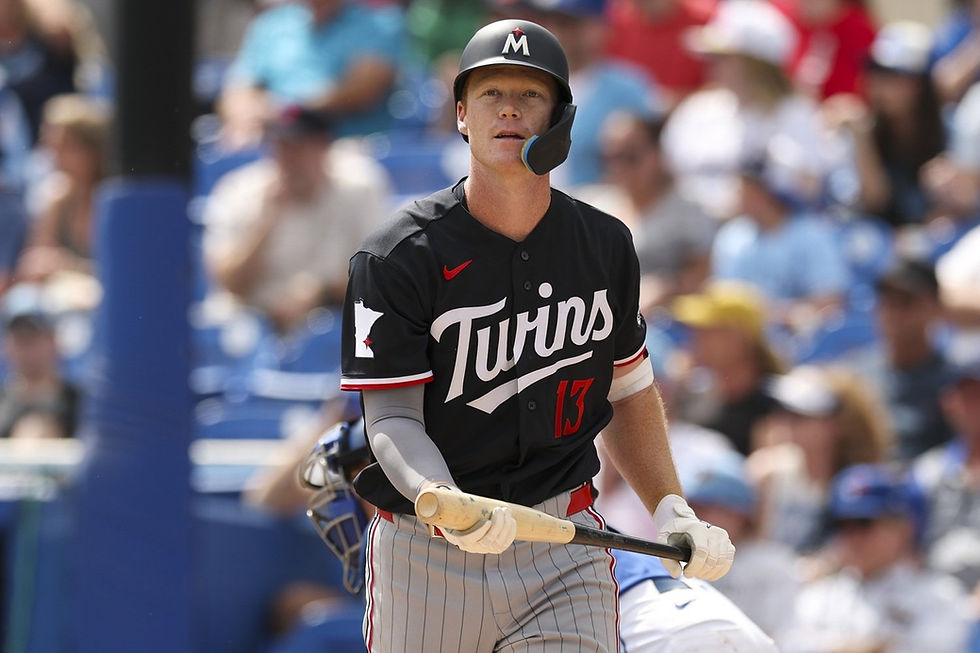
And now: Mets uniform. Citi Field. Real opportunity.
The kind that doesn’t come with guarantees, only at-bats.
If there’s a theme, it’s this:
He didn’t dominate his way here. He outlasted doubt.
Or as he puts it:
“I’ve just been very lucky to be around a lot of good people.”
That’s humility.
But it’s also survival.
Baseball loves a straight line: phenom to prospect to superstar.
Eric Wagaman took the scenic route, the detour route, and occasionally the “are we sure this is still baseball?” route.
And yet here he is.
In Queens.
In the lineup.
Still believing.
Still adjusting.
Still the kind of player who turns “organizational depth” into something a little more interesting than a roster note in a press release.
Sometimes baseball rewards talent.
Sometimes it rewards timing.
And sometimes it rewards the guy who just refuses to disappear.
Wagaman hasn’t disappeared.
Not even close.
Here is the complete interview :


Comments