
Full Circle: Paul Goldschmidt Is Ready to Be Somebody's Overbay

Paul Goldschmidt has been a Met for two days, and he hasn't taken a single swing in orange and blue yet. But on a Thanksgiving-week Zoom with the New York media, the 39-year-old first baseman made it clear what kind of Met he intends to be — because he told us exactly who taught him how.
I got the last question of the session, and I asked him about the thing his reputation is built on as much as his bat: leadership.

“Steve (Gelbs) touched on this earlier about your reputation around the game — about leadership, it's off the charts. I know in the past you've pointed to Lyle Overbay as the best teammate you could possibly have, and how he sped up your learning curve. Now that you're joining a team full of young players — Francisco Alvarez, Carson Benge, A.J. Ewing, and the entire young pitching staff — did the chance to mentor this young group factor into your decision as to why you signed with the Mets?”
His answer is worth hearing in full, because it explains this signing better than any stat line:
“I had so many great role models. When I got to the big leagues, Lyle Overbay — you mentioned — guys like Xavier Nady, Willie Bloomquist, J.J. Putz, the list goes on and on. I probably don't have enough time to list them all, and I hope those guys know how much they impacted my career.”

“So yeah, I have enjoyed that part as I've gotten to the back half of my career — probably starting in St. Louis more, and then even these last couple of years with the Yankees, where it was more of a part-time playing role. It gave me more time to kind of have the role that those guys had with me, which is helping them. The experience I've had, the ups and the downs, the good and the bad, that you can kind of share, that can hopefully help them perform.”
“So yeah, I think seeing these young players with the Mets that have been coming up the last few years — it is exciting, and hopefully I can help them in a small way. They probably don't need it because of how talented they are, but hopefully there's some things I've learned along the way... It's a team that has a good mix of veteran and young players. But yeah, I've enjoyed that part of the role that's come at this part of my career, and it is something I've kind of looked back on as just like a full circle moment.”
“Not really being young in my career, not knowing how long I would play — definitely not imagining playing this long — but almost like, you know, those guys gave back to the game and gave back to me and helped me. And now I get to do that with some other players. So I've enjoyed it.”
Full circle. In August of 2011, Arizona signed the veteran Overbay two weeks after Goldschmidt's debut to share first base with the rookie — and instead of guarding his job, Overbay taught the kid his. Fourteen years later, the kid is the veteran, sharing first base with Jared Young, and he just told you he's here to do for Alvarez, Benge, Ewing and the young arms what Overbay did for him.
The Skubal Question
I couldn't resist a second one. Goldschmidt owns a .438 lifetime average against Tarik Skubal, so I asked whether he planned to get on his new teammate about signing with the Mets just so he wouldn't have to face him anymore. Goldschmidt laughed it off like a pro:

“Skubal and I have had some back and forth on the field, and he's got my number a few times. I've got him, but he's one of the great pitchers, so no, I'm not going to give him a hard time. I'm glad I got a few hits and homers off him, and he's punched me out a few times too. So I'm just glad to be his teammate.”
Earlier in the session, Anthony DiComo of MLB.com had established the timeline: Goldschmidt came to terms with the Mets before the Skubal news broke.
“When we made the decision, we came to terms, it was before the news broke about him potentially coming to the Mets. And I remember thinking, like, man, I hope he goes. I got a chance to play with him on Team USA, and he was a great guy, a great leader and a competitor, and obviously an amazing pitcher... I remember thinking, if it's not him, they're going to go try to get other great players, because you can see from the outside, and talk with players that played here, how bad the ownership wants to win.”
“Nothing They Needed to Sell Me On”
Steve Gelbs of SNY pressed him on whether the front office had to sell him on the organization's commitment to winning. Goldschmidt waved it off:
“I remember hearing it a few years ago when guys like Scherzer and Verlander came here, and just when Mr. Cohen bought the team, how bad he wants to win, how bad this whole organization is committed to winning. So I think I knew that going in... Being with the other team in New York the last couple of years, the expectations of this city — seeing it firsthand — there was nothing that anyone really needed to sell me on. I knew that going in. And so when they called, it was exciting.”

Gelbs also asked about leadership and clubhouse intangibles — the very theme of the day:
“All the teams that win are very talented. But there's those teams that win the World Series or win the Super Bowl or whatever it is — you can just hear that there's something a little different about those teams. It doesn't guarantee that you're going to win... I think the teams that have success are all moving in the same direction... The commitment to doing whatever we have to do to win — that's what's most important. That's what my mindset's been my whole career, and I'll try to bring here. I don't have all the answers.”
The Green Connection, and Any Role They Want
The deal came together quickly, Goldschmidt said, helped by an old Arizona connection — manager Andy Green, who managed him in the minors and coached him with the Diamondbacks.
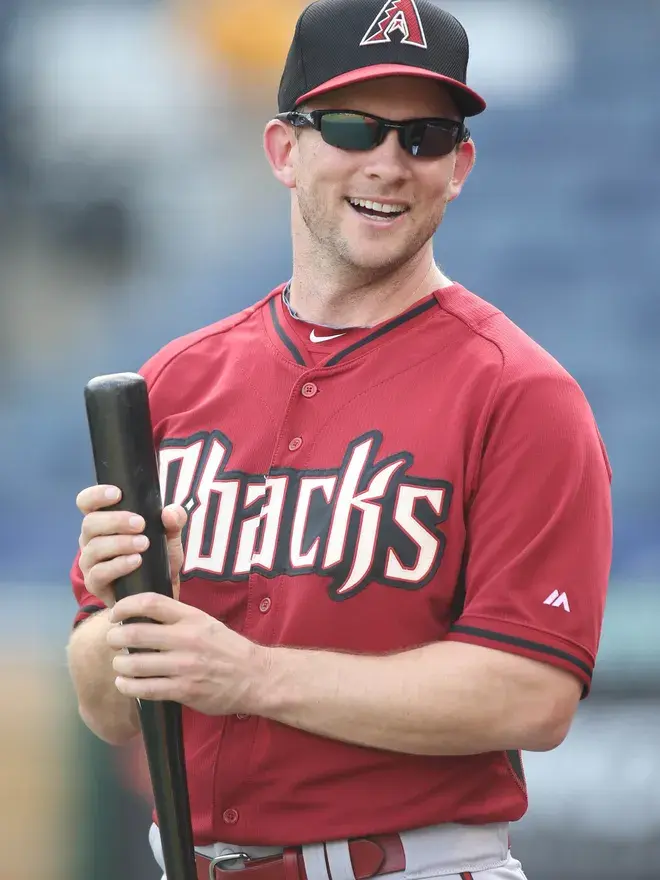
“He was our infield coach for a year, but we always stayed in touch. I think he's really smart, and he really has a game plan of how he wants to attack things... I remember him just being very open to continuing to learn. He didn't think he had all the answers. And so that's always very encouraging, and it stuck with me as I've gone through my career — even when I've had success — not thinking you've got it all figured out. This game is a really humbling game. Always searching for ways to get better, ways to make the people around you better.”
And when DiComo asked the playing-time question — how much does he expect to play against right-handers — Goldschmidt deferred to his manager and said the quiet part out loud:
“I think that's a better question for Greeny. My top concern was not, 'Hey, how do I go to some place where I get the most playing time?' My concern was going to a team where it felt right... and just have an opportunity to be on a team that has a chance to win and is going for it. As far as the role, I said, 'I'm ready to do whatever. I'm going to prepare to be ready to play every day if you need me to. But whatever decision is best for the team, whatever you need me to do, I'm open to doing it, and I'm going to do it to the best of my ability.'”
“This game is pretty simple. Your performance will kind of do everything. If you go out there and play well, then you're going to get yourself more playing time. And if you don't, then they're going to find someone else who will.”
The Craft of the Part-Time Role
Ron Blum of the Associated Press asked how he adapted to the part-time role with the Yankees, and Goldschmidt gave a ballplayer's answer — he studied the guys who'd done it before him:
“I wouldn't say it was hard. The basics are still there. I just tried to prepare every day... I did try to talk to players that had done that role before me, or coaches that have seen it, and just try to get a little bit of advice. It was more on the pinch-hitting role — how to kind of stay consistent.”
“It's been fun to have a different perspective. It's kind of like a relief pitcher — you think you're going to come into the game in the fifth and you don't come in until the seventh. So it's like trying to find that balance of being ready so that the game doesn't sneak up on you... For me, I just really did my routine a little bit later in the day, knowing that the pinch hit could come at 8:30 or nine o'clock at night. So I just kind of moved everything back in my day, but kept it pretty similar.”
Why He's Still Here at 39
Asked how a position player stays productive into his late thirties when so few do, he came back to the same word he's used his whole career — adapt:
“Every day is a blessing to play this game... It's just trying not to be set too much in my ways, and always adapt. What I could do early in my career isn't necessarily going to lead to success now... I've tried to just pick the brain of anyone who will let me ask some questions — whether that's players that are currently playing, coaches, guys that are retired, even front office staff and the information they have from an analytical sense. You can't try to always do what worked before.”
And on coming back to New York — this time to Queens — he sounded like a man who wouldn't have it any other way:
“I enjoy playing in New York... The number one thing I would say about this city is the high expectations of both these teams, and really all the sports teams, and really anything that goes on in New York. And for me, I love it. My expectation every year, no matter what team I've been on, is to perform at a high level and for our team to win and try to win the World Series... The fans are all in here. The expectation is to win, to win every game, to win the World Series. I've embraced that, and it's a lot of fun to go do that. The fans are great. They're very, very passionate, and that's a great thing.”
The Mets didn't just sign a right-handed bat to face lefties. They signed the guy Lyle Overbay made — and on his first day in the room, Paul Goldschmidt told you he's here to make the next one.
Happy Thanksgiving, Mets fans.
🔔 Get the Korner in Your Inbox
The Rumor Roundup, the Chronicles, Sunday School and everything from the Korner — delivered free every Sunday morning, plus a breaking-edition alert when the Mets make a move. Just drop your email in the form below and you're in.


Comments