
Kiners Korner Chronicles No. 13: Showtime in the Rain


Welcome back to the Kiners Korner Chronicles — the real ones. In our premiere, we brought back Tom Seaver's homecoming, and last time we rewound to 1980 and a new owner taking his seat. This time we jump a decade, to July 1, 1990 — and an episode that only exists because the sky opened up over Shea Stadium.
And the guest isn't a ballplayer. He isn't a manager or an owner, either. Ralph's guest was the home-plate umpire — Eric Gregg, who had been calling balls and strikes all afternoon, and who, when a storm stopped the game in the sixth inning with the score tied 1–1, came upstairs, sat down in the guest chair, still wearing his chest protector under his shirt, and held court while 42,907 people waited out the rain.

The Game — Sunday, July 1, 1990
Sunday, July 1, 1990. The Cincinnati Reds came to Shea carrying the best record in the National League — 46–27, in first place since the first day of the season, on their way to a World Series sweep that fall. The Mets, 42–30, were the team chasing them. Ron Darling started for the Mets against Danny Jackson, and behind the plate for a one-run game between the two best teams in the league was a 39-year-old umpire from West Philadelphia named Eric Gregg.
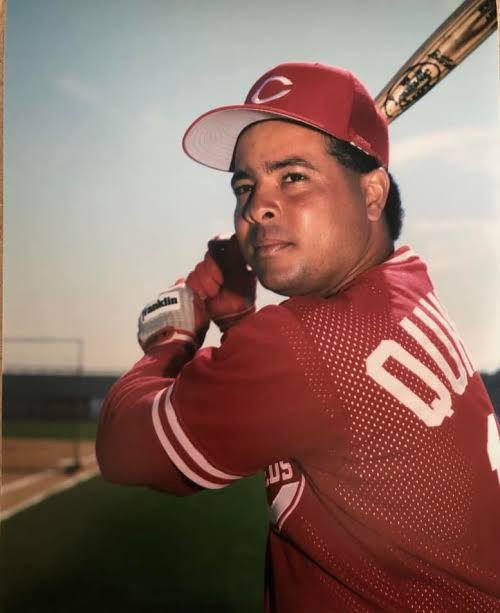
The Mets scored first, and they scored cheap. In the second inning, Kevin McReynolds reached on an error by third baseman Luis Quiñones, took third on a passed ball, and came home on Kevin Elster's single. The Reds tied it in the sixth: Darling hit Barry Larkin with a pitch, and Ken Griffey — the father, holding down first base for Cincinnati that day — doubled him home. In the bottom of the sixth, the Mets put two men aboard with one out, a rally just starting to breathe — and then the rain arrived, all at once, and the tarp came out. One hour and forty minutes of it. By the letter of the old rule, a game washed out there would have gone back to the last completed inning; by the new rule, it would simply be suspended and picked up where it stopped. While the umpires waited on the weather, the plate umpire went on television.
When the game finally resumed, the rally finished the job: Darryl Strawberry reached on an error to load the bases, and McReynolds's sacrifice fly off Rob Dibble brought home the go-ahead run — unearned, like every run the Mets would score all day. It came down to the ninth. John Franco, on for his second inning of work, retired the first hitter, but Mariano Duncan singled and pinch-hitter Joe Oliver doubled him home to tie it, 2–2. In the bottom of the ninth, Norm Charlton came in and Mackey Sasser greeted him with a double; Elster dropped down a bunt, Griffey couldn't make the play at first, and Sasser scored standing up. Mets 3, Reds 2 — a walk-off win built entirely out of Cincinnati mistakes: three Reds errors, not a single earned run. And the man who had the best seat in the house spent the middle of the whole thing talking to Ralph Kiner.
The Show
The tape we have opens mid-conversation — no introduction, no theme, just Ralph already quizzing his guest, the way you'd join any good talk already in progress. Who was the catcher in your first major league game? Gregg reaches back to 1975 and lands on Atlanta's Biff Pocoroba. But it's his first time behind the plate he lights up telling: the last day of the 1976 season, at the Vet in Philadelphia, Tim McCarver catching Steve Carlton's 20th win of the year — Carlton struck out 13, Tom Seaver struck out 10 — with some 30 members of Gregg's family packed into a section the ushers had roped off just for them. They called it the Soul Bowl.
Regular viewers would have noticed he's smaller than he used to be — some of him, anyway. Gregg had just come back from the Duke University diet and fitness center, down 62 pounds, his blood pressure down with them. He is candid about how he got there: National League president Bill White and umpires' union chief Richie Phillips pressured him to go, and he didn't want to go. “I'm probably really happy he did,” he says now, “because that probably saved my life.” (And before anyone writes in — yes, he looks big on the show. That's the chest protector under the shirt. Ralph makes him explain it, grinning, for the benefit of Mr. White, who Gregg is quite sure is watching.)
The nominal reason for the visit is that Gregg is an author. His book, Working the Plate — written with Marty Appel, the title a double meaning he delights in: working the plate, and clearing it — tells where he comes from: a kid out of the West Philadelphia ghetto, an abusive father, a brother in prison, a sister lost to drugs. And a mother he said it to at 13 years old: one of these days, I'm going to be on TV. Her answer has been family scripture ever since: “The only way you're going to be on TV is if I pick you up and sit you on top of it.” She is proud of him now, he says. If the book reaches one kid from a background like his, it's done its job.
Then comes the story this episode will be remembered for. Late in Mike Schmidt's final season, with Schmidt struggling, Gregg called a couple of close pitches on him, and Schmidt — who never gave him trouble — finally barked that he was showing him up. “Mike, you're showing yourself up,” Gregg told him. The next day, in a Philadelphia classroom, Schmidt's daughter Jessica informed her classmates that Eric Gregg had called some bad pitches on her dad. Listening quietly was Gregg's son José. He walked over and delivered the verdict of the next generation: “The money your dad makes, he should be able to hit those pitches.”
All the while, there is a ballgame on hold downstairs — tied 1–1, bottom of the sixth, two men on — and Ralph naturally wants the law on it. Gregg explains the modern suspended-game rule, and gets an assist from offstage: crew chief Doug Harvey — “the Lord,” Gregg calls him, the best there is — is watching the show from the umpires' room and confirms it. Suspended from this point; pick it up where it stopped. The waiting itself has its own arithmetic in the league manual — set periods to sit out before a game can be called — but it never came to that. Outside the studio window, the storm was already spending itself.
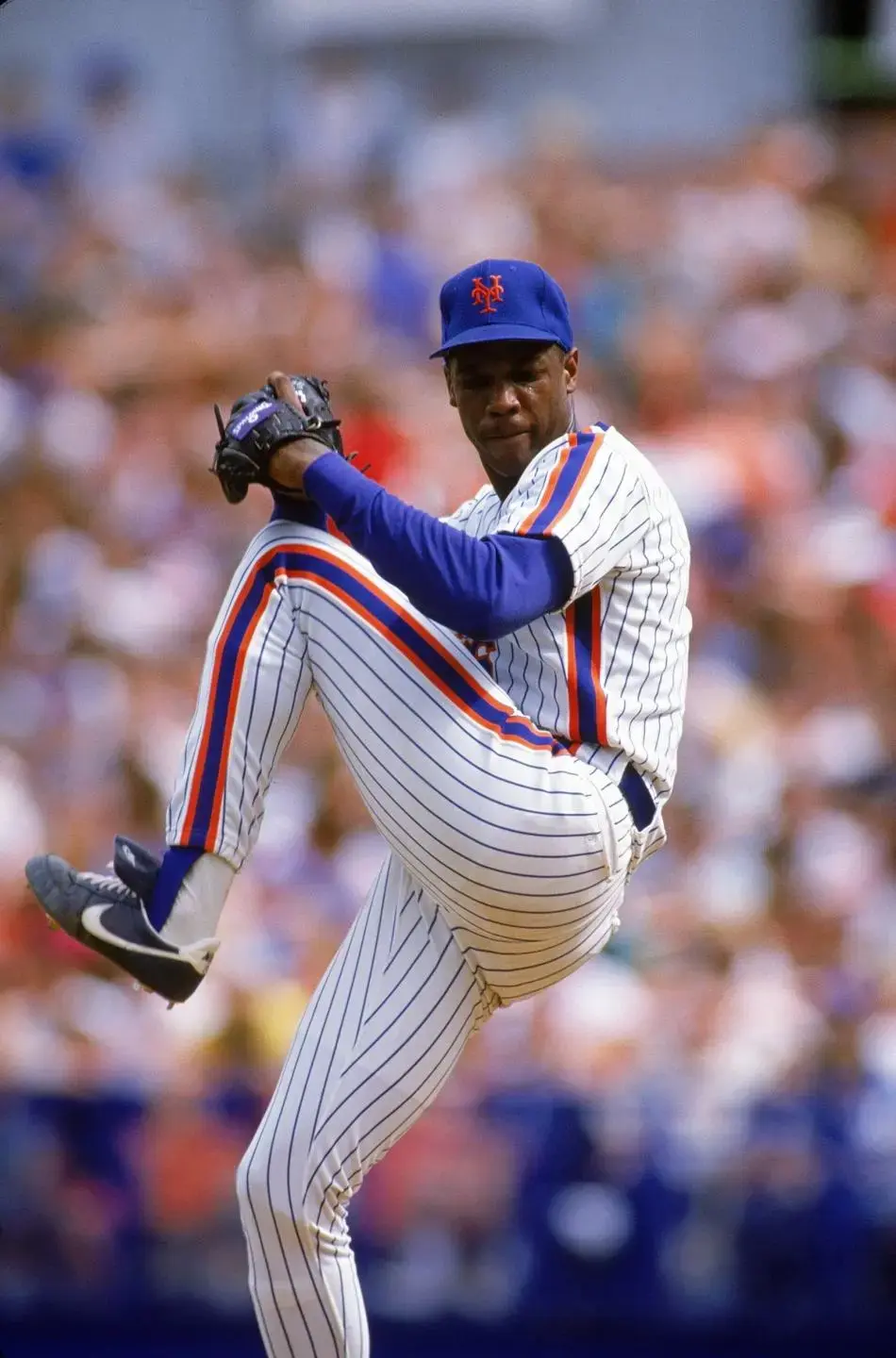
Ralph steers him to the craft. The toughest pitchers to call? Dwight Gooden, when the fastball is moving and the curve is bending off the table. And Carlton again — that inside slider, breaking down and in on a right-handed hitter, made invisible when a catcher comes up on you, the way McCarver would in his later days. On the great strike-zone question, Gregg is a historian: the American League's old balloon protector made its umpires stand tall and call the high strike; the National League's inside protector put a man in the slot, down low, calling the low one. The balloon is gone now, he says — but there will never be one strike zone. Every umpire has his own. The main thing is being consistent. It's a traveling life besides, he points out: ballplayers get homestands, umpires get airports. Living in Philadelphia, with Shea an easy commute, he counts himself lucky.
Ask him who he watched, and the whole story of his life arrives in one answer. Growing up in Philadelphia, the idol was Shag Crawford — he did everything well, and he looked good doing it. When Gregg got cut from his high school team — the coach told him if he couldn't play for West Philadelphia High, there was no way he was playing for the Phillies — he started umpiring, still watching Crawford. And then one Saturday he turned the channel and saw the Game of the Week, and Emmett Ashford, flamboyant, unmistakable, the first Black umpire in the major leagues: “They have black umpires doing it, so now I knew I had a chance.” Ashford broke the line in 1966, Art Williams followed in 1973, and Gregg came up in 1975 — he'd gone off to umpire school and finished first in his class, and five years after he started, he was in the big leagues. There have been more Black managers in the majors than Black umpires, he notes. He'd like the book to change the arithmetic.
For all the laughter, he is serious about the money, because in 1990 the men in blue were done being quiet about it. When he started, Gregg says, umpires were “second-class citizens” — until Richie Phillips put them on the map, a strike and all. Top men now make $105,000 a year, and a 30-year craftsman like Harvey ought to be making $200,000. Commissioner Fay Vincent had just said publicly that umpires should be compensated more, and Gregg takes the endorsement and makes the case in one sentence: “We know people don't pay to come see umpires, but we also know they have a big pie out there — just give us a slice of it.”
And then Ralph asks about the nerves — and the funniest man in the room goes quiet. Every fourth day is the plate, and on those days Gregg, the laughing storyteller, doesn't say a word. No radio, no singing, no talking in the locker room; his own kids get told to sit in the corner. Not fear — preparation. “Working the plate is Showtime,” he says. “It's a lot of pressure, and every pitch can be the game.” Three hundred pitches, an afternoon hanging on each one, and on a day like this one, a 1–1 game where all hell can break loose on a single call. Ralph sends him back down to work with the warmest sign-off an umpire has ever gotten on television: “Thank Eric Gregg — one of the great guys in this game.”
Back downstairs, the game refused to be suspended after all. The Mets finished their rally, lost the lead in the ninth, and won it in the bottom half on a double, a bunt and an error — and Gregg called every pitch of it. Showtime, indeed. More rescued shows are on the way as we work through the tapes one by one. And if you're sitting on a tape of this show — any tape, any year — the hunt is still on, and we want to hear from you.
Down on the Korner — the book Howie and I wrote about this show and these Mets — is available here.
Watch the rescued episodes as we revisit them: the Kiner's Korner archive playlist.

Box score: Retrosheet via Baseball-Reference.
🔔 Get the Korner in Your Inbox
The Rumor Roundup, the Chronicles, Sunday School and everything from the Korner — delivered free every Sunday morning, plus a breaking-edition alert when the Mets make a move. Just drop your email in the form below and you're in.


Comments