
Remembering Phil Regan: The Vulture Who Never Stopped Teaching

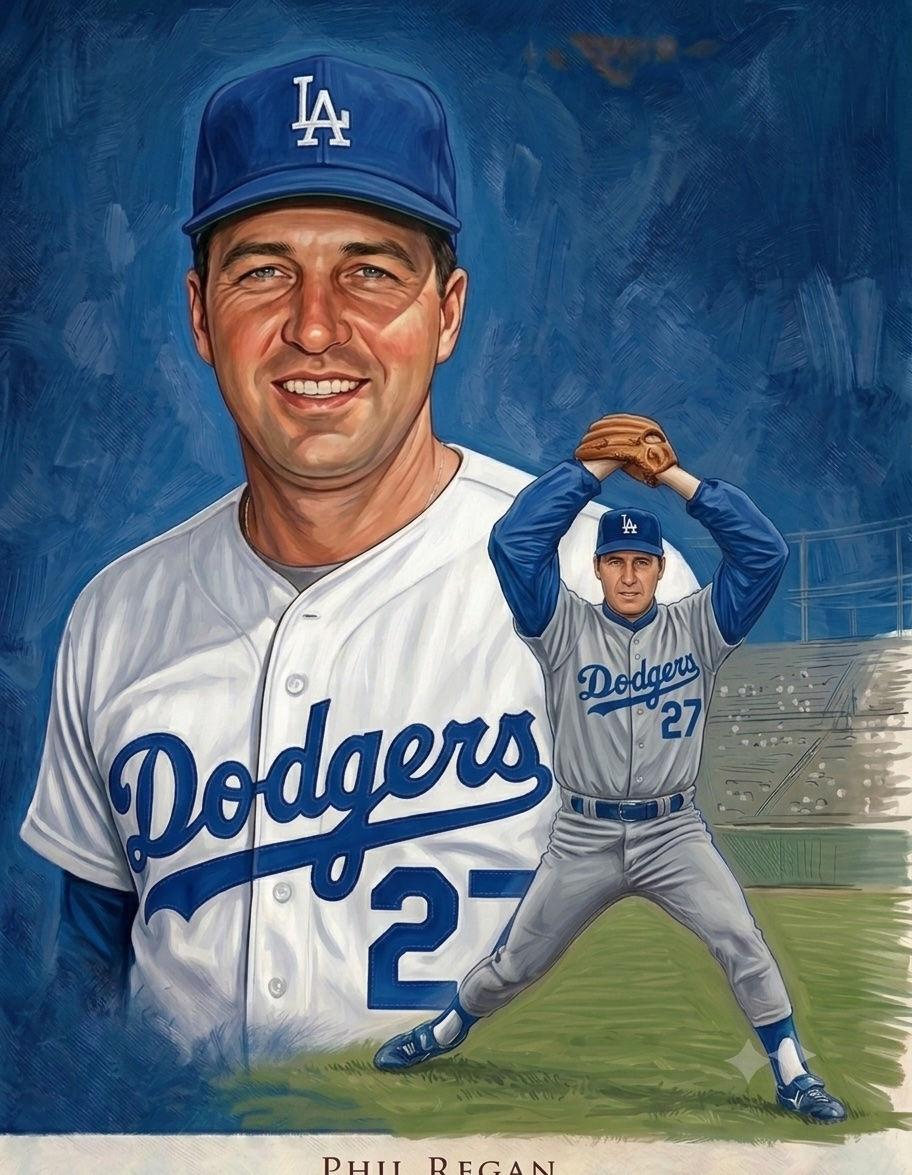
There are baseball lifers.
And then there was Phil Regan.
For more than six decades, Regan dedicated his life to the game he loved. He pitched in the major leagues against Mickey Mantle, Roger Maris, Willie Mays and Hank Aaron. He won a World Series with the Dodgers, managed in the majors, coached in the Olympics, spent decades developing pitchers throughout professional baseball, and at 82 years old returned to the New York Mets as their pitching coach, proving that passion has no expiration date.
Phil Regan, who passed away at the age of 89, left behind far more than statistics. He left behind generations of players who were better because he taught them—not just how to throw a baseball, but how to think about the game.
I was fortunate enough to interview Phil twice on my radio show as well as spend time with him at Mets Fantasy Camp. Like so many who spent time with him, I came away struck by his humility, warmth, and endless supply of stories. You never interviewed Phil Regan. You simply sat back and listened as baseball history unfolded.
Phil never forgot where he came from.
Growing up outside Wayland, Michigan, on a small farm, baseball entered his life not through television but through imagination.
"We didn't have a telephone in our house. We had to walk to the neighbor's to use their party-line phone. We didn't have television, so you listened to a lot of radio, you read a lot of books, and you played outside."
Those radio broadcasts by Tigers broadcaster Harry Heilmann sparked a dream.

"I can still tell you almost every player from those Tiger teams when I was in high school. George Kell, Johnny Lipon, Vic Wertz, Hoot Evers, Hal Newhouser... They stayed with the team back then, so you really knew them."*
That dream eventually led him to Detroit, where legendary pitcher Schoolboy Rowe watched the young right-hander throw.
"I remember hearing him say, 'Yeah... he's got enough.'"
Years later, Rowe would change Regan's career by teaching him the slider.

"Within two years, I was in the major leagues. That was the pitch I really needed."
Few nicknames in baseball have endured quite like "The Vulture."
The story, naturally, came courtesy of Sandy Koufax.

In 1966, Regan had been traded to the Dodgers expecting to become a starter. Instead, manager Walter Alston turned him into a reliever.
It turned out to be the perfect fit.
Regan went 14-1 with a remarkable 1.62 ERA while leading the National League with 21 saves, earning All-Star honors and Sporting News National League Reliever of the Year.
The nickname came after Regan repeatedly earned victories in games started brilliantly by Koufax.
"He said, 'Regan, you are a real vulture... getting my wins like that.' Some reporter heard it, and that's how it started."
The nickname stuck forever.
"The zoo in Los Angeles wanted to put a real vulture in the bullpen. I started getting rubber vultures mailed to me from all over the country."*
What made Phil Regan special wasn't simply what he accomplished.
It was how deeply he understood baseball.
Long before analytics, Regan believed pitching began with preparation.
"You had to know how you got hitters out. You had to know how you got a left-handed hitter out. You had to know how you got a right-handed hitter out."
He often recalled his first meeting with Seattle pitcher Mike Moore.
"I handed him the lineup and said, 'How are you going to pitch these guys?' He looked at me and said, 'What's the scouting report say?' I told him, 'You've got to learn the hitters.' That year he won 17 games."
Even in baseball's analytical era, Regan believed technology could never replace experience.
Whether he was working with Cy Young winners or young pitchers just beginning their professional careers, every player received the same attention.
Former Mets pitcher and current Kansas City Royals starter Seth Lugo, who worked extensively with Regan in the Mets' farm system before later playing for him in New York, reflected on what made his former pitching coach so special before Wednesday night's game at Citi Field.
"Phil was a special guy. Playing for him in 2014, he always brought a lot of energy. He was always working with everybody. That's special for a pitching coach—to be there for every single pitcher, not just his favorites. He was a great guy."
Lugo's comments echoed exactly what so many players said throughout Regan's career. Every pitcher mattered.
When I asked Phil during one of our interviews about the balance between analytics and old-school baseball wisdom, his answer was classic Regan.
"The machines can tell you what the ball did. They can't tell you how to change it. That's where you need the pitching coach."
Lugo said those lessons extended far beyond spin rate or pitch design.
"That's what he was talking about all the time. You're going to get to the big leagues and you're going to face the same guys over and over. You're going to have to figure out how to get them out. This game is exhausting mentally. You have to bring good energy, pick up your teammates and stay positive. That's how you make it."
That was Phil Regan.
Yes, he embraced analytics. He appreciated technology.
But he never believed computers could replace preparation, confidence, experience, or heart.
As he once told me:
"There are five boxes everybody checks—can he hit, run, throw, field and does he have power. But there's another box they ought to check... makeup. His heart. His desire."
For Phil Regan, that sixth tool was always the most important one.
It was a lesson he carried throughout more than 60 years in professional baseball.
When the Mets promoted Regan to pitching coach during the 2019 season, much of the national conversation focused on one thing—his age.
Phil, naturally, laughed.
"I asked if I could wear number 82," he joked. "Every article said, 'Phil Regan, 82, joins the Mets.' I thought maybe that was going to be my uniform number."

Behind the humor was genuine gratitude.
"I was thankful the Mets gave me the opportunity. It took me 20 years to get back to the major leagues."
He also cherished something else.
"A lot of older people have written and said, 'You've given us a little hope.' That's been great."
One of Phil's favorite topics wasn't Koufax or Drysdale.
It was teaching young pitchers.
When discussing Steven Matz, Regan didn't talk about velocity.

He talked about mechanics.
He talked about confidence.
He talked about helping a young man believe in himself again.
"He's one of the greatest kids you'll ever meet. You want him to succeed."
That was Phil Regan.
Whether it was Matz, Seth Lugo, Edwin Díaz, or countless minor leaguers over four decades, every conversation eventually came back to helping someone improve.
He never stopped teaching.
Few people have witnessed baseball history quite like Phil Regan.
He pitched against Mantle and Maris.
He was a teammate of Sandy Koufax.
He coached Kerry Wood's 20-strikeout game.
He managed the Orioles during Cal Ripken Jr.'s pursuit of Lou Gehrig's consecutive games record.
He served as Tom Lasorda's trusted confidant and later helped Team USA win Olympic gold in Sydney.

When I asked him which moment stood above them all, his answer surprised me.
It wasn't Koufax.
It wasn't the Dodgers.
It wasn't the World Series.
It was watching Cal Ripken Jr. break baseball's Iron Man record.

"The players were standing on the top step every night waiting for it. There were a lot of tears. I can tell you... I had tears in my eyes when Cal broke that record."
Phil Regan won 96 games in the major leagues.
He saved 92 more.
He earned an All-Star selection.
He twice captured The Sporting News National League Reliever of the Year Award.
He managed in the major leagues.
He coached around the world.
He won an Olympic gold medal.
But perhaps his greatest achievement can't be found in any record book.
It lives in every pitcher whose career he helped shape.
It lives in every clubhouse story that made teammates laugh.
It lives in every baseball conversation where an 82-year-old coach could still outwork—and outteach—people half his age.
When our interview concluded, Phil simply said:
"Thank you, Mark. Good being with you. I look forward to seeing you."
Like so many baseball fans, I wish we'd had one more conversation.
Rest in peace, Coach.
And thank you for spending a lifetime making baseball a better game.
Here are links to the two inteviews :


Love it! I remember you telling me he was a good guy! Hope they have room in the pen upstairs.