
Saturday Seasons: 1978- False Optimism


With the conclusion of the first season under the new realities of free agency and how the game was impacted, the results for Mets fans were devastating. Not only were the crosstown rival Yankees, who invested in Don Gullett and Reggie Jackson, sitting pretty with the 1977 World Series trophy in the Bronx, the Mets found themselves chilling in the cellar of the National League East for the first time in a decade. The Mets then were known as "Loveable Losers", now they were just plain losers. Then Shea Stadium was known as a state of the art edifice, now forlorn, lonely and adequately dubbed as "Grant's Tomb".

With this in mind, Mets brass preparing for the 1978 season made it known to their fans that they were open to investing in the free agent market going forward, though they would not enter into ridiculous contracts. They were desperate for power, and the free agent market had a whole host of options available, ranging from the likes of Richie Zisk, Larry Hisle and Lyman Bystock, notto mention Dave Kingman, whom they traded to San Diego as part of the 1977 Midnight Massacre (largely because they didn't want to accede to his contractr demands then). But on the same day that the Cubs signed Dave Kingman, the Mets elected to sign the oft-injured Elliott Maddox to a multi year contract. Pitcher Tom Hausman was the other signee from the Mets' first foray into the free agent market.
Yet the team that opened the 1978 season, at least on paper, looked a lot better than the team that ended 1977. Having traded Jon Matlack during the winter meetings in a blockbuster, four-team , 12-player trade, the pitching staff was now anchored by the veteran Jerry Koosman, who was nearly traded to the Kansas City Royals in exchange for John Mayberry, followed by three quality starters; Craig Swan, Pat Zachry and Nino Espinosa. The Mets were also solid up the middle defensively with John Stearns behind the plate, a double play combination of Doug Flynn and Tim Foli, who was purchased from the Giants over the winter, (Bud Harrelson was sold to the Phillies during spring training) and Lee Mazzilli in centerfield. Offensively, the Mets looked a lot better as well. The corners had Willie Montanez at first and Lenny Randle, the 1977 spark plug, at third. With potential continuing improvements from Mazzilli, Steve Henderson and John Stearns, it was an optimistic team that took the the field on April 7, against the Montreal Expos. With Koosman taking the mound as the opening day starter the Mets got the season of to a fast start, a trend that began in 1970. Koosman beat the Expos, 3-1, with contributions by the the new acquisitions Montanez and Ken Henderson. Subsequent games saw game winning dramatic pinch hit home runs by Ed Kranepool and Steve Henderson, the latter a grand slam, and the Mets were off to an exciting start.

There even was symmetry to 1969, when a few days later in a game against the Cubs, after Cubs starter Rick Reuschel deliberately plunked Steve Henderson with a pitch after taking too much time to get in the batters box. When Reuschel came to the plate for his next at bat, he was immediately beaned by Koosman, who was always known for protecting his batters. Koosman was summarily ejected from the game and that's where the symmetry to 1969 ended, because the Mets went 62-94 the rest of the way.
Despite the terrible record and another last place finish, the team played gritty and exciting baseball in the first half of the season, refusing to die with late comebacks but ultimately falling short, with a leaky bullpen the main culprit. Skip Lockwood was not able to return to the form that made him the closer from mid-1975 through the end of the 1977 season. Another mainstay of the Mets bullpen, Bob Apodaca, ripped ligaments in his elbow during spring training, effectively ending his career. Dale Murray, acquired from the Reds in mid-season, was ineffective.
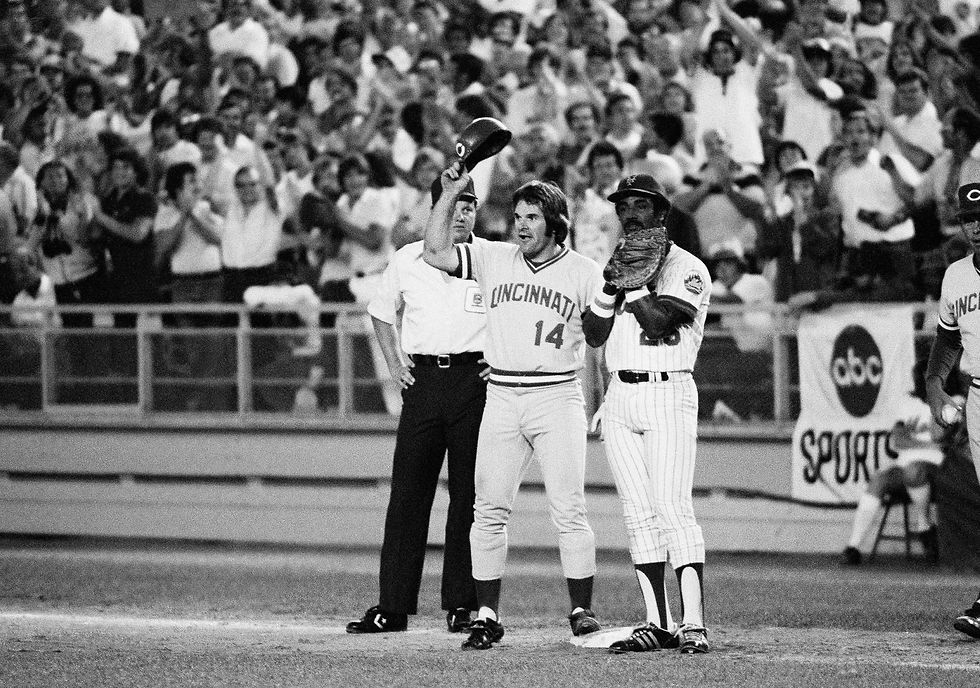
Sadly, the most excitement in Shea Stadium during the 1978 season came from the opposition when Pete Rose came to Shea Stadium with a 36-game hitting streak on the line. Number 37 would tie Tommy Holmes, who held the National League record, and number would break the record. Ironically, Holmes was working in the Mets' public relations department at the time and was on hand for the record-breaking hit. During the series, it was not only Holmes' record that was broken, but Pat Zachry's toe, the Mets leading pitcher, was broken as well, when he kicked the dugout steps after surrendering Rose's record tying hit.
When the dust cleared on the 1978 season, the early optimism turned out to be nothing but a mirage. The anticipated power of Montanez failed to materialize, hitting only 17 home runs, not a significant upgrade from John Milner, the man he was traded for. Lenny Randle, went from batting .304 in 1977 with 34 stolen bases to only .233 with only 14 stolen bases in 1978 and failed to be the sparkplug the Mets desperately needed. However, by far and away the biggest disappointment was the fate of Koosman, who once again was failed by the lack of run support by the offense and a shaky bullpen. The proud left-hander, despite pitching his heart out, won only 3 games all season. In a microcosm of the season all you have to do is take a look at the game of August 16th, where Koosman took a 1-0 lead into the ninth inning in a game against the San Diego Padres. With one out and a runner on first base, Manager Joe Torre elected to replace Koosman with Lockwood, who immediately surrendered a two run, game deciding home run to the light hitting Derrell Thomas. That game was followed by a 10-inning, 12-strikeout performance, allowing no earned runs, only for the Mets to lose to the Giants in 11 innings. His seaon highlight? That came on July 13 in Cincinnati, when he bested his friend and former teammate Tom Seaver. With the team headed in the direction that it was, Koosman decided if he was going to lose, he might as well lose in his hometown of Minnesota, rather than having to move his family to New York every year. With this in mind, Koosman threatened to retire if he was not traded to the Twins. Having no choice, Joe McDonald dealt Koosman to the Twins in exchange for minor league pitche, Greg Field who turned out to be the second piece in the trade that brought Frank Taveras to the Mets, and the proverbial player to be named later. That player turned out to be Jesse Orosco. To this date, the two players that were traded for each other, are the only two pitchers that were on the mound when the Mets won their championships in 1969 and 1986.


Comments