
Sunday School: Forgotten Faces of Flushing #78- Salty Parker the Leo Getz of Baseball


Last week in Sunday School, we wandered away from forgotten players altogether.
Instead of forgotten faces...
We remembered a forgotten piece of baseball theater.
The bullpen cart.
A giant rolling baseball that somehow made perfect sense in an era when baseball wasn't afraid to have a little fun.
Which got me thinking.
Sometimes you know exactly what this week's Forgotten Faces of Flushing will be.
Sometimes an anniversary jumps off the calendar.
Sometimes an old baseball card falls out of a book.
Sometimes it's a conversation with another Mets fan.
And sometimes...
The inspiration comes from something happening right now.
This week, it came in the form of two simple words.
Interim Manager.
With Andy Green now serving as the Mets' interim manager, it reminded me that while the franchise has had nineteen permanent managers, true interim managers have actually been a rarity.

In fact, before Green, there have only been four.
Now, I know some fans will immediately say five thinking of Jerry Manuel.
But for the purposes of this series, I'm leaving Jerry off the list.
Why?
Because Jerry wasn't simply filling the seat until someone else arrived. He earned the job, had the interim label removed, and became the Mets' full-time manager. His story belongs with the permanent managers.
The four men we'll be looking at over the next month are different.
Each was handed the lineup card under difficult circumstances.
Each was asked to steady a ship that had suddenly lost its captain.
Some lasted only days.
Some managed for months.
All became small but fascinating footnotes in Mets history.
And that's exactly why they belong here.
So for the next four Sundays, class is in session as we revisit the men who, however briefly, sat in the manager's office with "interim" on the door.
We begin with the very first one...
A baseball lifer whose nickname fit him perfectly.
Salty Parker.
If there were a Baseball Hall of Fame for guys who simply lived baseball, Salty Parker would need his own wing.
He wasn't a superstar.
He wasn't a headline.
He wasn't even a household name in my house that had baseball cards scattered across the living room floor.
Instead, Salty Parker was the kind of baseball man every organization seemed to have back then.
Player.
Manager.
Coach.
Scout.
Instructor.
Teacher.
Need someone to manage a Class A club in Iowa? Salty.
Need a third-base coach in San Francisco? Salty.
Need someone to teach infielders in Arizona? Salty.
Baseball organizations treated Salty Parker the way Danny Glover and Mel Gibson treated Joe Pesci's Leo Getz in the Lethal Weapon movies. If something needed doing, Salty was already halfway there with a fungo bat in one hand and a lineup card in the other.

So when the Mets needed somebody to keep a clubhouse together after manager Wes Westrum suddenly resigned with eleven games left in the season?
Once again...
Salty.
His nickname wasn't born on a baseball field. Growing up in East St. Louis, young Francis Parker worked in a neighborhood store and had a habit of helping himself to salted peanuts. Before long, everyone simply called him "Salty." Which was probably for the best. Every time I hear the name Francis, I still expect Sergeant Hulka to yell, "Lighten up, Francis!"
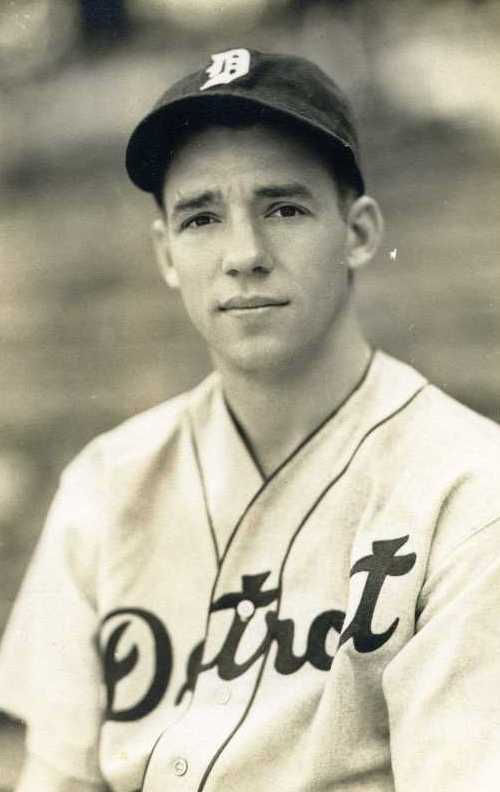
His own major league playing career barely lasted long enough to break in a glove. He appeared in just 11 games for the defending world champion Detroit Tigers in 1936, hit a respectable .280, then suffered a shoulder injury that effectively closed the door on his big league playing days.
For most people, that would have been the end of the baseball story.
For Salty Parker...
It was merely the end of Chapter One.
Over the next five decades he became one of baseball's ultimate lifers. He managed throughout the minor leagues, won championships, coached for the Giants, Angels, Indians, Astros and eventually the Mets. If there was a baseball diamond somewhere in America that needed an experienced baseball mind, chances are Salty Parker knew how to get there.
Which is exactly why, when Wes Westrum unexpectedly resigned with just eleven games remaining in the 1967 season, the Mets didn't panic.

The Mets turned to the steady baseball man already sitting on the bench.
Salty Parker.
His first game as manager couldn’t have started much tougher. Waiting in the opposing dugout was the Houston Astros—and on the mound was future Cy Young Award winner Mike Cuellar, who handcuffed the Mets in an 8–0 shutout. Not exactly the kind of welcome gift you hope for on your first day as a major league manager.
Fortunately, baseball is one of the few professions that occasionally gives you a do-over just a few hours later.
The Astros and Mets were playing a doubleheader that Friday afternoon at Shea Stadium, and by the time the day was over, Salty Parker had already experienced both ends of the managerial spectrum.
He lost his first game in that harsh 8–0 introduction.
Then, almost as if baseball owed him or the 13,342 faithful Mets fans in attendance something back, he won his first game in far more dramatic fashion.
The nightcap turned into a classic at Shea on September 22, 1967, as Jerry Buchek delivered one of the great single-game performances in Mets history. Buchek went 2-for-5 at the plate, both hits leaving the yard—three-run home runs one that tied the game in the eighth inning, and the other ended it in the 11th with a walk-off blast, sealing an 8–5 Mets victory. It was the kind of performance that didn’t just win a game—it told the whole story of it, and certainly earned him a seat on Kiner’s Korner.

Salty Parker had his first win as a major league manager. In the span of one doubleheader, he had lived the full emotional cycle of the job: the shutout loss, the late-inning walk off heroics only hours after suffering his first defeat.
Think about that for a moment.
Most managers wait days...
Sometimes weeks...
To experience both the thrill of winning and the frustration of losing.
Salty Parker squeezed both emotions into his first day on the job.
Over those final eleven games of the 1967 season, Parker guided the Mets to a 4-7 record. The assignment was never about earning the permanent job. It was about keeping the club focused, finishing the season professionally, and providing a steady hand while the organization figured out its next move.
Here's one of those wonderfully quirky baseball coincidences.
Salty Parker's entire major league playing career consisted of exactly 11 games with the Detroit Tigers in 1936.
Thirty-one years later, his stint as the Mets' interim manager also lasted exactly 11 games.
Now, before one of my more detail-oriented readers fires off an email—and trust me, I know you're out there—that wasn't the entirety of his major league managerial career. Five years later, Parker managed one game for the Houston Astros, winning it to finish his big league managerial career with an overall record of 5-7.
Still...
There's something wonderfully fitting that the man whose major league playing career lasted just eleven games also spent exactly eleven games guiding the Mets from the dugout.
Baseball has always had a knack for little bits of symmetry like that. Cecil Fielder and his son Prince Fielder, for example, both finished their careers with exactly 319 home runs—an almost eerie statistical mirror across generations.

Ironically, the same Houston Astros who handed Parker a loss in his managerial debut would become his employer just weeks later when he joined their coaching staff after the season.
Sometimes baseball really is a small world.
And while history rightly remembers Gil Hodges as the man who changed everything in Queens, someone had to bridge the gap between Wes Westrum and the Miracle Mets.
For eleven quiet games...
That someone was Salty Parker.


Comments