
Sunday School: Forgotten Faces of Flushing #92: Génesis Cabrera — In the Beginning (and the Big Inning), There Was No. 92


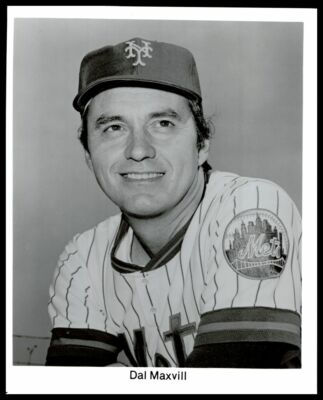
Last week on Sunday School, Forgotten Faces of Flushing, we took a stroll back to 1978 and rediscovered Dal Maxvill, a longtime St. Louis Cardinal who found himself wearing orange and blue as Joe Torre's third-base coach.
Maxvill spent one season in Flushing, helping a Mets team that finished sixth in the National League East before heading home to St. Louis, where his baseball journey eventually took him all the way to the Cardinals' general manager's office.
And that, of course, is the beauty of Forgotten Faces of Flushing.
One week, we're looking at a former player who spent 14 seasons in the majors and won four World Series rings. The next, we're looking at somebody whose Mets career was so brief that you might need to check your baseball card collection, your media guide and possibly the security footage from Citi Field to make sure he was actually here.
You never know who you're going to meet in this series.
We've covered coaches, catchers, forgotten starters, one-season wonders and players whose Mets careers lasted about as long as the average trip to the mound by a relief pitcher.
But this week presents a different challenge.
We're up to installment No. 92.
And when you get to No. 92, well, you have to think about No. 92.
According to Baseball Almanac's Mets uniform-number records, exactly one player has worn that number for the New York Mets.
One.
One player.
So when your weekly series reaches No. 92, the baseball gods have pretty much made the decision for you.
This week's Forgotten Face of Flushing is Génesis Cabrera.
Yes, THAT Génesis Cabrera.
If you're wondering whether the accent over the first name makes him more difficult to find in your old baseball-reference books, don't worry. The name is memorable. The Mets career? Well, that's why we're here.
A Genesis in the Dominican Republic
Cabrera was born October 10, 1996, in Santo Domingo, Dominican Republic. A left-handed pitcher who throws from the same side of the rubber as he bats from the plate, Cabrera signed with the Tampa Bay Rays as an international free agent in November 2013.
He was just 17 years old.
While most teenagers were worrying about homework, driver's licenses and whether their parents were going to let them stay out past 10, Cabrera was beginning a professional baseball career.
He worked his way through the minor leagues, earning recognition as a Midwest League All-Star in 2016 and a Southern League All-Star in 2018.
The St. Louis Cardinals saw enough potential in Cabrera to acquire him in a major trade on July 31, 2018, sending outfielder Tommy Pham to the Tampa Bay Rays in exchange for Cabrera, Justin Williams and Roel Ramírez.

That turned out to be a pretty significant detour.
Cabrera made his major-league debut on May 29, 2019, against the Philadelphia Phillies. It wasn't exactly the stuff of baseball fairy tales. He allowed five runs, three earned, in 3⅔ innings in an 11-4 Cardinals loss.
Welcome to the big leagues!
But the young left-hander eventually found his footing. In the shortened 2020 season, he posted a 2.42 ERA in 22⅓ innings. The following year, he became a regular member of the St. Louis bullpen, appearing in 71 games and recording a 3.73 ERA with 77 strikeouts in 70 innings.

He was a hard-throwing lefty who could miss bats, and the Cardinals had found themselves a useful bullpen piece.
Then came 2022, a season that would give Cabrera another connection to the Mets — and not exactly the kind you put on a promotional bobblehead.
On April 27, 2022, the Cardinals were playing the Mets when Cabrera hit Mets infielder J.D. Davis with a pitch.
Things escalated into a benches-clearing incident, and Cabrera was subsequently suspended for one game. Mets first baseman Pete Alonso publicly criticized Cabrera's behavior during the confrontation.
It was the sort of moment that reminded everyone that baseball's unwritten rules can sometimes produce more drama than a ninth-inning rally.
At the time, Cabrera was wearing a Cardinals uniform. He had no idea that a few years later, he'd be wearing the uniform of the team on the other side of that confrontation.
Baseball has a funny way of doing that.
Players become teammates. Rivals become clubhouse neighbors. And occasionally, a guy who once found himself in the middle of a confrontation with the Mets winds up trying to get outs for them.
Cabrera continued pitching for St. Louis through July 2023, when the Cardinals designated him for assignment. The Toronto Blue Jays acquired him three days later for minor-league catcher Sammy Hernández.
In Toronto, he found another opportunity. He posted a 2.66 ERA in 29 appearances down the stretch in 2023, then appeared in 69 games during the 2024 season, finishing with a 3.59 ERA.
That was a lot of work for a left-handed reliever who had begun his professional journey with the Rays.
But by the end of 2024, Cabrera was looking for another home.
And that's when the Mets entered the picture.
On November 27, 2024, the Mets signed Cabrera to a minor-league contract.
There were no parades. No press conference at Citi Field with a jersey held up between David Stearns and the newest member of the Mets family. No announcement that the franchise had just landed its next great left-handed reliever.
It was a minor-league deal.
Cabrera began the 2025 season with Triple-A Syracuse, where things did not go particularly well. He posted a 7.88 ERA in seven appearances before the Mets called him up on May 1.
And there it was.
Génesis Cabrera was a New York Met.

He appeared in six games for the Mets, pitching 7⅔ innings and recording a 3.52 ERA with seven strikeouts.
Those numbers weren't bad. In fact, they suggested that Cabrera might have been a useful piece for a bullpen that was constantly searching for the right combination of arms.
But baseball rosters have a way of changing faster than the weather forecast in April.
On May 24, the Mets designated Cabrera for assignment. He cleared waivers and elected free agency three days later.
And just like that, his Mets career was over.
Six appearances.
Seven and two-thirds innings.
One uniform number.
And one permanent place in the Mets' uniform-number history.
Here's the thing about No. 92.
Most Mets fans can tell you who wore No. 7. They know No. 31. They know No. 15, No. 17 and No. 41. They can debate the merits of retired numbers and argue about who deserves to join the club.
But No. 92?
That's a different conversation.
Cabrera is the only player listed in the Mets' uniform-number records to have worn it for the club. The number was not exactly a crowded piece of real estate.
And he wasn't just the first Met to wear it.
According to MLB's player biography, Cabrera became the first player in major-league history to wear uniform No. 92 when he switched to it with St. Louis in 2020.
Think about that for a moment.
In more than a century of major-league baseball, with thousands of players and every imaginable number combination, nobody had worn No. 92 in an MLB game before Cabrera.
He made history without hitting a home run, winning a Cy Young Award or pitching in a World Series.
Sometimes history doesn't come with a parade. Sometimes it comes with a jersey that looks like the equipment manager accidentally grabbed a number from the wrong end of the rack.
And for Mets fans who enjoy the obscure corners of franchise history, Cabrera's number is a wonderful little piece of trivia.
You can forget how many games he pitched. You can forget the exact date he joined the team. You can even forget which minor-league club he was playing for before his promotion.
But when somebody asks who wore No. 92 for the Mets, you now have an answer.
Génesis Cabrera.
You're welcome.
Of course, the Mets were only one stop on Cabrera's baseball itinerary.
After leaving New York in May 2025, he signed with the Chicago Cubs. That lasted until June, when he was designated for assignment after nine appearances.
Next came the Pittsburgh Pirates, where he made nine appearances before another designation for assignment.
Then the Minnesota Twins, where he pitched in 16 games to finish the season.
By the time 2025 was over, Cabrera had worn the uniforms of four major-league teams in a single season.
Four teams in one year.
Some players spend an entire career trying to get traded once. Cabrera practically needed a frequent-flyer account.
And his journey wasn't finished. After the 2025 season, he signed minor-league deals with the Philadelphia Phillies and Kansas City Royals in 2026, before pursuing an opportunity in the Mexican League with Diablos Rojos del México.
That opportunity ended in August.
Cabrera's major-league career had included the Cardinals, Blue Jays, Mets, Cubs, Pirates and Twins. He had pitched in important bullpen situations, battled through stretches of inconsistency and experienced the reality of professional baseball: one phone call can change everything.

One day you're getting ready for a major-league game. The next, you're waiting to learn where you'll be pitching next week.
That's the life of a relief pitcher, and especially a reliever trying to hold on to his place in the big leagues.
Génesis Cabrera was never going to be remembered as one of the great Mets relievers.
He was here briefly, did his job in six appearances and moved on.
But Forgotten Faces of Flushing has never been about requiring every player to leave behind a monument.
It's about the little connections that make baseball history so much fun.
Dal Maxvill spent one season coaching the Mets before returning to St. Louis and eventually becoming the Cardinals' general manager.
Génesis Cabrera spent a few weeks pitching for the Mets before continuing a journey that took him across the major leagues and beyond.
Their stories are completely different. One was a longtime infielder turned coach and executive. The other was a left-handed reliever trying to keep his career alive.
But both remind us that the history of the New York Mets isn't made up only of the stars whose numbers hang on the wall.
It's also made up of the guys who came through for a season, a month, a week or six appearances.
And sometimes, it's made up of a guy who wore a number nobody else had worn before him.
So here we are at Forgotten Faces of Flushing No. 92, and the choice was almost too easy.
Génesis Cabrera.
The first major-leaguer to wear No. 92. The only Met to wear No. 92. A man whose Mets career lasted just long enough to make the history books — if you know which page to turn to.
And a number that belongs to him alone in Mets history.
At least until somebody else comes along and asks the equipment manager for No. 92.
Then we'll have to start all over again.
And that's the beauty of Forgotten Faces of Flushing.


Comments