
The Mets Interview Vault: Lost Audio from Mets History # 1: Ron Locke


Welcome to the first installment of The Mets Interview Vault: Lost Audio from Mets History. This series is all about digging through old recordings, dusty archives, and forgotten broadcasts to bring you the voices of the players, managers, and personalities who helped shape Mets history. Some of these interviews haven’t been heard in decades—sometimes they’ve been hiding in boxes, on reel-to-reel tapes, or tucked away in old radio and TV archives. Our mission is simple: to rescue these moments from obscurity and share them with the Mets fans who love the stories as much as the scores.
Think of it like opening a box of old scorecards in the attic: once you press play, the memories come rushing back—the triumphs, the heartbreaks, the clubhouse laughs, and the voices that made Shea Stadium and Citi Field feel like home. In each installment, we’ll feature a rare or long-lost interview, giving you a chance to hear Mets history straight from the people who lived it.
For our very first installment of The Mets Interview Vault, we dusted off a long-lost interview conducted back in 2001 by fellow SABR member Peter Zanardi. Our subject: Ron Locke, a left-handed pitcher who spent one dazzling season with the Mets in the mid-1960s. Some guys dream of making it to the majors. Locke made it, mostly by sheer will, a little luck, and a curveball that dropped like a guillotine.
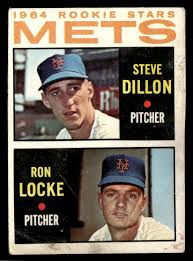
“I came right up from Auburn, New York,” Locke told Zanardi. “I was 18 and 8. I had 250 strikeouts, 60 walks… and I batted .343.” Not bad for a kid who barely weighed 156 pounds and stood 5’10”. “They said, ‘We don’t sign anybody unless they’re six foot,’” he laughed. But fate—and scout Len Zanke, who had an eye for fireballers in short pants—gave him a second chance. Locke signed with the Mets and began what he calls his “first year in baseball” in 1963, pitching for Auburn’s Class A team.
From the start, it was clear Locke wasn’t like the other kids. Bob Sheffing, the Mets’ organizational head at the time, remembered watching Locke warm up before a championship game. “I was popping the ball,” Locke said, “and he said, ‘Wow, you’re not bad. Throw a curveball.’ I threw it, and it just dropped right off the table.” That’s right, folks: a knuckle curve so nasty it could make a hitter reconsider baseball entirely.
Locke wasn’t just a pitcher—he was a competitor with a taste for the dramatic. In semi-pro leagues across New England, he racked up strikeouts like a factory produces bolts. “I struck out 20 in one game in Holyoke, Massachusetts,” he recalled. “The next game… I forgot how many. But we lost 1-0.” Baseball is cruel that way.
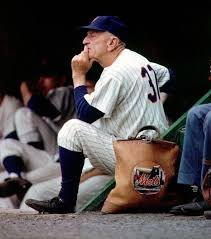
By the end of 1963, the Mets had called him up—not to pitch, but to observe. Casey Stengel’s philosophy: “Sit over there, kid, and watch how men pitch.” Locke said the first time he saw the Polo Grounds, and then Shea Stadium the next year, he thought: “This is it. This is the big leagues.” And yes, he got to meet the legends, like Willie Mays’ dad hanging around under the stands, and Casey himself—“my old man,” Locke called him—hobbling along and occasionally delivering cryptic coaching advice.
1964 was the real test. Locke entered games at Shea Stadium with 56,000 fans staring. “My legs were shaking,” he admitted. “The first batter I faced, Bobby Tolan, bases loaded… I struck him out. That was all it took.” A few relief appearances later, Locke had made his mark, posting a respectable 3.50 ERA despite a Mets team that was, generously speaking, under construction.
There’s just one small historical hiccup in the memory. Tolan didn’t reach the major leagues until 1966, when he debuted with the St.Louis Cardinals, so the dramatic strikeout Locke remembered almost certainly came later most likely during a matchup in the minors when the two crossed paths in 1965.
Memory can play tricks after sixty years, but the essence of Locke’s story remains the same: somewhere along the baseball road, a skinny left-hander with a wicked curveball stared down a future big leaguer with the bases loaded… and walked off the mound smiling
Locke’s actual first appearance in the majors came a little more quietly. Entering the game in relief against the Chicago Cubs at Shea Stadium in front of 8,025 fans, he took the mound in the eighth inning with the Mets trailing 5–0 and immediately went to work against the heart of Chicago’s order. Locke retired Ron Santo on a foul pop to the catcher, got Ernie Banks on a grounder from third to first, then walked Andre Rodgers before inducing a ground ball from Dick Bertell that forced the runner at second to end the inning. Locke returned for the ninth and continued to look comfortable, retiring Billy Cowan on a fly to left and striking out pitcher Dick Ellsworth before allowing a single to Jimmy Stewart. The inning ended moments later when Lou Brock lifted a fly ball to left, giving Locke two scoreless innings as well as retiring three future hall of famers in his first taste of the big leagues.

Life in the Mets bullpen wasn’t all glory. Locke remembers the pranks, especially from Choo-Choo Coleman, the catcher who once set a teammate’s shoelaces on fire mid-flight. “Hawk Taylor bought new alligator shoes,” Locke chuckled. “Choo-Choo lit the laces on fire at 30,000 feet. I thought, ‘This is why I love baseball.’”

Despite talent and determination, Locke’s major league stay was fleeting. The Mets shuffled him in and out of AAA, and by 1965, pitching coach Warren Spahn had his own ideas about how many lefties could stay on the roster. Locke’s career continued mostly in AAA, hopping from team to team—Buffalo, Jacksonville, Tidewater, Memphis—until a freak injury in 1971 finally sidelined him. “I fell in the outfield during sprints,” he said. “Didn’t feel it at first… but I tore my shoulder. That was it.”
Through it all, Locke reflects on the journey with no bitterness, only humor. “I didn’t think I’d make it,” he said. “But I got lucky. I had one year. And what a year it was.” The Mets didn’t just get a lefty; they got a story. A story of small-town grit, semi-pro heroics, knuckle curves, and a little chaos courtesy of Choo-Choo Coleman.
And that’s exactly why we open the door to The Mets Interview Vault.
Not every story in Mets history belongs only to the superstars. Sometimes it belongs to a lanky left-hander from Auburn who rode a curveball, a dream, and a little bit of baseball luck all the way to Shea Stadium. Ron Locke may not have spent a decade in Queens, but like so many players who passed through the early years of the franchise, he left behind something just as valuable — a story worth remembering.
Thanks to fellow SABR member Peter Zanardi, whose 2001 interview preserved these memories, Locke’s voice still echoes across the decades. And that’s the mission of this series: to dust off the recordings, rediscover the voices, and bring back the stories that might otherwise fade away with time.
And that’s where you come in.
What do you remember about the early Mets teams of the 1960s? Do you remember hearing stories about players like Ron Locke, the colorful clubhouse characters, or the unpredictable charm of those early Shea Stadium days? Mets history isn’t just built on box scores — it lives in the memories of the fans who watched it unfold.
Share your thoughts in the comments below and keep the conversation going. And if you want to talk Mets baseball with fellow fans every day, be sure to join our ever-growing KinersKorner Facebook group, where the discussion continues long after the final out.
Because when it comes to Mets history, there are always more voices waiting to be heard… and more treasures waiting to be unlocked from the vault.
Stay tuned: The Mets Interview Vault is just getting started. Next time, we’ll pull another lost tape from the archives and give a voice to someone the Mets fans of today might have forgotten, but who deserves to be remembered.
Comments