
1953: When Little League Was Still Little


There are baseball videos, and then there are baseball time machines.
This is a baseball time machine.
And there may not be a better time to climb aboard.
As Little Leaguers from around the country are currently battling their way through the regional tournaments, all dreaming of making it to Williamsport for the Little League World Series, I found myself taking a very different trip back in time. A copy of an 18-minute film made in 1953 was given to me by my neighbor and fellow SABR member, Michael Jablon. And here's the really cool part: Michael wasn't just passing along some old piece of baseball history. He was actually one of the Roslyn Little Leaguers featured in the film. Narrated by the legendary Red Barber, the film offers an extraordinary window into what Little League baseball looked like more than 70 years ago.
Seventy-three years ago.
And the timing couldn't be better.
Because before we watch it, consider this:
1939: Little League Baseball begins in Williamsport, Pennsylvania.
1953: This film is made in Roslyn, New York, just 14 years after Little League's first game.

2026: Another generation of kids is battling its way toward Williamsport, chasing essentially the same dream.
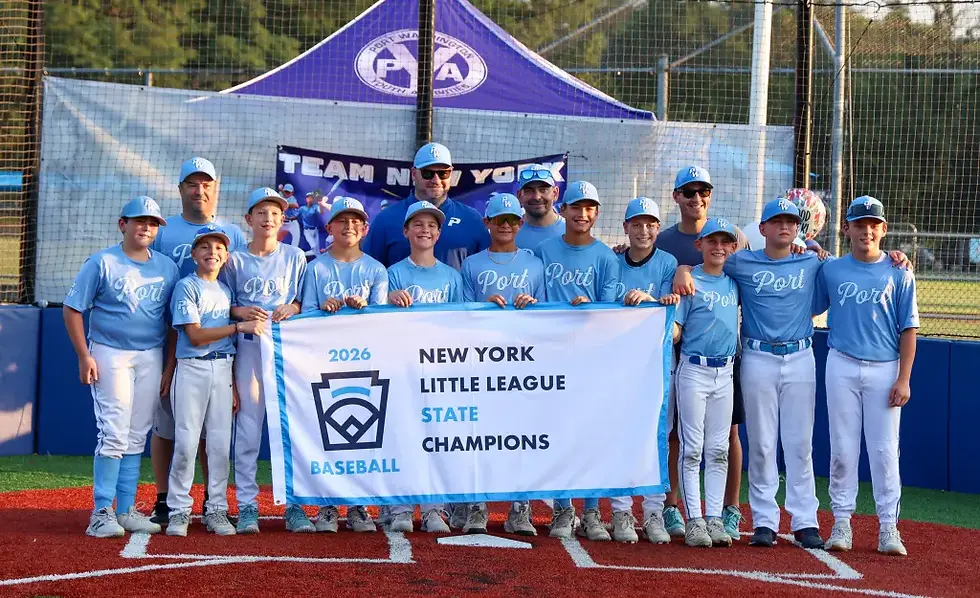
That's what makes this film so fascinating.
It isn't a look at some ancient baseball tradition that had been around forever.
In 1953, Little League was still in its first generation.
It was a relatively young idea that was spreading rapidly across America.
And someone had the foresight to put a camera on it.
The setting is Roslyn, New York.
That's right.
Long Island.
The same Roslyn that many of us know today.
Only this is Roslyn in 1953.
Dwight Eisenhower is in the White House. The Brooklyn Dodgers are still in Brooklyn. The New York Giants are still playing at the Polo Grounds. Television is still in its infancy.
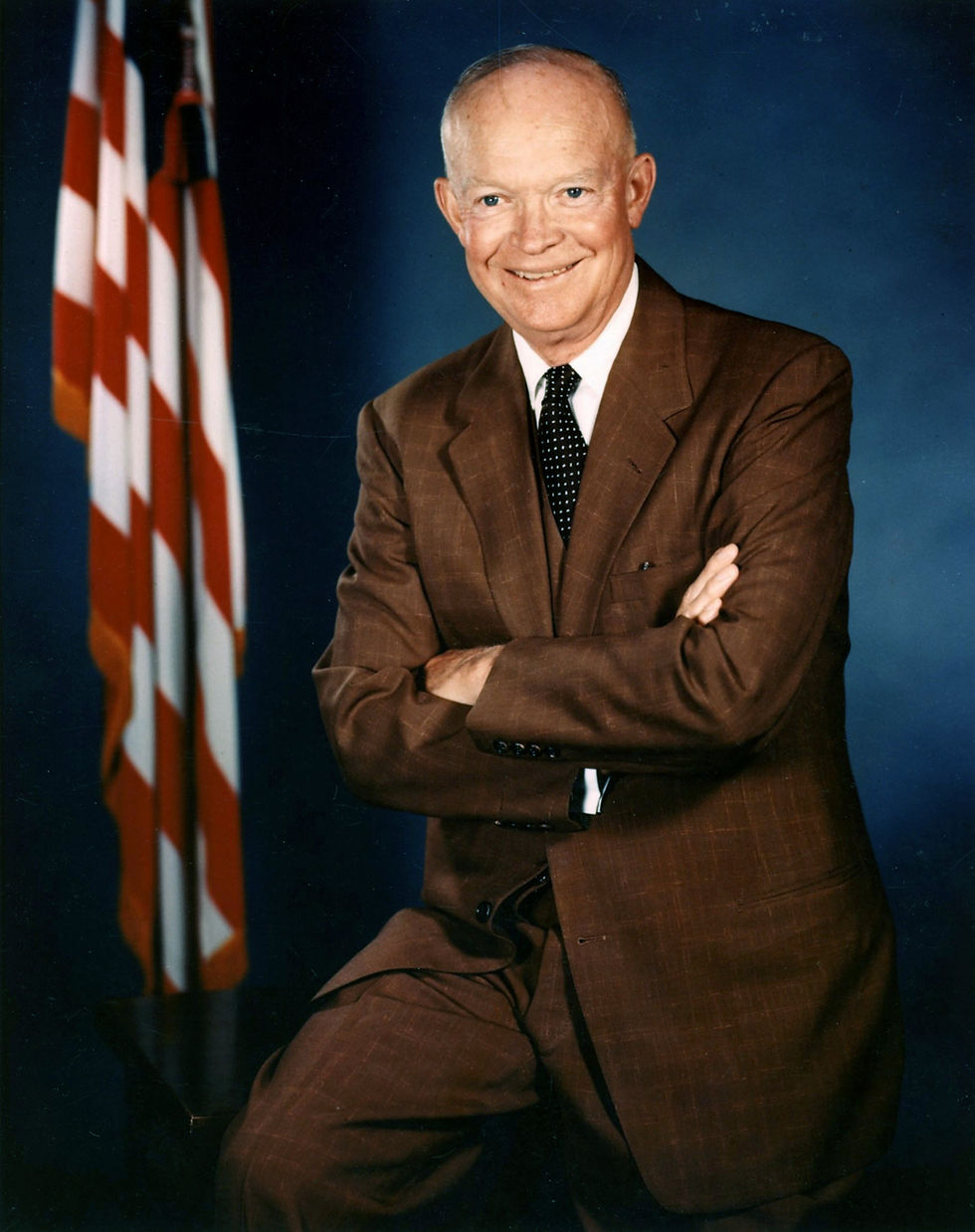
And in Roslyn, boys between the ages of 8 and 12 are discovering something that will eventually become one of the most recognizable institutions in American sports.
Little League Baseball.
The film opens by describing baseball as the "national pastime" and then explaining this growing phenomenon to its audience.
Little League.
For boys 8 to 12.
Today, that sounds almost ridiculous.
Of course everybody knows what Little League is.
But remember, this is 1953.
Little League had only been around for 14 years.
The first Little League game had been played in Williamsport on June 6, 1939.
Fourteen years later, more than 3,000 communities were participating.
That tells you something about how quickly the idea caught on.
And Roslyn was one of them.
The first thing you notice is that Little League didn't just happen.
It took a community.
There was a board of directors.
Managers had to be selected.

Umpires had to be trained.
Volunteer scorekeepers were recruited.
Fields had to be prepared.
And then came the day every kid was waiting for.
Tryouts.
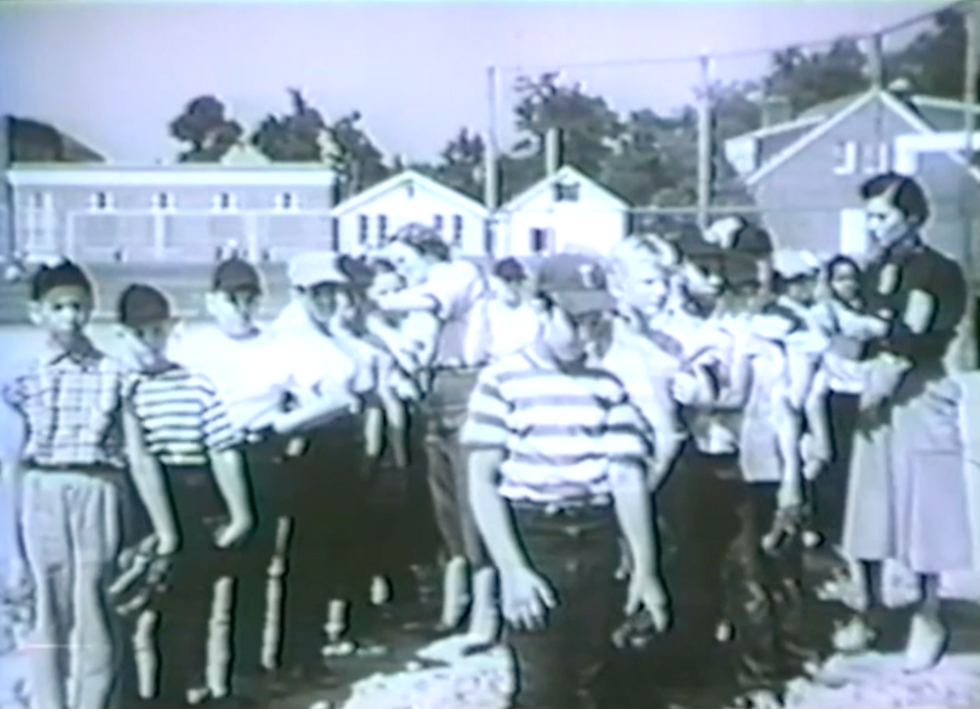
The boys are evaluated on hitting, fielding, throwing and running.
They are divided by age.
Eight.
Nine.
Ten.
Eleven.
Twelve.
And then they're graded.
The goal isn't simply to identify the best players.
It's to create teams that are relatively equal.
And that's where this film starts giving us a glimpse of something that feels very different from youth baseball today.
If a boy wasn't good enough to make one of the major league teams, he wasn't going home.
He was going to the farm system.
If he wasn't ready at eight, perhaps he'd be ready at nine.
If he wasn't ready at nine, perhaps he'd be ready at ten.
No boy was left out.
That line from the film may be the one that sticks with you.
No boy was left out.
There were six teams for the eight-year-olds.
Ten minor league teams for the boys who weren't quite ready.
There was instruction.
There were opportunities to move up.
There was always another chance.
And then there were the fathers.
Oh, the fathers.
They weren't sitting in the parking lot waiting for practice to end.
They were helping build the fields.

The local schools supplied playing space, but the fathers took responsibility for getting those fields ready.
The narrator admits they might not have looked quite like Yankee Stadium.
I suspect that's an understatement.
But to the boys playing there, it didn't matter.
This was Yankee Stadium.
This was Ebbets Field.
This was the Polo Grounds.
This was the biggest baseball field in the world.
Then comes another wonderful piece of the film.
The equipment.
The league provided the uniforms, bats, balls and catcher's equipment.

It cost the kids nothing.
All they had to provide was their glove and "a bit of hustle."
Imagine that.
Your baseball uniform was provided.
Your bat was provided.
Your balls were provided.
Your catcher's equipment was provided.
And the community paid for it.
Local merchants even contributed a portion of their receipts on special days.

This wasn't a business.
It was a community.
And then, about halfway through the film, a familiar face appears.
Whitey Ford.

The Yankee great, who lived nearby on Long Island, gathers the Roslyn pitchers together and offers them some pointers.
There is something incredibly cool about watching Whitey Ford teaching a bunch of Little Leaguers how to pitch.
The boys are probably looking at him the way today's Little Leaguers look at the biggest stars they see on television.
Except this is 1953.
And Whitey Ford is standing right there.
The narrator makes a wonderful observation: Little League isn't intended to be an incubator for future major league stars.
But perhaps, he suggests, one of these boys might someday wear Whitey Ford's Yankee number.
That's the eternal beauty of baseball.
Every Little Leaguer thinks he might be the next big thing.
Most aren't.
But for six innings, it doesn't matter.
They believe.
And then we get to see the eight-year-olds.
And this might be my favorite part of the entire film.
The skills aren't necessarily there.
The coordination is questionable.
The baseball knowledge is probably somewhere between "limited" and "where did the ball go?"
But the spirit?
Oh, the spirit is there.
They are playing baseball.
And they are having the time of their lives.
You can see it on their faces.
You can see it in the way they run.
You can see it when they put on those uniforms.
And that's when the film becomes something more than an old baseball movie.
It becomes a window into childhood.
There are no travel teams.
No radar guns.
No recruiting services.
No social-media highlight reels.
No college scholarship discussions.
No parents wondering whether their 10-year-old needs to be playing shortstop every inning so a college coach might notice him eight years later.
There is a kid.
There is a glove.
There is a baseball.
And there is a dream.
That's it.
Then the games begin.
The baselines are 60 feet.
The pitching distance is 44 feet.
The games are six innings.
Boys can't steal until the ball passes the batter.
Curveballs aren't encouraged.
Protective helmets are mandatory.
Rubber spikes instead of metal.
And the baseball itself?
Pretty much the same baseball.
Which may explain why the game looks so familiar.
The kids hustle.
They run everywhere.
They make spectacular plays.
They make spectacular mistakes.
There is a rundown that goes completely haywire.
The narrator politely suggests that the boys' enthusiasm occasionally gets in the way of their judgment.
That's probably the nicest description of a Little League rundown ever recorded.
But that's the point.
They aren't supposed to be perfect.
They're kids.
And they're playing baseball.
Eventually, of course, the dream gets bigger.
Williamsport.
And that brings us right back to the present.
Little League was born in Williamsport in 1939.
Fourteen years later, this film captures what the game looked like as it spread into communities like Roslyn.
And now, in 2026, the regional tournaments are once again being played, with another generation of Little Leaguers trying to earn a trip to that same place where the whole thing began.
Think about that circle.
Williamsport, 1939.
The birthplace.
Roslyn, 1953.
A community discovering what Little League could become.
Williamsport, 2026.
A new generation chasing the same dream.
The uniforms are different.
The television coverage is different.
The fields are different.
The audiences are much bigger.
The game has become an international phenomenon.
But the dream is remarkably similar.
A kid wants to win.
A kid wants to represent his hometown.
A kid wants to make his parents proud.
A kid wants to play in Williamsport.
And in 1953, that dream was already enormous.
The surviving teams traveled to Williamsport.
They met kids from other states and Canada.
They ate together.
They went sightseeing.
They had picnics.
They played baseball.
The film talks about how the experience broadened the boys socially and emotionally.
That may sound like 1953 narration, but the idea remains as relevant as ever.
Baseball brought these kids together.
Then comes the championship game.
New York versus Alabama.
One of the best things about watching it today is realizing how seriously these kids are taking it.
There are no professional contracts at stake.
No agents.
No fantasy baseball consequences.
Just baseball.
Alabama scores a run.
New York can't answer.
And suddenly, the entire championship comes down to one final out.
A swinging third strike.
Game over.
Alabama wins 1-0.
Six innings.
One run.
A championship.
And then comes the celebration.
The trophies.
The smiles.
The kids standing proudly together.
They are champions of America.

And for that moment, there are no happier kids anywhere.
The film closes with a salute not only to the Alabama champions but to the thousands of boys playing Little League baseball all across the country.
And that may be the perfect place to end this trip back to 1953.
Because watching this film in 2026, it's easy to concentrate on everything that has changed.
The equipment.
The uniforms.
The fields.
The television coverage.
The size of youth baseball.
The entire culture surrounding the game.
But watch the kids.
Really watch them.
The kid who wants the ball hasn't changed.
The kid who wants to hit a home run hasn't changed.
The kid who wants his father to be proud of him hasn't changed.
The kid who thinks his next game is the biggest game anyone has ever played hasn't changed.
And the kid who dreams about Williamsport?
He certainly hasn't changed.
That's why finding this film right in the middle of Little League World Series season feels almost perfect.
Little League began in 1939 with a handful of boys playing in Williamsport.
Fourteen years later, a camera captured the game taking root in Roslyn.
Seventy-three years after that, another generation is trying to make it back to Williamsport.
The baseball keeps moving forward.
The kids keep changing.
But somehow, the game remains exactly the same.
That's the magic.
In 1953, these kids didn't know they were making history.
They were just playing Little League.
And thankfully, somebody had a camera running.
Watch the entire 18-minute film below.
Then tell me you don't feel like you've just climbed into a time machine.
Because sometimes the best way to understand where baseball is today...
is to go back and watch where it was yesterday.


Comments