
50 Years Later, The Bad News Bear Still Knows More About Little League Than Most of Us Do


SABR Long Island Movie Night takes a trip back to 1976 — and four members of the original cast help explain why the movie still hits home
There are movies you watch.
There are movies you love.
And then there are movies that, no matter how many times you've seen them, can still suck you in when you stumble across them while channel surfing.
For me, The Bad News Bears is one of those movies.
Along with Rocky, Slap Shot and Field of Dreams, it occupies a very special place on my personal sports-movie Mount Rushmore. And while I have probably seen The Bad News Bears more times than I can count, watching it again 50 years after its original release was different.
I first saw the movie shortly before turning 16. Now, after spending decades around Little League and travel baseball — including coaching — I watched it through a very different set of eyes.
And you know what?
It still holds up.
That was the conclusion of our latest Long Island SABR Movie Night, where we screened the original The Bad News Bears and then had the extraordinary opportunity to talk with four members of the original cast: David Pollock, who played Rudi Stein; Brett Marx, who played Jimmy Feldman; Dave Stambaugh, who played Toby Whitewood; and Brandon Cruz, who played Yankee pitcher Joey Turner.
It turned into much more than a nostalgia trip.
It became a conversation about baseball, childhood, Hollywood, parents, pressure — and a movie that may have understood youth sports better in 1976 than many of us do in 2026.
A Movie That Was Never Really Just About Baseball
Released in 1976 and directed by Michael Ritchie from a screenplay by Bill Lancaster, The Bad News Bears looks on the surface like a movie about a terrible Little League team.
It isn't.
At least, that's not what makes it memorable.
The Bears are terrible, but the kids aren't really the problem. The adults are.
Walter Matthau's Morris Buttermaker is a washed-up former minor-league pitcher who gets talked into managing a team of misfits. Tatum O'Neal's Amanda Whurlitzer is the talented young pitcher Buttermaker recruits when he realizes his team actually needs someone who can get people out. Jackie Earle Haley's Kelly Leak becomes the superstar addition.
But surrounding all of that is a fascinating collection of adults who have managed to turn Little League into something far more important than it should ever be.
That is where the movie remains almost uncomfortable in its accuracy.
Vic Morrow's character, Joey Turner's father, is not merely a competitive baseball dad. He is the embodiment of a parent who has wrapped his own identity around his child's performance.

And that theme becomes even more powerful when you have spent years around youth baseball.
In 1976, the movie was holding up a mirror.
Fifty years later, some of us may not like what we see in that mirror.
The Things That Could Never Be Made Today
There is no getting around it: The Bad News Bears could never be made exactly the same way today.
Tanner Boyle's bigotry, Kelly Leak smoking cigarettes, children drinking "beer" in the dugout, the language and some of the adult behavior would all create an entirely different movie if a studio tried to make it in 2026.
And yet, remarkably, those things don't destroy the movie.
Somehow they become part of the strange, wonderful world of 1970s filmmaking.
The language often becomes comic relief. Tanner is obnoxious and offensive, but underneath all of it is still a kid. The smoking and beer are outrageous by today's standards, but they are also part of what makes the movie feel like a time capsule.

And then there are the close-ups.
Some of them go on longer than they probably would today. Our attention spans have mutated since the 1970s. But those long shots also give us something modern movies sometimes don't: time to watch an actor's face.
And nobody benefited from that more than Walter Matthau.

His facial expressions alone could tell half the story.
One of the most powerful moments comes when Buttermaker lashes out at Amanda, essentially admitting that he has been using her because of her baseball talent. It is an ugly scene, and it is supposed to be.
But watch Matthau after Amanda walks away.
The anger disappears.
What remains is guilt.
His tirade wasn't really about Amanda.
It was about Buttermaker.
The same thing happens elsewhere in the movie. The film keeps showing us adults who are supposed to know better behaving worse than the kids.
And that is the point.
The Movie's Most Important Character Might Be the Parent
One of the reasons the movie connected so strongly with our SABR audience is that many of us have lived some version of this story.
Maybe not with beer in the dugout.
Maybe not with Tanner Boyle's vocabulary.
But with parents who become so emotionally invested in their children's athletic success that they forget whose game it actually is.
During our Zoom discussion, Brandon Cruz, who played Joey Turner, explained that the intensity of Vic Morrow's character was not foreign to him at all.

Cruz didn't actually play Little League himself, but his brothers did, and he watched plenty of games.
"I saw a lot of really mad behavior," he recalled.
That familiarity helped him understand Morrow's character.
Cruz said Vic Morrow "personified" that kind of father extremely well and, importantly, didn't play him as some cartoon villain.
"It was not over the top," Cruz said. "It was very real."
That may be one of the most important observations about the movie.
Joey's father isn't scary because he is unrealistic.
He's scary because he is believable.
And Cruz had another remarkable story about one of the movie's most uncomfortable moments. When Vic Morrow's character slaps Joey on the mound, Cruz revealed that Morrow actually slapped him.
"When he slapped me, he actually slapped me," Cruz said.
Cruz didn't believe it was intentional, but the reaction we see on screen was certainly helped by the fact that the moment was very real.
Looking back, Cruz believes the scene ultimately benefited the movie because it demonstrated exactly what the filmmakers were trying to say.
"This is what happens when you get a bit too involved," he explained.
In other words:
It's just a game.
"It's a Movie With Kids, But It's a Very Adult Movie"
That may have been the best description of The Bad News Bears to come out of our discussion.
Dave Stambaugh, who played Toby Whitewood, made that observation while talking about how his perception of the film changed as he got older.
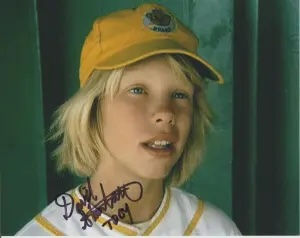
"We realized that this isn't a kid's movie," Stambaugh said. "It's a movie with kids, but it's a very adult movie."
Exactly.
When we were young, we saw baseball.
As adults, we see ourselves.
Stambaugh explained that friends who knew he was in the movie would sometimes tell him they were going to let their kids watch it.
His response depended on how they were watching it.
If they were watching the television version, fine.
If they were watching the unedited movie?
"It's a very different movie," he said.
That distinction is important because television versions of The Bad News Bears often softened the movie considerably. The theatrical version is much rougher, darker and more adult than its reputation as a "kids' baseball movie" might suggest.
And perhaps that is why it has endured.
It never talks down to the audience.
The Bears Were Cast as Individuals — and That's Why They Worked
One of the great strengths of the original movie is its ensemble.
There is no generic "Little League team."
There is Tanner.
Engelberg.
Ahmad.
Rudi.
Jimmy.
Toby.
Kelly.
Lupus.
Amanda.
Each kid has a distinct personality, and somehow the characters fit together perfectly.
Brett Marx explained that the kids didn't sit around and decide what personality traits each character would have.

"I don't think we spoke about what our traits were," he said.
Instead, Marx believes the casting process itself created the chemistry.
They were cast in a way that allowed their personalities to fit together as a group.
Marx described Jimmy as one of the quieter Bears and joked that he may have contributed "the sweet part" of the team.
He also admitted that he had played some baseball and probably thought he was better than he really was.
That turned into one of the funnier revelations of the night: some of the kids were actually pretty good baseball players.
They just had to act like they weren't.
Pollock, for example, had Little League experience.
Stambaugh did too.
And Marx admitted that some of what we see on the screen was simply real.
"I didn't really have proper coaching," Marx said when discussing his hitting mechanics.
So when he looked bad in some of those scenes?
"If I looked like I wasn't doing very well in some scenes, it was true. It was real."
That may explain part of the movie's authenticity.
These weren't adults pretending to be children playing Little League.
They were kids playing kids.
Rudi Stein Was Almost Lefty Stein
David Pollock's Rudi Stein is one of those supporting characters who becomes unforgettable almost immediately.

The enormous glasses.
The nervous demeanor.
The inability to hit.
And, of course, Buttermaker's realization that Rudi's most useful skill may be getting hit by the baseball.
Pollock recalled that when he first read the script, he was excited simply to be part of the production.
Then came the description of the role.
They were looking for "a Jewish-looking, zit-faced kid that couldn't hit."
"I was typecast," Pollock joked.
But Rudi almost wasn't Rudi.
Pollock revealed that his character was originally named Lefty Stein.
There was one small problem.
Pollock wasn't left-handed.
And he wasn't a particularly good pitcher with his right hand either.
During the roundtable script reading, Pollock pointed that out to director Michael Ritchie.
Then Walter Matthau spoke up.
"Yeah, we'll call you Rudi," Pollock recalled Matthau saying.
And Rudi Stein was born.
It's a small story, but it is exactly the kind of detail that makes a cast reunion like this so much fun. Fifty years later, a character whose name seems as though it was always meant to be Rudi actually came to life because Walter Matthau changed it.
The Real-Life Tanner Boyle Was Nothing Like Tanner Boyle
One of the most enjoyable parts of the discussion involved asking the cast which of the Bears was most different from his on-screen personality.
There was one overwhelming answer:
Chris Barnes, who played Tanner Boyle.
Brett Marx described Barnes as "the sweetest" guy and said he was particularly kind and protective toward Quinn Smith, who played Lupus.
That was especially striking because Tanner Boyle is, well, Tanner Boyle.
Marx said Barnes was so different from the character that the two personalities were almost impossible to reconcile.
Stambaugh agreed.
"I think he's probably the most diametrically opposed to the character that he played," he said.
Stambaugh added that he felt he was fairly similar to Toby, explaining that he grew up watching baseball and was a Mets fan.
"I grew up watching Kiners Korner," he said.
Now that's a quote I can get behind.
The cast also had praise for Alfred W. Lutter, who played Ogilvie.

Marx remembered Lutter as extremely smart — just like the character he portrayed — although he said the actor could also be a bit of a menace.
The performances work because the kids don't feel like interchangeable movie characters.
They feel like a real group of kids.
Hollywood Parents and Little League Parents
One of the more fascinating discussions during the Zoom was the comparison between Little League parents and Hollywood parents.
After all, both environments can involve parents trying to live vicariously through their children.
Stambaugh immediately saw the connection.
"Perhaps one of the correlations is trying to live out your dreams through your kids," he said.
Whether that dream is acting, athletics or something else, the temptation is the same.
Pollock said he didn't experience that pressure personally. His parents had their own careers, and, according to Pollock, they barely even visited the set.
But he said his agent, who specialized in child actors, eventually became frustrated with the "helicopter parents" who were living vicariously through their children.
Brett Marx also pointed out how much the child-actor environment changed over the years, particularly the role of teachers and social workers on movie sets.
He recalled having strong adults around the cast who had a say in their safety, how they were treated and how they were expected to behave professionally.
That structure, he suggested, helped keep the Bears grounded.
And apparently it worked.
Despite starring in a hit movie as children, none of the cast members developed the kind of inflated egos that have become part of Hollywood folklore.
Marx put it simply:
"We were kids in a movie."
And, he added, "I think we were all pretty grounded."
Tatum O'Neal: The 12-Year-Old Academy Award Winner
Then there was Tatum O'Neal.

Imagine being 11 or 12 years old, showing up to make a baseball movie and finding out that one of the stars is already an Academy Award winner.
Brandon Cruz remembered that O'Neal carried a certain amount of "weight and power" on the set because of her success in Paper Moon.
But that didn't mean she acted like a movie star around the other kids.
Cruz described her as a normal 12-year-old girl — sometimes sweet, sometimes cute and, well, occasionally "a little bitchy."
In other words, a 12-year-old.
He also admitted that "everybody had a crush on her."
Marx remembered O'Neal being great to work with and noted that she had Polly Platt with her on the set. Platt, who had worked with O'Neal on Paper Moon, provided another grounding presence for the young actress.
Stambaugh's memory was similar.
He said O'Neal and Matthau were the big stars, but "both of them couldn't have been nicer and sweeter to everybody."
That sense of being a team came up repeatedly during the discussion.
And that's probably another reason the movie works.
The Bears actually look like a team.
"We Were Made to Look a Lot Better Than We Were"
Brandon Cruz offered another terrific behind-the-scenes look when the subject turned to baseball ability.
He was not a baseball player.
"Very little," he said when asked about his baseball skills.
"I'm a surfer."
He also skated.
Cruz admitted that he was "definitely not a jock" and that he had very little baseball experience coming into the movie.
Several of the kids received coaching from baseball instructors, including a pitching coach and hitting coach from USC.
And then came the magic of filmmaking.
"We were made to look a lot better than we were," Cruz said.
Some of the kids were genuinely talented, but others had their baseball skills enhanced by coaching, editing and the movie-making process.
That was particularly true for Cruz.
He was playing Joey Turner, after all — the best pitcher on the Yankees — despite having very little actual baseball background.
And somehow, it worked.
Even the Product Placement Is Part of the Fun
Watching the movie again, one thing jumped out at me that I hadn't really appreciated before.
This movie has a LOT of products in it.
Beer.
Pizza Hut.
Denny's.
Kentucky Fried Chicken.
Harley-Davidson.
Candy bars.
Engelberg seems to have access to half the candy aisle in America, while Buttermaker appears capable of working his way through an entire beer distributor.
It almost feels like an early example of modern product placement.
Except Marx doesn't think it was that calculated.
"I don't think product placement departments existed when we made that movie," he explained.
His theory was much simpler: the production wanted to shoot at a Pizza Hut, the restaurant agreed, and the company signed a location release.

In other words, Hollywood in 1976 may have accidentally invented something that would become a billion-dollar business.
Fifty Years Later, the Field Is Still There
The cast also talked about the location where much of the movie was filmed.
The field at Mason Park in Chatsworth, California, is still there, although Pollock explained that the actual movie remnants are gone.

"It's a totally different ball field," he said. "But the ball field's there."
The buildings are gone, but the place remains.
And that seems fitting.
Because so much of The Bad News Bears is about things that disappear.
The season ends.
The kids grow up.
Teams break apart.
Actors move on.
And eventually, the people who once recognized you everywhere don't recognize you anymore.
Stambaugh offered a particularly poignant observation about that.
"When you're 10, 11, 12 years old," he said, "you've got that success while the movie's going on."
But five years later, you look completely different.
Eventually, "you just don't look like the person you were in the movie anymore."
The movie remains.
The kids grow up.
So, Does It Still Hold Up?
Absolutely.
Maybe even more than it did when I was 15.
There are things that don't age particularly well. Some of the close-ups feel long. Some of the language is jarring. Tanner Boyle's bigotry is indefensible. The smoking and drinking by children are things that would make today's audiences shake their heads.
But the movie isn't asking us to approve of those things.
It is asking us to look at them.
And then it asks us to look at ourselves.
That's why the movie still works.
I've spent enough years around Little League and travel baseball to know that the world depicted in The Bad News Bears wasn't simply a Hollywood exaggeration.
If anything, in some respects, youth baseball has become even more intense.
Parents spend enormous amounts of money.
Travel teams have become businesses.
Kids have private coaches.
Parents argue with umpires.
Parents argue with coaches.
Parents argue with other parents.
Sometimes parents lose sight of the fact that the kid standing on the mound is still a kid.
That's what makes the movie feel so remarkably modern.
It isn't really about 1976.
It's about adults.
It's about expectations.
It's about competition.
It's about parents who see their children's success as a reflection of their own.
And it is about a coach who finally realizes that winning isn't necessarily the most important thing he can teach his players.
The genius of Michael Ritchie and Bill Lancaster's movie is that they never turn that message into a sermon.
They hide it inside a very funny, very crude, very occasionally outrageous baseball movie.
And then, when you least expect it, they make you feel something.
The Bottom Line
Our third Long Island SABR Movie Night turned out to be exactly what we hoped these evenings would be: a chance to watch a great baseball movie, talk about it with baseball people and then hear directly from the people who made it.
Having four members of the original cast — David Pollock, Brett Marx, Dave Stambaugh and Brandon Cruz — join us afterward took the evening to another level.
The movie is 50 years old.
The kids who made it are now adults with families, careers and five decades of perspective.
And that perspective made the movie even better.
Perhaps Dave Stambaugh summed it up best.
The Bad News Bears isn't a kids' movie.
"It's a movie with kids, but it's a very adult movie."
Fifty years later, that's exactly what it is.
And after spending a couple of hours watching it again, I came away with the same feeling I get whenever I stumble across it while channel surfing:
I'm going to watch the rest.
Again.
Here is the full Q/A with The Cast of The Bad News Bears:


Comments