
Day 4 in Port St. Lucie: Mets Star Players, Selfless Work, and the Quiet Poetry of Spring Training


By the time the Florida humidity announced itself before breakfast, Clover Park was already humming. Clover Park was already humming. Spring Training coverage Day 4 began early — locker room doors open at 8 a.m. — and if you’ve been around this game long enough you know that’s when the real stories tend to wander in, usually wearing spikes and carrying a cup of bad clubhouse coffee.
I made the rounds, hopping from locker to locker — speed dating for reporters, where the goal is soundbites, not phone numbers.— catching up with Christian Scott, Bo Bichette and Jorge Polanco before heading out to the fields where outfielders shagged, infielders vacuumed up grounders, and pitchers unleashed BP sessions that popped mitts like Fourth of July fireworks. The standard timeless Spring Training fare, which is to say, the endless drills and tosses yet in that repetition lies a strange beauty, a chance to witness the team being quietly built one play at a time.

Scott, working his way back into the rhythm of competing for a spot, spoke with the grounded focus of someone who understands that your résumé doesn’t throw strikes. “I’ve just got to control the day-to-day… show my stuff. Continue just to build innings, build pitches. That’s just kind of what I’m focusing on right now.” He talked about analytics the way modern pitchers must respectfully, but not reverently. “We kind of use that to see how my injury is moving… but I wouldn’t say analytics play a huge part in how my body is feeling overall.” And in a line that captured the tone of the clubhouse, he added, “The staff did an unbelievable job with me last year… so I’m just really grateful for that.”
That word grateful popped up more than once today. Not entitlement. Not spotlight. Grateful.

Bo Bichette is learning a new position on the diamond and embracing the humility that comes with it. Watching him work, you see flashes of shortstop instincts showing through, but he’s leaning into the challenge. “I’m trying to figure out how I play the position… but also doing it kind of the correct way.” And if you want the theme of this camp summarized in one sentence, he delivered it: “I’m just trying to do everything I can to help the team win.”
He didn’t make it sound heroic. He made it sound obvious.
Polanco echoed that sentiment while grinding through reps at first base, a position that looks deceptively simple until you actually try it. “I’m trying to work as hard as I can to become more comfortable… things are going really good right now.” He admitted the learning curve — “Throws… moving your feet and catching the pickoff… it’s kind of difficult” — but quickly pivoted to the bigger picture. “When you see a guy committed to make the transition… and do it for the team, it’s a great thing. It gets us together and know that we all have a goal.”
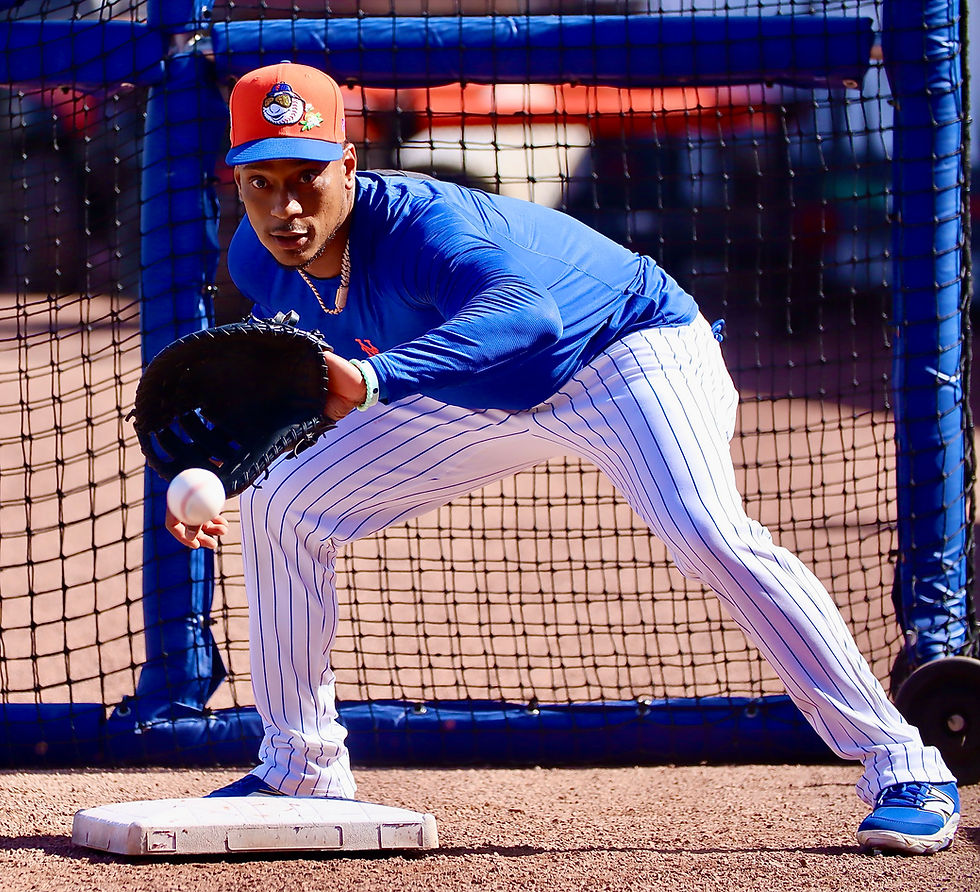
He also dropped the kind of wisdom that should be stitched onto every minor league equipment bag: “If you are more versatile, it’s better… the more positions you can play, the more opportunity you get and it’s really good for the team.”
At 11 a.m., notebooks snapped shut and cameras swung toward something larger than batting practice — the groundbreaking ceremony for the Mets’ new 55,000-square-foot Player Development Complex. Designed to integrate training, recovery, and daily operations into one environment, the facility promises a 7,000-square-foot weight room with cardio mezzanine, expansive locker space, hydrotherapy pools, dining areas — the kind of infrastructure that turns potential into production. David Stearns praised ownership for investing in resources to maximize talent and invited everyone back for the ribbon cutting next year.

You could almost hear the future echoing through the ceremonial shovels.
Then it was back to baseball. Luis Garcia and Tobias Meyers showed strength during live BP, validating what Carlos Mendoza later described as encouraging progress, noting Garcia’s “high 90s” and ability to attack hitters and confirming “everybody’s in a good place” physically. I asked Mendy about Tobias, noting that earlier he mentioned the goal was to stretch him out as a starter, but whether he could see him more in the Max Kranick or Jose Butto role as a long guy out of the bullpen. Mendy was candid: “You’re going to need guys like him, right? Like we said at the beginning of camp, we’re going to build him up as a starter. Then hopefully, you know, everybody’s healthy… there’s a long ways to go. And if we decide to put him in the bullpen, he’s definitely going to be a guy that is going to be a multiple-inning guy out of the pen.”
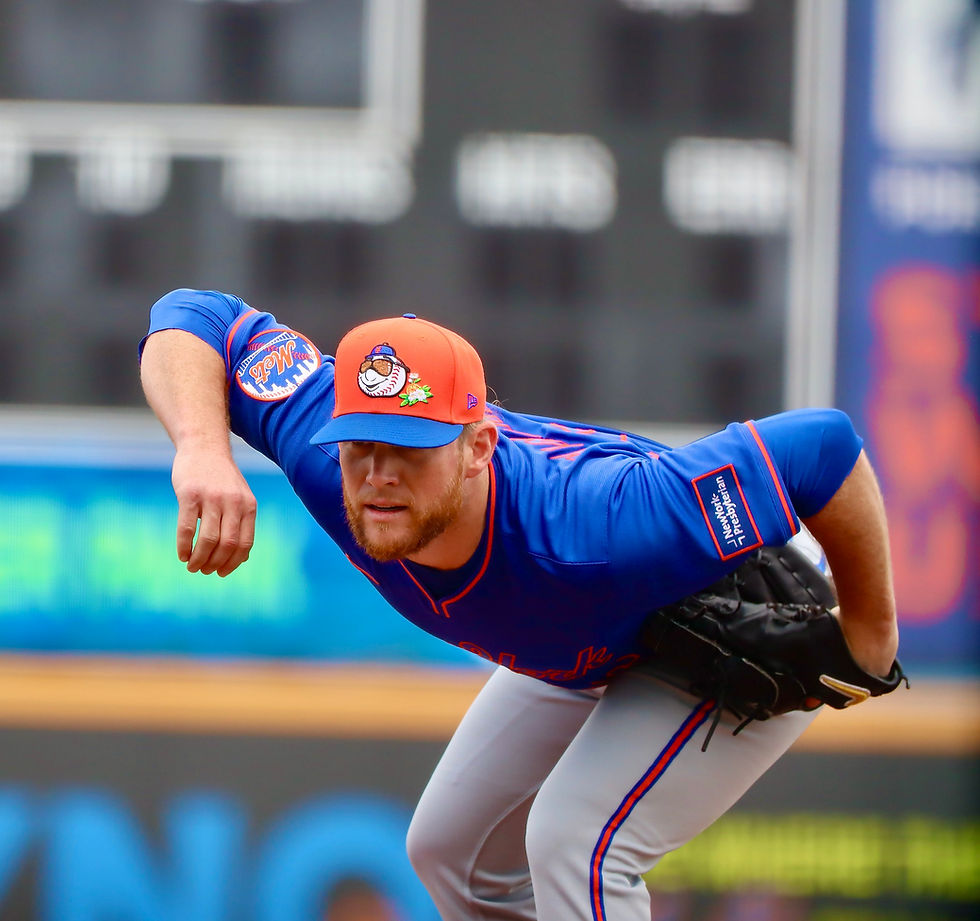
Craig Kimbrel took the mound with that unmistakable presence — part Hall of Fame résumé, part rookie enthusiasm — and Mendoza summed him up perfectly: “The way he carries himself… he’s out there like a rookie… how open he is to share experiences.” Kimbrel kept hitters guessing, though Juan Soto reminded everyone that even elite relievers occasionally donate souvenirs to the bleachers.
Back inside, Marcus Semien reflected on what this collection of position-shifting veterans signals to younger players trying to carve out their place. “It’s always going to be a team effort. We need as much depth as we can possibly have.” He spoke about blending lessons from previous organizations and cultivating a shared identity. “You want to bring anything positive from your former teams in here, if it can benefit the group.”
His take on camp culture felt telling: “I think it’s a great working environment… I’ve been extremely happy with the coaching staff and the hard work put in so that we can just go out and do more.”

And then there was Mark Vientos — “Swaggy V” to those keeping score on personality — juggling reps at first and absorbing the example set by veterans around him. “You got a bunch of shortstops playing everywhere in the infield… that just puts the team in a good position.” The clubhouse vibe? “Everybody’s cool… everybody wants to have fun and play baseball.” He described the daily grind being softened by competition and camaraderie including a ground-ball game of horse he proudly claimed victory in and spoke with genuine excitement about the upcoming World Baseball Classic. “It’s surreal… one of the best feelings you’ll get.”
The day wrapped not with radar guns or batting cages but with perspective — a clinic involving Special Olympics Florida athletes, the kind of interaction that reminds you why this game still matters beyond box scores and spin rates.
Four days into camp, the pattern is emerging. Star players are learning unfamiliar angles, swallowing ego, chasing versatility. Veterans are teaching without lecturing. Prospects are absorbing without forcing. Technology hums, facilities rise, arms strengthen — but beneath it all runs something harder to quantify.
Pride being set aside. Roles being reshaped. A clubhouse quietly choosing collective success over individual comfort.
You can measure exit velocity. You can measure sprint speed. You can even measure the square footage of a future complex.
But you can’t measure that.
And here in Port St. Lucie today — from the 8 a.m. locker room murmur to the last smiles on the practice fields — you could feel it.
For a deeper dive into the clubhouse, including full locker room interviews with Christian Scott, Bo Bichette, Jorge Polanco, Marcus Semien, and Mark Vientos, click here to watch exclusive conversations where the players share their thoughts on new positions, team culture, and their journey toward the 2026 season.


Comments