
Diamond Destinations: Louisville — A Minor League Stop with Major League Memories


Get ready to continue the journey as KinersKorner.com’s Diamond Destinations series heads to a place that may not have a Major League team, but offers everything a baseball fan could want — and then some. Louisville may be home to Triple-A baseball, but after a few days here, you’ll realize this city punches well above its weight. Rich in baseball history, bourbon culture, iconic landmarks, and just across the river from neighboring Jeffersonville, Indiana, Louisville delivers the kind of baseball road trip that feels like a hidden gem waiting to be discovered.
Traveling from New York is simple, with direct flights available from John F. Kennedy International Airport, LaGuardia Airport, and Newark Liberty International Airport. Fans from Chicago, Atlanta, Dallas, and Charlotte can also fly direct. In under three hours from New York, you can trade the traffic of the BQE for bourbon country and baseball.
One of Louisville’s best features is that the trip extends beyond Kentucky. Just across the Big Four Bridge lies Jeffersonville, Indiana — and the two cities are connected by one of the best pedestrian walks in America. Originally opened in 1895 as a railroad bridge, the Big Four once carried trains across the Ohio River before being abandoned in the 1960s. Today it’s been reborn as a beautifully lit walking bridge, linking two river towns and offering spectacular views, especially at sunset.

The bridge also connects two candy institutions, and for anyone with even a modest sweet tooth, both are worth the trip. In Louisville’s vibrant NuLu district — short for New Louisville — you’ll find Muth's Candies, a beloved local landmark that has been operating since 1921. The shop is best known for its signature Modjeskas, a Louisville original named after 19th-century Polish actress Helena Modjeska. The treat consists of a pillowy marshmallow center wrapped in rich handmade caramel, creating a combination that somehow manages to be both simple and unforgettable. One bite and you understand why people have been lining up for them for more than a century. Beyond the Modjeskas, Muth’s offers handcrafted chocolates, bourbon-infused treats, and the kind of old-fashioned candy shop atmosphere that makes you half expect to see kids from 1953 running in with pocket change.
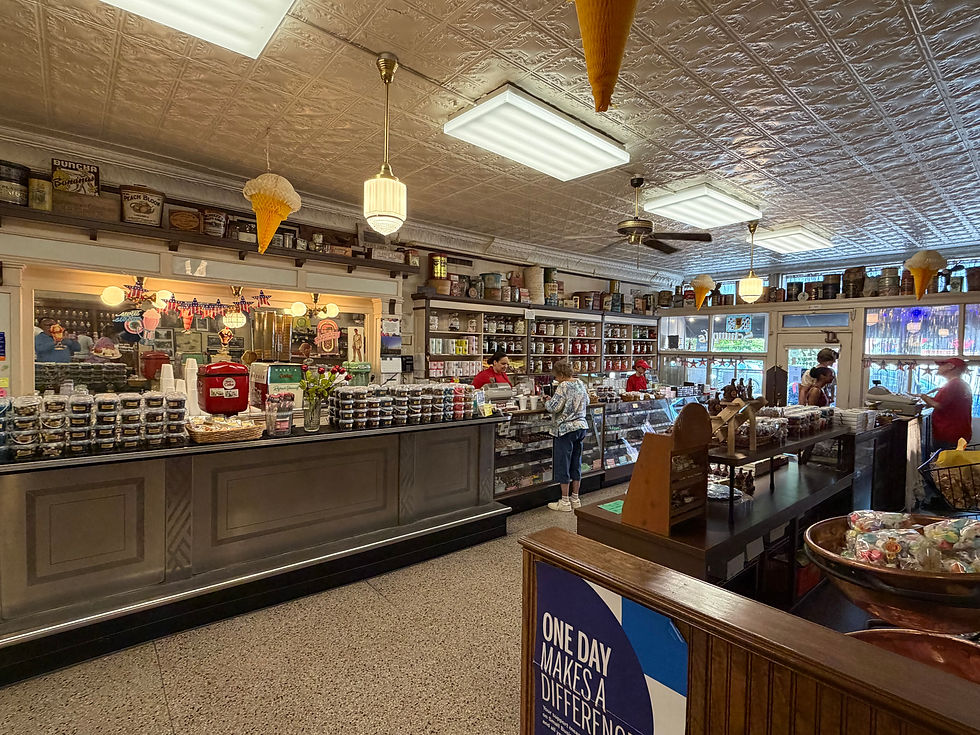
NuLu itself has become one of Louisville’s most exciting neighborhoods, where historic brick storefronts now house bourbon tasting rooms, independent boutiques, art galleries, and some of the city’s best restaurants. Cross the river and Jeffersonville counters with Schimpff's Confectionery, which has been in operation since 1891 and remains one of the oldest family-owned candy stores in the country. Along with a remarkable candy museum filled with vintage molds, equipment, and memorabilia, Schimpff’s still offers demonstrations showing how traditional red-hot cinnamon candies are made, proving that some old traditions are worth preserving — especially the edible ones.

The centerpiece of any baseball trip, of course, is Louisville Slugger Field, home of the Louisville Bats. Opened in 2000, the park was built into the city’s old rail district and cleverly incorporates the brick façade of a historic train warehouse into its design. It’s one of those ballparks that immediately feels right — intimate, scenic, and filled with character. Louisville’s baseball roots go back to the 1800s, including the old Colonels and the legendary Louisville Redbirds, and many future stars have passed through, including Joey Votto, Adam Dunn, Elly De La Cruz, and Aroldis Chapman.
The night I attended was called Nothing Night. At first, I honestly thought maybe it was a promotional tie-in to Seinfeld and George Costanza’s lifelong commitment to doing as little as possible. Instead, it turned out to be one of the most enjoyable ballpark experiences I’ve had in years.

There were no between-inning contests. No booming sound effects. No endless scoreboard prompts ordering everyone to make noise as if they forgot how. Just baseball. The organist provided the only background music, and for one night, the game was allowed to speak for itself. You could hear the crack of the bat, the pop of the catcher’s mitt, players calling each other off, and actual conversations between fans. It was old-school baseball in the best possible way.

Ironically, on a night dedicated to “nothing,” there was plenty happening on the field. The Indianapolis Indians beat Louisville 10–8 in a game that featured ten home runs — tied for the most in Triple-A this season. Jhostynxon Garcia went 5-for-5 and homered three times for Indianapolis, while Michael Chavis homered twice for Louisville. Edwin Arroyo and Hector Rodriguez also went deep. Even better, the Bats had the son of former Mets nemesis Charlie Liebrandt pitching, because baseball somehow always finds a way to remind Mets fans of the 1980s.

A special shoutout goes to Bats public relations manager Aaron Cheris — Long Island’s own and a Mets fan, which means Louisville has at least one person there with proper baseball taste.
Day Two: Ali, Ash, and a Walk Through Baseball History
Start the second day at the Muhammad Ali Center, one of the best sports museums in the country. It’s interactive, moving, and beautifully done, telling the story of Muhammad Ali not just as a fighter, but as a global icon and humanitarian. One story that stood out to me was one I had never fully known. After winning the gold medal at the 1960 Olympics in Rome, Ali returned home to segregated Louisville and was told by the mayor that the medal was the key to the city. But according to the story long associated with Ali, that honor rang hollow when he was later refused service at a whites-only restaurant. Humiliated and angry, Ali is said to have walked out to the bridge spanning Kentucky and Indiana and tossed his gold medal into the Ohio River. Whether every detail has been embellished over the years or not, the symbolism is powerful — a hometown celebrating him as a champion while denying him the basic dignity he had earned. Standing there today, it makes you wonder if somewhere beneath those waters that medal is still resting — and whether some ambitious diver has ever gone looking for one of the most meaningful lost treasures in sports history.

From there, walk down Main Street toward the Louisville Slugger Museum & Factory. Along the sidewalk is one of baseball’s coolest hidden tributes — bronze home plates embedded into the pavement honoring players who swung Louisville Slugger bats. Next to each plate sits a replica bat, along with details about the player and the specific model they used. As you stroll toward the museum, you’ll pass legends like Babe Ruth, Hank Aaron, Ted Williams, Johnny Bench, and Hank Greenberg. Ironically, of all the Hall of Famers honored there, the only one missing when I visited — apparently stolen for scrap metal — was Ralph Kiner, the man this site is named after. And before anyone starts asking questions, no, it was not me. For one thing, there was no chance that bat was fitting in carry-on luggage, even if TSA is more baseball-friendly than advertised.

Inside the museum, the bat vault is a baseball nerd’s dream. Each bat pattern is identified by a model number tied to the exact specs used by the player — barrel size, handle thickness, and length. Throughout the exhibit halls, life-size figures of some of the game’s greatest players stand as if they’re waiting for batting practice to start, including Hank Aaron, Roberto Clemente, Ken Griffey Jr., Jackie Robinson, Babe Ruth and Ted Williams, giving the museum the feel of walking through baseball’s history

One of the absolute highlights is the “Hold a Piece of History” exhibit, where visitors are handed actual game-used bats from some of baseball’s legends — not replicas, but the real lumber that once stepped into big league batter’s boxes. Staff happily let you pose for photos, making it one of the most unique baseball experiences anywhere. There’s something surreal about standing there holding bats that range from Derek Jeter’s surprisingly light 29-ounce model to Babe Ruth’s famous 42-ounce monster. Holding Ruth’s, in particular, feels less like sports equipment and more like someone handed you a polished tree trunk and told you to hit a curveball.
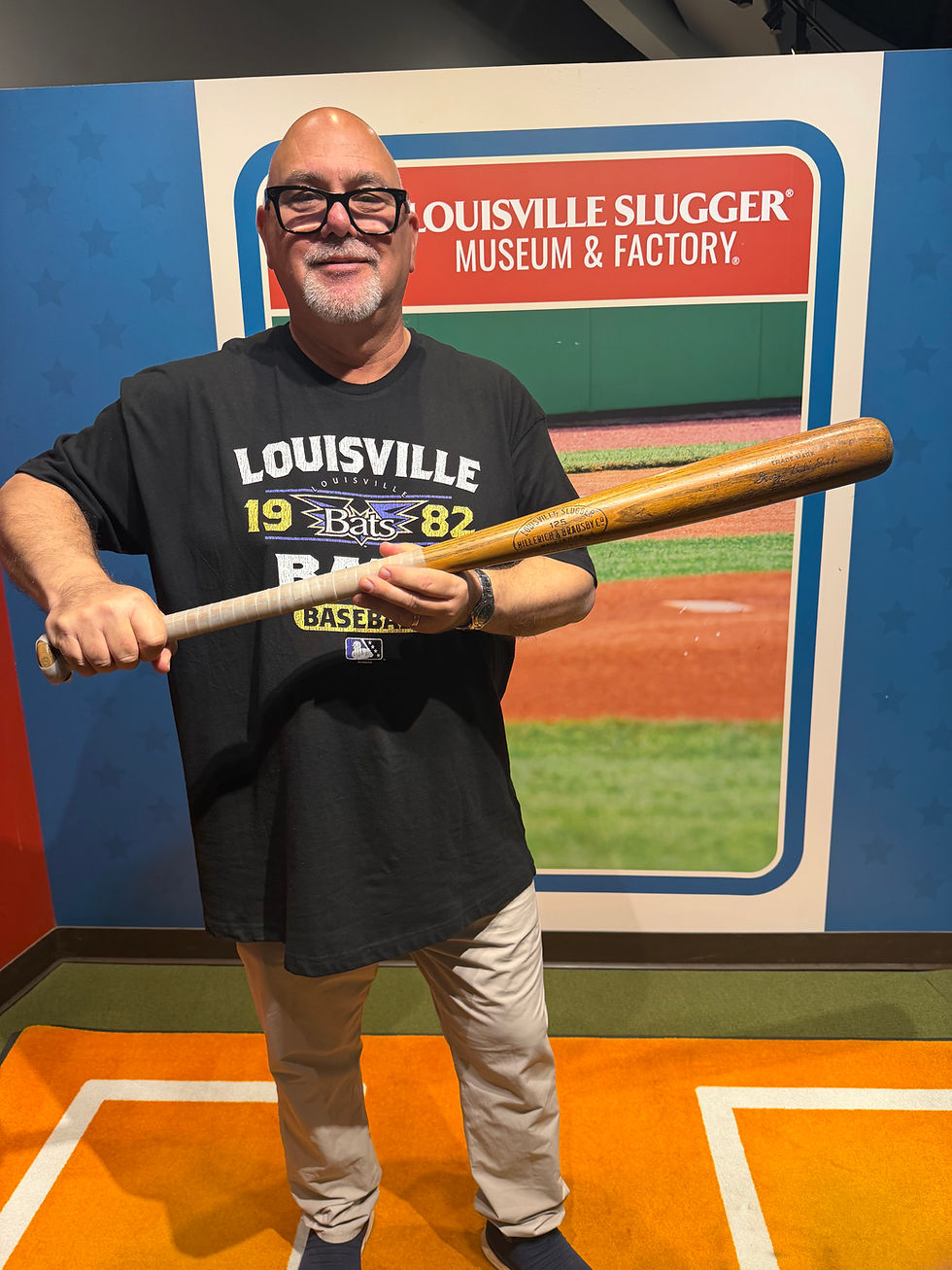
The factory tour is outstanding, and during my visit, they were actually making bats for Francisco Alvarez, which somehow made me irrationally proud. Ironically, it was the very same day Alvarez landed on the injured list, which made seeing his bats being crafted feel a little like baseball was teasing Mets fans in real time — here’s the lumber, now if only the catcher came with it.
Afterward, Main Street offers several bourbon tasting rooms within walking distance, making the rest of the afternoon very easy to enjoy. It also made it a little easier to forget about Francisco Alvarez’s injury and, for that matter, the Mets’ season to date — which, depending on your beverage of choice, might require something aged a little longer than a day or two in the barrel.

Take a quick ride to Muhammad Ali Childhood Home Museum, then head back over to Jeffersonville for dinner along the Ohio River, where the skyline view alone is worth crossing the bridge again.
Day Three: A Surprise Trip to Indiana
About 45 minutes away, near French Lick, sits Wilstem Wildlife Park, one of the most unexpected highlights of the trip. It’s also worth noting that this part of southern Indiana is the same region that produced Larry Bird, who grew up in nearby West Baden Springs and became a local legend long before his career took off in Boston. French Lick is still very much his home base in spirit, and even today the area wears that connection proudly — the kind of small-town basketball heritage that somehow feels just as iconic as anything you’ll find in a big city arena.
The park offers close encounters with giraffes, sloths, kangaroos, otters, and more, and one of the real standouts is the open-air safari experience — a drive-through style adventure where you move through wide, natural habitats and animals casually approach the vehicle as if you’ve accidentally driven into their world. Giraffes lean in with that almost curious elegance, zebras and antelope move across the landscape in herds, and it feels less like a zoo and more like a living nature documentary unfolding right outside your window. It’s one of those rare experiences where you’re not just observing wildlife — you’re in it.

We did both the safari and the elephant encounter, and the combination made the visit unforgettable. After the drive-through adventure, we moved on to the elephant experience, which was even more personal. Feeding, bathing, and interacting with three elephants up close was one of those travel moments that stays with you long after you leave. There are some things you expect from a baseball road trip. Giving an elephant a bath usually isn’t one of them.
Afterward, head back and spend the evening strolling the Big Four Bridge at sunset. It’s the kind of walk that makes you stop checking your phone and just enjoy where you are.
Day Four: Derby Dreams
No Louisville trip is complete without the Kentucky Derby Museum and Churchill Downs.

The museum does a tremendous job covering the history of the Derby, all of its winners, and the pageantry that makes the event special. One entire floor is dedicated to Secretariat, still considered by many the greatest athlete of all time regardless of species. The museum admission includes a guided tour of Churchill Downs, and if races are being run that day, stay for the card. The trumpet call to the post, the crowd, and a mint julep in hand make it unforgettable.
Finish the trip at Jeff Ruby's Steakhouse.
It’s one of the best steakhouses anywhere and comes with its own baseball connection. Jeff Ruby was once partners with Pete Rose in one of his earliest restaurants. Former Mets infielder Doug Flynn and Reds reliever Rawly Eastwick were housemates of Ruby’s as rookies, renting rooms from him. It’s either a great baseball story or the pilot episode of a sitcom nobody was smart enough to make.
And for context, I’ve eaten at plenty of the heavy hitters — Ruth's Chris Steak House, Peter Luger Steak House, Morton's The Steakhouse, and Gibsons Bar & Steakhouse — and this one didn’t just hold its own. It was better. Not “close call, depends on the night” better. No ABS challenge needed at this is Flat-out, circle-it-on-the-scorecard better.

Final Thoughts
Louisville proves that a baseball destination doesn’t need a Major League team to deliver a Major League experience. It has baseball history, bourbon history, horse racing history, the legacy of Ali, and enough unique attractions to make a long weekend feel packed.
You can watch a game in one of the best minor league parks in the country, walk across two states on a historic bridge, visit the birthplace of the Louisville Slugger bat, spend time with elephants, and end the night with steak and bourbon by the river.
Some cities have all the hype. Louisville just has all the substance.


Comments