
Diamond Destinations: Seattle – Coffee, Culture, Cream Cheese Hot Dogs and a Ballgame


After our recent trip to Louisville to experience a minor league city with a major league attitude, My wife Beth and I decided to head to another baseball destination that had long been on our bucket list: Seattle.
Now, before we get to the baseball, let me warn you that Seattle is one of those places where you can spend three days doing things that have absolutely nothing to do with baseball and still feel like you barely scratched the surface. It is part waterfront city, part coffee capital, part art gallery, part history lesson, and occasionally part science-fiction movie set.
Our Seattle adventure began with what is practically mandatory for every first-time visitor: Pike Place Market.

Opened in 1907, Pike Place is one of the oldest continuously operating public markets in the United States. To put that in baseball perspective, the market opened just four years after the first World Series was played in 1903 and the same year a 17-year-old Casey Stengel was still years away from his playing days and decades away from becoming the “Old Perfessor” of Mets lore. More than ten million visitors pass through each year, but somehow it still manages to maintain the feel of a neighborhood gathering place.
Today, salmon routinely fly through the air while tourists stand around wondering whether they should be impressed or worried—unless you’re a Mets fan, in which case you instinctively don’t stand too close, especially if the fish handler has even a slight resemblance to Luis Castillo.

A short walk away sits the original Starbucks location. While technically not the very first store that opened in 1971, it occupies the original marketplace area and attracts coffee pilgrims from around the globe.
We continued down toward Puget Sound, taking in spectacular waterfront views before dinner at The Pink Door.
Despite its somewhat mysterious entrance, The Pink Door has become one of Seattle's legendary restaurants. Hidden behind—you guessed it—a pink door in Pike Place Market, the restaurant serves outstanding Italian cuisine in an atmosphere that feels equal parts neighborhood restaurant and secret club. The food was excellent and easily one of the highlights of the trip.
Then we stumbled upon perhaps the strangest attraction I've ever seen.
The Gum Wall.
Imagine thousands upon thousands of pieces of chewing gum stuck to a brick wall in a narrow alley. Now imagine people intentionally adding more every day.
The wall began accidentally in the 1990s when patrons waiting for shows at the nearby Market Theater started sticking gum to the bricks. I am pretty sure there are even a few pieces of 90’s Topps baseball card gum up there as well. Theater workers repeatedly scraped it off until they finally surrendered, and we all know that Topps gum lasts forever. Today the colorful display stretches for dozens of feet and has become one of Seattle's most photographed attractions.

I still maintain that somewhere there is a Board of Health official having recurring nightmares about this place.
Day Two started at Biscuit Bitch, which wins the award for Most Difficult Restaurant Name to Explain to Your Toddler.
Fueled by breakfast, we headed to Seattle's most recognizable landmark: the Space Needle.
Built for the 1962 World's Fair, the Space Needle was designed to symbolize the future. Standing 605 feet tall, it was an architectural marvel of its time and remains the defining image of the Seattle skyline. More than sixty years later, it still delivers breathtaking views.
Adjacent to the Space Needle sits Chihuly Garden and Glass, one of the most beautiful museums I've ever visited.
Artist Dale Chihuly transformed glass into something that seems almost impossible. The exhibits combine color, light and imagination in ways that make visitors feel as though they've wandered into another world. It was peaceful, mesmerizing and unforgettable.

The surrounding grounds were originally developed for the 1962 World's Fair, officially known as the Century 21 Exposition. The fair attracted nearly ten million visitors and showcased futuristic technologies that included early concepts of video communications, monorails and space exploration. The fair helped transform Seattle into a modern international city.
After relaxing near the International Fountain, we headed into the Museum of Pop Culture (MoPOP).
For music fans, the Jimi Hendrix exhibits alone are worth the admission price. Add in the science fiction, horror movie and guitar collections and you've got one of the most entertaining museums anywhere.
From there we boarded Seattle's free waterfront shuttle and caught the ferry to Bainbridge Island.
The ferry ride itself is an attraction, offering incredible views of the Seattle skyline, Puget Sound and the majestic Mount Rainier looming in the distance.
At 14,411 feet, Mount Rainier is the tallest mountain in Washington State and one of the most recognizable peaks in North America. On clear days it appears almost unreal, like somebody painted it into the background—very much in the spirit of a Bob Ross landscape where everything is just a little too perfect to be real. We were lucky enough to catch it on one of those rare crystal clear Seattle days, when the mountain wasn’t just visible, it was practically posing for photos.

Bainbridge Island has become one of the region's most desirable communities, known for its small-town charm, waterfront beauty and artistic culture. It's also associated with the birth of pickleball, which was invented there in 1965.
After a terrific lunch at Proper Fish, we explored the island before returning to Seattle for dinner at Din Tai Fung.
The food was excellent.
The gas prices? Not so much.
Day Three started with an early return to Pike Place Market.
Beth grabbed a cappuccino from La Panier while we discovered an important travel tip: visit the market on a weekday. The difference between weekday crowds and weekend crowds is roughly equivalent to the difference between a spring training game and Game Seven of the World Series.
Breakfast was a grilled cheese sandwich from Beecher's Handmade Cheese.
Founded in 2003, Beecher's has become a Seattle institution. Visitors can watch cheesemakers craft fresh cheese right inside the store before sampling some of the finished product. The grilled cheese may have been the best sandwich we ate all trip.
From there we headed to the Seattle Aquarium.
Located on Pier 59, the aquarium focuses on the marine life of the Pacific Northwest. The new Ocean Pavilion has expanded the experience dramatically, but for Beth the main attraction was the octopus.
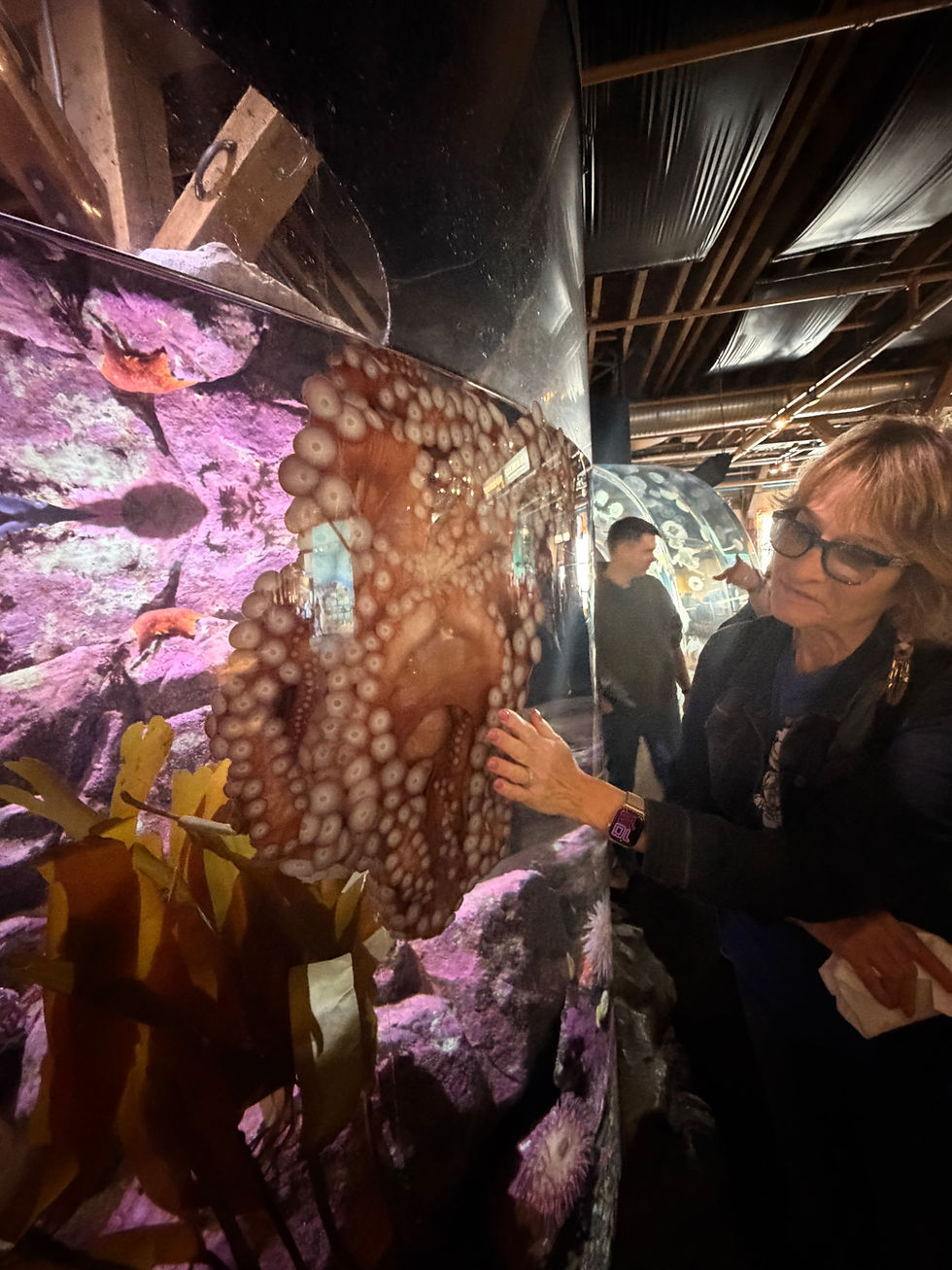
After seeing Remarkably Bright Creatures, we had become a major fan of Marcellus the octopus. Seeing a real giant Pacific octopus up close was one of the highlights of our day.
Next came lunch at Tat's Delicatessen in Pioneer Square.
As a New Yorker, I approach claims about great deli sandwiches with healthy skepticism. Tat's delivered. The corned beef and pastrami were outstanding and every bit as good as many East Coast delis.
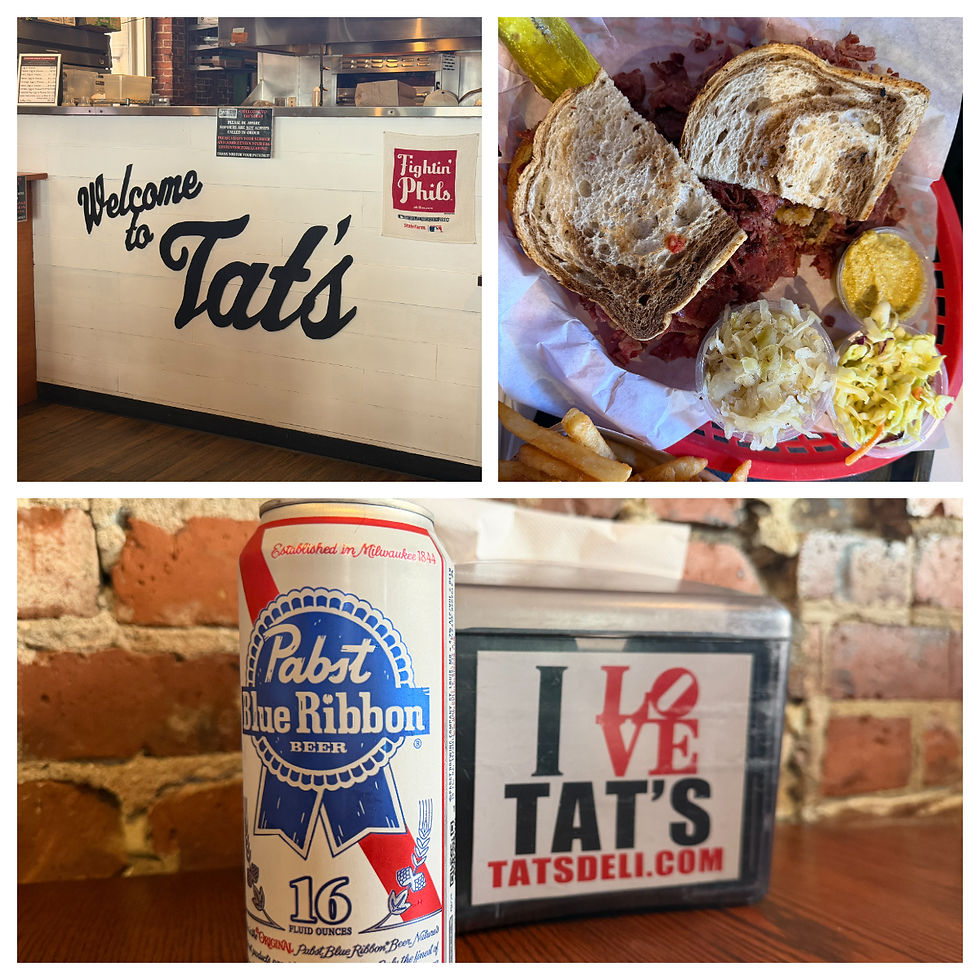
Naturally, I paired it with a Pabst Blue Ribbon. Had they offered a Rheingold, I might have shed a tear.
Dessert was Molly Moon's Ice Cream. I realize this statement may get me permanently banned from Seattle, but I found it slightly overrated.
The afternoon brought one of the most fascinating tours we've ever taken: Bill Speidel's Underground Tour.
To understand the tour, you need to know that much of old Seattle was literally built on top of itself.
After a devastating fire in 1889, city leaders rebuilt the downtown area and raised street levels to improve drainage problems. The original sidewalks and storefronts remained below the new streets, creating an underground network that still exists today.
The tour also shines a light on some of the colorful characters who helped shape early Seattle, none more famous than Madame Lou Graham. A German-born brothel owner and savvy businesswoman, Graham amassed a fortune in real estate and became one of the city's most influential citizens. After the Great Seattle Fire destroyed her business, she rebuilt quickly and invested heavily in downtown property during Seattle's recovery. Local lore even credits her with helping stabilize a bank during the financial panic of 1893, making her one of the most unlikely power brokers in the city's history. In a city busy rebuilding itself from the ground up, you could say Madame Lou was responsible for quite a bit of the erecting going on in Seattle back then.

Walking through those buried passageways feels like stepping into a time machine.
The evening concluded with the centerpiece of the trip a game at T-Mobile Park as the Mets took on the Mariners.

Opened in 1999, T-Mobile Park replaced the Kingdome, Seattle's multipurpose indoor stadium that served as home to the Mariners from 1977 through 1999.
Before the Mariners, Seattle briefly had the Pilots, an expansion team that played one season in 1969 at Sick's Stadium before relocating to Milwaukee and becoming the Brewers.

T-Mobile Park is an excellent baseball venue with a retractable roof, beautiful sightlines and outstanding views. I nice small Hall of Fame, adequate but not extensive food choices.
That said, call me biased, but I'd still take Citi Field every day of the week and twice on Sundays.
The Mets came up short that night 3-2 in extra innings, but any day spent at a ballpark is usually a pretty good day.
Especially when it ends with a Seattle Dog.

For the uninitiated, a Seattle Dog is a hot dog topped with cream cheese and grilled onions. On paper, it sounds like something invented after a dare and three beers.
In reality?
It's surprisingly delicious.
Much like Seattle itself.


Comments