
In Memoriam: Ron Hunt — The Met Who Took the Hit, Played the Game Right, and Never Forgot the Fans


The New York Mets have announced the passing of Run Hunt,
“Some folks give their bodies to science. I gave mine to baseball.”
Those words belonged to Ron Hunt, and if there was ever a quote that perfectly captured a baseball player, it was that one.
Ron Hunt was not the biggest star of his era. He was not a home run hitter. He was not a player who filled highlight reels with towering drives or dramatic celebrations.
He was something different.
He was a baseball player.
The kind of player who wore the uniform with pride, who respected the game, who listened to the veterans who came before him, and who gave every ounce of himself every time he stepped onto the field.
For generations of New York Mets fans, Ron Hunt was the first player they could truly call their own.
Before Tom Seaver arrived. Before the Miracle Mets. Before Shea Stadium became home to championship memories, there was Ron Hunt — a young second baseman who gave a struggling expansion franchise something it desperately needed: hope.
And he gave the fans something even more important.
Someone to believe in.
Hunt arrived with the Mets in 1963, a 22-year-old kid who had spent years working his way through the minor leagues and learning from some of baseball’s greatest teachers.
But when he arrived in New York, he was buried on the depth chart.
He was the seventh second baseman on the roster.
As Ron told Howie Karpin and me while we were writing *Down on the Korner: Ralph Kiner and Kiner’s Korner*, he knew he belonged on the field.
“I was number 7 of 7 second basemen so where do you go from there, home!”
But Ron Hunt was never afraid to speak up.
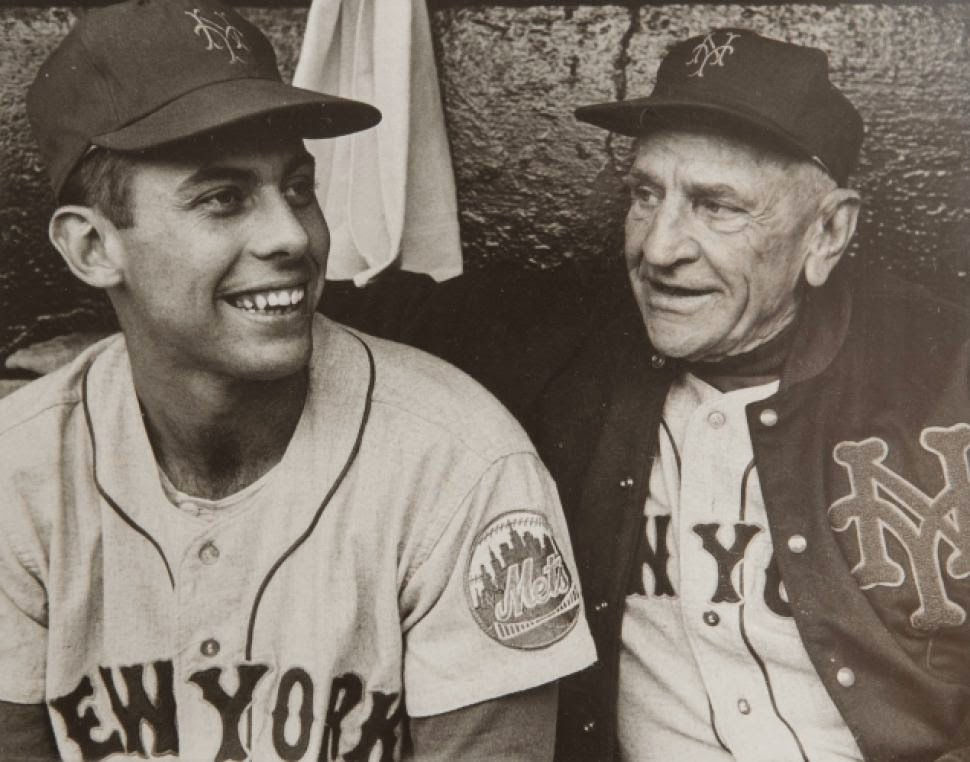
He approached Casey Stengel and delivered a message only a confident young player could deliver.
“Ron Hunt, number 33, second base.”
Stengel, who famously remembered players more by their numbers than their names, looked at the young infielder and asked what he wanted.
Hunt told him he deserved a chance.
Casey’s response?
“Son, you want to play that bad? OK then. You start tomorrow.”
The next day in Cincinnati, Ron Hunt was a major league starter.
And he never looked back.
What made Ron Hunt special was not just his talent. It was his willingness to listen.
He was surrounded by baseball royalty, and unlike some young players who thought they already knew everything, Hunt absorbed every lesson.
Duke Snider took him under his wing.
“Duke told me listen more than you talk and you will learn a hell of a lot more than you think you would.”
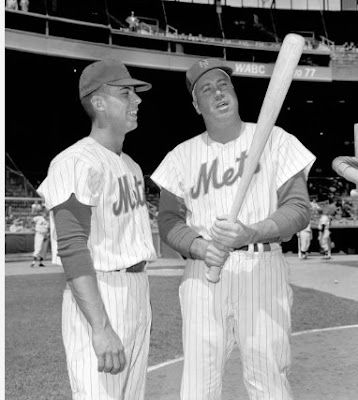
Those words stayed with him forever.
Snider taught him how to think the game — offensively and defensively. He taught him that hustle mattered because “you never know who is sitting in the stands.”
He learned from Gil Hodges.
He learned from Ralph Kiner.

He learned from Casey Stengel.
And he carried those lessons with him for the rest of his life.
Ron Hunt was old school before “old school” became a phrase.
He believed in preparation.
He believed in respect.
He believed the uniform meant something.
In 1964, Ron Hunt became the first Mets player ever to start an All-Star Game.

The New York fans embraced him as their first All-Star.
The game was played at Shea Stadium, and Hunt made sure one special person was there — his grandfather Walter Gronemeyer, the man who introduced him to baseball.
The kid from St. Louis who learned the game playing catch in an alley with his grandfather was now standing among the greatest players in the world.
He went 1-for-3 in the game, but the moment represented something much bigger.
The Mets finally had a star.
And the fans finally had a hero.
Of course, Ron Hunt became known for one unbelievable statistic.
Getting hit by pitches.
A lot.
A record amount.
In 1971 with the Montreal Expos, Hunt was hit by 50 pitches, the most by any player in a season since 1900.
During his career, he was hit 243 times.
But those numbers only tell part of the story.
Ron was not simply getting hit.
He was competing.
He crowded the plate. He battled pitchers. He found a way to get on base.
He once explained that he gave pitchers less room to make mistakes.
His philosophy was simple:
If they came inside, they would hit him.
If they came over the plate, he would hit them.
Either way, he was going to help his team.
As he told us, “I took 243 times of that to get on base any way I could.”
That was Ron Hunt.
Whatever it took.
One of the great honors of Ron Hunt’s career was being part of Ralph Kiner’s “Kiner’s Korner.”
When asked about Ralph, Hunt’s words reflected the respect he had for him.
“He played the game right. He played the game clean. He wasn’t looking for dirt or shit on the players. He was just looking for common sense and he asked common sense questions.”
That was Ralph.
And that was Ron.
Two people who understood that baseball was more than statistics.
It was about people.
Ron remembered walking into that small studio at Shea Stadium and talking baseball with Ralph.
No controversy.
No nonsense.
Just the game.
“He talked the game well because he played the game well.”
That may be the greatest compliment one baseball man can give another.
After his playing career ended, Ron Hunt continued giving back to baseball.
He created the Ron Hunt Eagles Baseball Association, helping young players develop not only their skills but their character.
Because that was always what mattered most to him.
He wanted young players to understand that baseball was not just about talent.
It was about effort.
It was about teammates.
It was about respect.
The same lessons Duke Snider, Gil Hodges, Ralph Kiner, and Casey Stengel had taught him.
Ron simply passed them along.
Ron Hunt played only four seasons with the Mets.
But his impact lasted much longer.
He was the first Mets player fans truly connected with.

He represented the spirit of those early teams — teams that struggled, but never quit.
Teams that played hard.
Teams that believed tomorrow could be better.
That was Ron Hunt.
A player who took the hits.
A player who played through the pain.
A player who never forgot the fans who cheered for him.
And most importantly, a player who always played the game right.
The numbers tell us he was an All-Star.
The stories tell us he was much more.
Ron Hunt was a Met.
And he always will be.
R.I.P. Ron Hunt # 33


Players like Ron Hunt made baseball fun to watch when I was young. You could relate to them. They looked like your Dad or the guy next door. He was a real competitor, may he rest in peace.
Godspeed, Ron Hunt!