
In Memoriam: Terrance Gore — The Fastest Man on the Field, A Blur in October

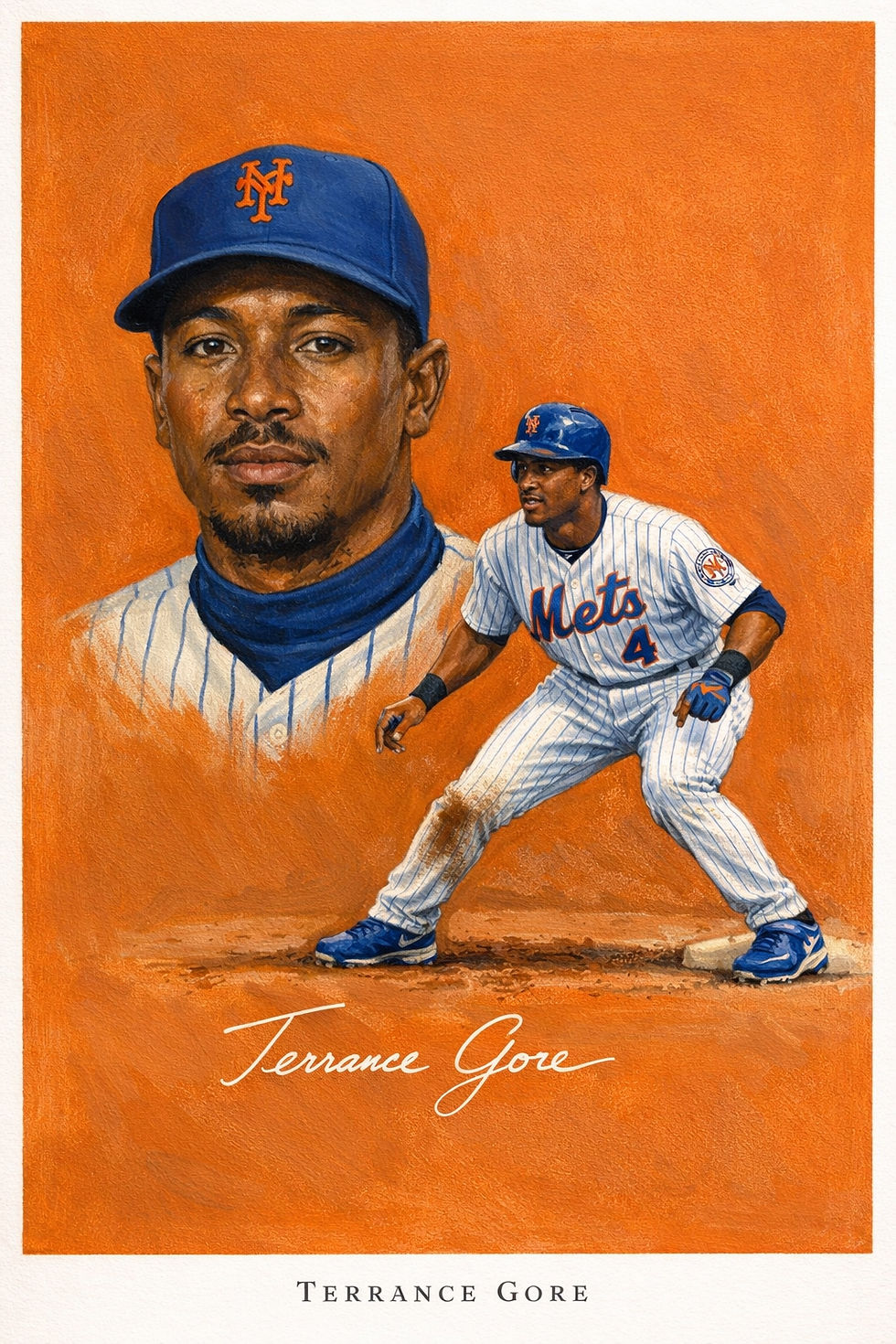
Terrance Gore was never the guy whose baseball card you bought for the home runs or batting titles. He was the guy managers quietly looked for when October tightened and ninety feet suddenly felt like a mile.

And now, far too soon, he’s gone.
News broke this weekend that Gore passed away Friday evening at the age of 34. Tributes quickly followed from across baseball — from organizations he suited up for and teammates who knew him — but the words that mattered most came from those closest to him: a husband, a father, a brother, a friend. Baseball lost a unique figure. A family lost someone irreplaceable.
That’s the part that should always come first.
For those of us who follow the game, Gore’s story was one of persistence and speed — breathtaking, ridiculous speed. The kind of speed that makes you check the remote to see if the broadcast accidentally hit fast-forward.
Raised in Georgia, he was a multi-sport standout who could just as easily have pursued football. Instead, he chose baseball and took the long road, drafted in the later rounds and grinding through bus rides, minor league cities, and the sort of uncertainty that defines most professional careers long before they resemble anything glamorous.
At one point early on, he even considered walking away. Responsibilities were growing, opportunities weren’t. It happens to more ballplayers than fans realize. But mentors nudged him forward, and baseball — thankfully — kept one of its most specialized weapons.
By 2014, he reached the majors, and from that moment forward his role was clear. Terrance Gore wasn’t there to fill box scores — he was there to change games in heartbeats.
He appeared in just over a hundred big league contests spread across parts of eight seasons with several clubs, including a brief stop in Queens in 2022. The numbers, as numbers tend to do, tell only a sliver of the story: limited at-bats, plenty of stolen bases, and the unmistakable imprint of a designated chaos agent once he reached first base.

His impact was felt most when the lights were brightest. He became the kind of October specialist contenders added because they knew one stolen base could swing an inning, a series, or a season. He was part of multiple championship runs — earning rings along the way — proof that baseball success isn’t always measured in headlines or WAR totals.
Sometimes it’s measured in tension. In defensive alignments shifting nervously. In pitchers throwing over three times before delivering home. In crowds buzzing because everyone in the building knows what’s about to happen and still can’t stop it.
Mets fans saw a glimpse of that during his time in the organization — a reminder that baseball teams are built not just on stars, but on specialists, grinders, and clubhouse guys who understand their lane and run it as hard as they can.

And that’s maybe why Gore resonated. He carved out a career doing something incredibly specific — and did it well enough that winning teams kept calling.
He is survived by his wife, Britney, and their three children — Zane, Skylyn, and Camden — and it’s impossible not to pause there, because perspective matters. Ballgames end. Seasons turn. Scoreboards go dark. Families carry forward.
We often measure players by statistics, rings, or highlight reels. But every once in a while you remember that baseball is really about people who devoted their lives to chasing something improbable. Terrance Gore did exactly that — outrunning odds, outrunning expectations, and, quite often, outrunning catchers’ throws.
That’s how he’ll be remembered: a blur on the basepaths, a competitor in October, and a man taken far too early.
Rest easy, Terrance.


Comments