
Mets’ Nice Guys Finish Second, Third, or Fourth: Remembering Nimmo and Díaz


I’m sorry for opening up fresh wounds, but writing about it is sort of therapy for me, so bear with me. It’s a bitter pill for Mets fans, one that doesn’t go down easy: in less than a month, we’ve lost two of the most beloved players to ever wear the orange and blue. Brandon Nimmo, traded away, and Edwin Díaz, who chose his own path in free agency. And let’s be honest, there are probably very few Mets fans with a bad word to say about either of them. Both of these guys had smiles that could light up Citi Field and personalities bigger than the Home Run Apple. Covering their careers was nothing short of a pleasure. But when the emotions settle, when you put sentiment aside, you have to look at the reality. Both were in—or approaching—their prime years while with the Mets. Brandon Nimmo will be 33 when the season starts, and most data says an outfielder’s peak is between 26 and 29. Edwin Díaz will be 32, just past the typical peak window for closers, which is 25 to 31. And yet, the Mets never quite broke through with them, even when both were performing at their best.

Brandon Nimmo’s tenure with the Mets spanned ten seasons from 2016 through 2025, a period of highs, lows, and everything in between. Over that time, the Mets averaged 79 wins and 75 losses, finishing on average in third place in the NL East, 12.8 games behind the division leader, with a winning percentage of .514. Some seasons sparkled, like 2022 with 101 wins, and others barely registered, like the pandemic-shortened 2020 with 26 wins. Nimmo himself was a model of consistency at the plate, posting a career .262 batting average, .364 on-base percentage, and .438 slugging percentage, with OPS sitting at .802. His WAR peaked at 5.0 in 2022, and OPS+ remained above average most years. Yet despite steady production, he never made an All-Star team, never won a Silver Slugger or Gold Glove, and never received MVP votes. On paper, he was a valuable contributor, but the Mets rarely leveraged that value into playoff success. They qualified for only two Wild Card spots and won just two total playoff rounds during Nimmo’s career, and he wasn’t even on the postseason roster in his rookie year of 2016. Subtle declines in batting metrics after age 30 hinted at the inevitable, but even at the tail end of his Mets tenure, he remained a reliable presence in the lineup, and a joy to cover as a reporter.

Edwin Díaz arrived in 2019 with the kind of personality and electric fastball that makes you wish every closer could have a cool song and light show announcing their entrance. His Mets years were shorter, and like Nimmo, filled with flashes of brilliance amid team inconsistency. Excluding his injury-shortened 2023, the Mets averaged 77 wins and 68 losses with Díaz on the roster, finishing on average in roughly third place, 8.4 games behind the division leader, with a winning percentage of .531. Díaz earned the NL Reliever of the Year Award in 2022, made two All-Star teams, and landed on the All-MLB team twice. He experienced some rough patches—his ERA ballooned in 2019, and injury kept him out in 2023—but he returned to dominance with a 1.31 ERA in 2022 and a 1.90 ERA in 2025. Closers typically peak between ages 25 and 31, so Díaz was just approaching the upper edge of that range, yet his contributions were elite when the team needed them most.

From a pragmatic perspective, the timing of these departures may actually reflect Branch Rickey’s old wisdom that it is better to lose a guy a year too early than a year too late. Both Nimmo and Díaz leave New York as accomplished, well-liked players before any decline would have dulled their contributions or overshadowed the memories they leave behind. There is a bitter edge to seeing them go, but there is also the reality that the Mets have fluctuated around mediocrity during the very years these two were at their best. David Stearns’ track record in Milwaukee during pretty much the same time period illustrates how much a general manager can influence results when paired with stability and a strong roster, while the Mets under the same stewardship have had flashes of brilliance without sustained success despite the talents of Nimmo and Díaz.
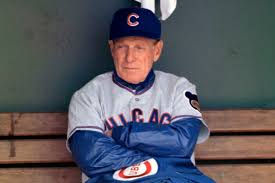
As the Mets look ahead to opening day, the challenge isn’t just about finding someone to fill a spot on the roster; it’s about filling a clubhouse void left by two players who brought energy, personality, and leadership every day. But let’s be honest: as much as we loved Nimmo and Díaz, as much as they smiled, hustled, and lit up every room they walked into, they didn’t win a ring. As Leo Durocher once said, “Nice guys finish last,” and for these two it’s more like second, third, fourth, maybe fifth, just not first. The lesser 1986 Mets, players like Rafael Santana, Danny Heep, and Doug Sisk, are still remembered decades later because they won it all. Nimmo and Díaz will be remembered fondly by fans who watched them play, but in the long run the memories of their energy and smiles will fade in a way that championship teams never do.
It stings to see them go, but perhaps it stings less than watching them slide down the back end of their careers on a team that wasn’t competing for a title. In a game where analytics often outweigh emotions, the bottom line is that even with two beloved Mets in their prime, the team never managed to cross the finish line and win it all. Nimmo and Díaz will be remembered for the energy, smiles, and leadership they brought every day, but in terms of championships, the ultimate goal remained just out of reach.


Comments