
Strat-O-Matic and Sportsphone: The Forgotten Heroes of the 1981 Baseball Strike
- Mark Rosenman

- Oct 23, 2025
- 7 min read

Inspiration for a story can come from just about anywhere. Sometimes it’s a stat that jumps off the page. Sometimes it’s a random YouTube clip of Ralph Kiner interviewing Ed Kranepool in glorious 1970s color, the kind that makes you miss both of them and Shea Stadium all over again. And sometimes, it’s a text from my good friend Ken Ricken.
After reading yesterday’s piece about Rusty Staub and George Steinbrenner appearing together on Face the Nation during the 1981 baseball strike, Kenny sent me this text:
“I was just reading up about the strike. Marvin Miller and the owners’ rep Ray Grebey refused to take a picture together after it was settled. Also, one thing you’ll appreciate: if you remember, baseball came back with the All-Star Game first and real games the next night. But on the day of the originally scheduled All-Star Game, the press created the game with Strat-O-Matic and broadcast it over the stadium speakers in Cleveland.”
Truth be told, I didn’t remember that All-Star Game or non-All-Star Game, as it were. But I vaguely recalled the New York papers doing something similar to fill the baseball void. And if you’ve learned anything about me from reading my stuff on KinersKorner.com, there are a some buzzwords that will get me to dive down a research rabbit hole faster than a 7-year-old me running to catch the ice cream man: “Kiner’s Korner” and “Strat-O-Matic.”
So, after I called Kenny and cursed at him , because I knew that text was going to send me straight down the rabbit hole. And what I found was pure 1981 magic: when the bats were silent, the players were idle, and the only thing keeping baseball alive was a set of dice, some player cards, and a little imagination..
Before baseball returned from the strike, SPORTSPHONE — yes, 976-1313, COME ON, YOU ALL KNOW THE NUMBER — decided to stage its own “Dream Subway Series”: the 1969 Mets vs. the 1978 Yankees. I spoke with KinersKorner.com staffer Howie Karpin, who was working at Sportsphone back then and wrote all about it in his terrific book 976-1313: How Sports Phone Launched Careers and Broke New Ground. After talking with Howie, I knew there was a story to be told — one about dice, dreams, and the game I love (and still play today), Strat-O-Matic, which for a brief moment in 1981, kept the game of baseball alive.
The 1981 baseball strike wasn’t just inconvenient it was downright dangerous for the sport. On June 21, players walked off the field, marking the first extended strike in Major League history. Over 700 games disappeared from the schedule, about 38% of the season gone in a puff of collective bargaining frustration. For fans, baseball wasn’t just a pastime; it was a habit, a daily ritual of scanning box scores, debating stats, and dreaming about the next game. Break that habit for too long, and even the most devoted fan might find their attention drifting to old reruns or, heaven forbid, soap operas.
I know from personal experience falling out of the rhythm of following the scores is easy; falling back in is a lot harder. Baseball was in peril, not just in the stands, but in the hearts of its fans. That’s where Strat-O-Matic came in.
A few days into the strike, newspapers began reporting that radio stations were turning to Strat-O-Matic to fill the void. San Diego broadcasted the play-by-play of a simulated game, and the Minneapolis Star published Strat-O-Matic box scores throughout the strike. Glenn Guzzo, a baseball journalist some of you may know, noted that the strike had initially worried tabletop baseball companies, but those fears were unfounded. Fans were desperate for the familiar rhythm of a baseball season — and Strat-O-Matic could deliver.
Why Strat-O-Matic? There were other games , APBA, Status Pro, the Sports Illustrated board game but most weren’t as easy to get. Strat-O-Matic, on the other hand, was available on store shelves back then, simple to buy, and, as Howie Karpin recalled, the consensus at Sports Phone was that Strat had the stats-driven credibility to make it feel real. I know because I still play the game today .( If you live on Long Island, keep an eye out for Newday's Sunday paper, where you’ll find a story about the Long Island Strat League I run.)
New York Sportsphone. You remember 976-1313, right? COME ON, YOU ALL KNOW THE NUMBER, needed to take it to another level. By 1981, Sportsphone was reporting scores to over 100,000 callers a day. When the strike hit, the calls dried up. No games meant no news, and that meant no revenue. Their solution: Strat-O-Matic. On June 23, 1981, Sportsphone ran an ad announcing a fantasy championship between the 1969 Mets and the 1978 Yankees — dice, player cards, and all , staffers Al Abrams, King Wally and Mike Weinstein were part of the festivities, with the results broadcast live to fans who hadn’t heard a real play-by-play in days.

Marv Albert, covering the story live from Sportsphone, summed it up perfectly: the Mets and Yankees, two legendary squads separated by nearly a decade, were suddenly brought together in a simulated best-of-seven series. You had the Miracle Mets of ’69 — Seaver, Koosman, Shamsky, and Cleon facing off against the Bronx Bombers of ’78, Reggie, Thurman, Rivers and a young Goose Gossage on the mound. Fans called in, hanging on every pitch, every strikeout, every improbable homer that the dice and cards conjured. Tom Seaver squared off against Ed Figueroa, Ron Swoboda made some of his trademark plays, and for a few strange, glorious weeks that summer of 1981, dice and statistics were all that kept baseball alive and fans sane. The Mets won the series in extra innings in game seven.

Here is Marv's report after Game one of the series :
The press and fans lapped it up. Newspapers across the country covered the “games” as if they were real, and even the All-Star Game that had been scheduled for Cleveland on July 14 became a Strat-O-Matic spectacle. Cleveland in 1981 wasn’t exactly brimming with confidence. The city had weathered a disastrous decade a river fire, municipal bankruptcy, and a string of struggling sports teams and the announcement that it would host the MLB All-Star Game seemed like a much-needed chance to shine. But when the players went on strike in late June, just weeks before the scheduled July 14 game, that opportunity vanished overnight.
Fans and local media were left staring at empty stadiums and canceled box scores. As Dale Kirk, a Cleveland TV editor at the time, recalled, “We felt cheated. We were supposed to have the All-Star Game, the big fanfare of the summer. We felt we had to do something to regain our pride.”
Once again it was Strat-O-Matic Baseball to the rescue. Jon Halpern, a weekend producer at WKYC and a lifelong Phillies fan, suggested a do-it-yourself All-Star Game. Alongside his roommate and colleague Jim Schaefer, they staged a simulated game between the American League and National League using dice and player cards complete with ceremonial first dice thrown by none other than Bob Feller.

Fans helped pick the lineups, calling into Sportsphone to vote. The AL featured pitchers like Lenny Barker, just months removed from his perfect game at Cleveland Stadium, while the NL roster included heavy hitters like Dave Parker, who homered in the simulated game. Halpern and Schaefer practiced for weeks beforehand, honing their Strat skills, and by game day, every pitch, hit, and strikeout was treated with the seriousness of a real All-Star contest.

The event had all the pageantry of a true MLB showcase. Cleveland legend Rocco Scotti belted out the national anthem with his usual gusto, and even the city’s much-maligned mascot, the Baseball Bug, made an appearance to entertain the sparse but spirited crowd. For those who’ve blocked it out (and who could blame you), the Bug was the Indians’ short-lived mascot from 1980 to ’81 — a red, globe-shaped creature in a blue vest, with antennae topped by baseballs, created to match the team’s marketing slogan, “Indian Fever—Get Bitten by the Bug.” Unfortunately, most fans preferred to take their chances unbitten. The Bug lumbered around the field, doing its best to stir up enthusiasm, though it looked more like something that had escaped from a Saturday morning cartoon than a big-league dugout. It vanished after two seasons, fondly remembered by almost no one — though, in a delightful twist of fate, it recently resurfaced in 2024 as a “mentor” to the Lake County Captains, the Guardians’ High-A affiliate. Only in baseball can even a failed mascot get a second act.

Coverage spread quickly: newspapers across the country ran box scores, and the story made network news. Glenn Guzzo, who later chronicled Strat-O-Matic’s history, said the attention “helped save the year” for the company, turning a potential sales disaster into free publicity on a national scale.

The game itself was a romp: the National League blew out the American League 15-2. “Except for the fact the managers used dice and cards instead of balls and players, the rest of the proceedings resembled most All-Star games of the last two decades,” one reporter noted dryly. For a few magical hours, the dice kept baseball alive in Cleveland, giving fans a reason to smile during one of the darkest stretches in the sport’s history.
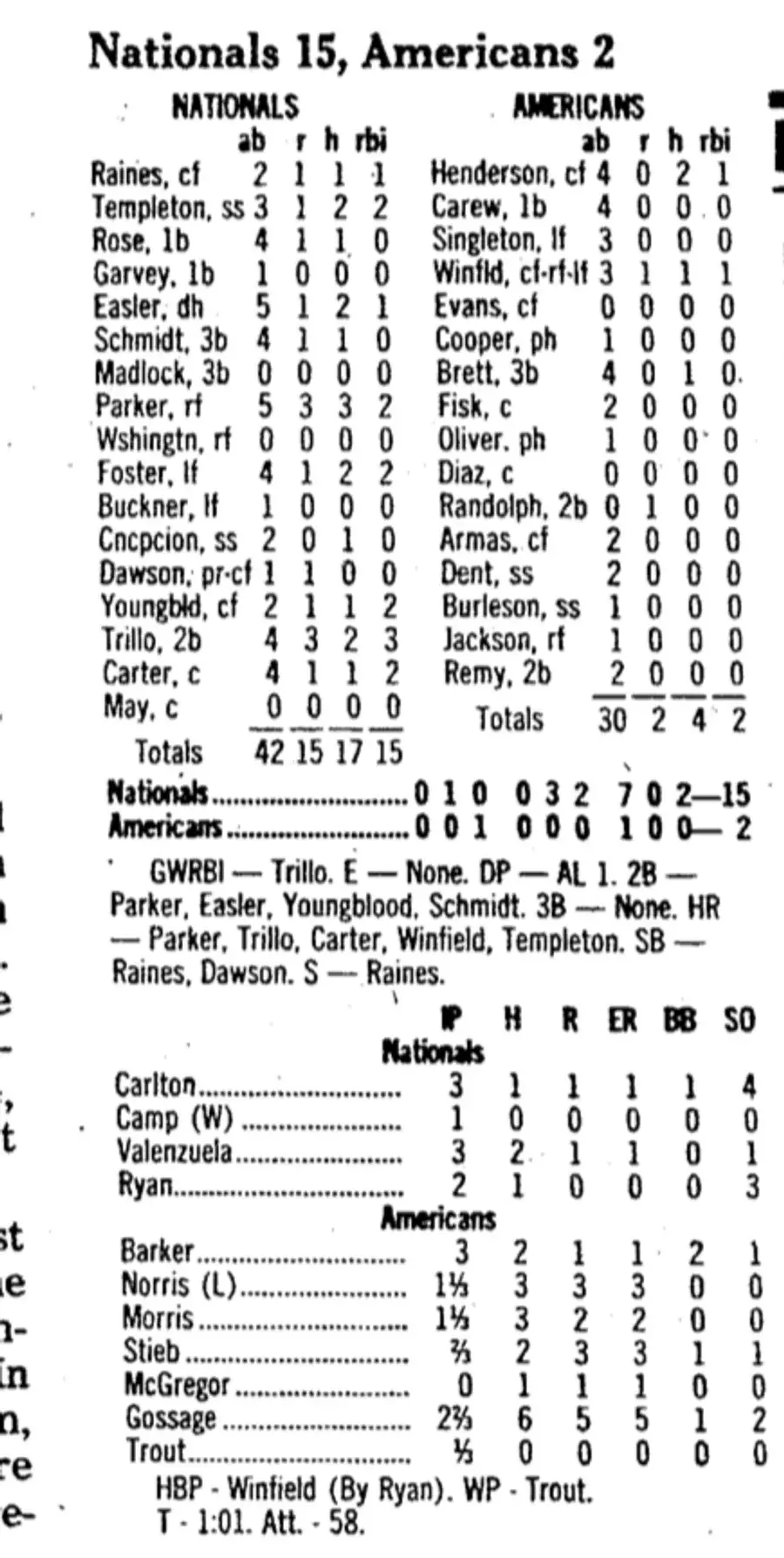
Other tabletop games had their moments — ABPA had its own simulated All-Star games in Detroit and Milwaukee but nothing had the national spotlight that Strat-O-Matic received. When the strike finally ended in early August, and the All-Star Game finally took place in Cleveland on August 9, fans weren’t just returning to baseball; they were returning to a game they’d survived thanks to dice, paper, and a little imagination.
Baseball survived the strike. And Strat-O-Matic? It wasn’t just a game. That summer, it was a lifeline in a cardboard box.
So here’s to you, Kenny Ricken , proof that one well-timed text can still spark a story, a smile, and a very long day spent Googling “Baseball Bug.”


Comments