
Sunday School: Forgotten Faces of Flushing #54 :The Mets Know How to Make Draft Picks, They Just Don't Know How to Keep the Draft Picks.


Welcome back to Sunday School: Forgotten Faces of Flushing, our weekly rummage through the Mets’ attic, where we brush the dust off the bubble gum cards, flip through the curling pages of old yearbooks, and rediscover the players who once made you pause mid–potato knish and mutter, “Hold on… he was a Met, right?”
Last week, class focused on Joe Frazier , not the heavyweight champion, but the Mets manager whose brief tenure somehow produced a better winning percentage than Terry Collins, Dallas Green, Joe Torre, and Art Howe. A reminder that sometimes Mets history forgets its own overachievers.
While the majority of our Forgotten Faces of Flushing lessons focus on players who actually wore the orange and blue , who jogged out onto the Shea Stadium grass or later took their cuts under the Citi Field lights this week we’re taking a slightly different path down memory lane.
Instead of revisiting Mets who were, today’s class is about Mets who almost were.
This lesson focuses on six players drafted by the Mets, players whose names were called, whose names were written on draft cards, and whose rights briefly belonged to the organization, but who never signed. In Mets terms, this is what we call a promising start.
Instead, each of them reentered the draft, slipped back into the baseball current, and eventually surfaced wearing other uniforms for other teams, often while Mets fans squinted at the TV and said, “Wait… didn’t we draft that guy?”
They never wore the orange and blue in a real game, but they were still part of the Mets’ story, even if their chapter was written in pencil, erased, and then rewritten somewhere else.
Lesson One: John Tudor
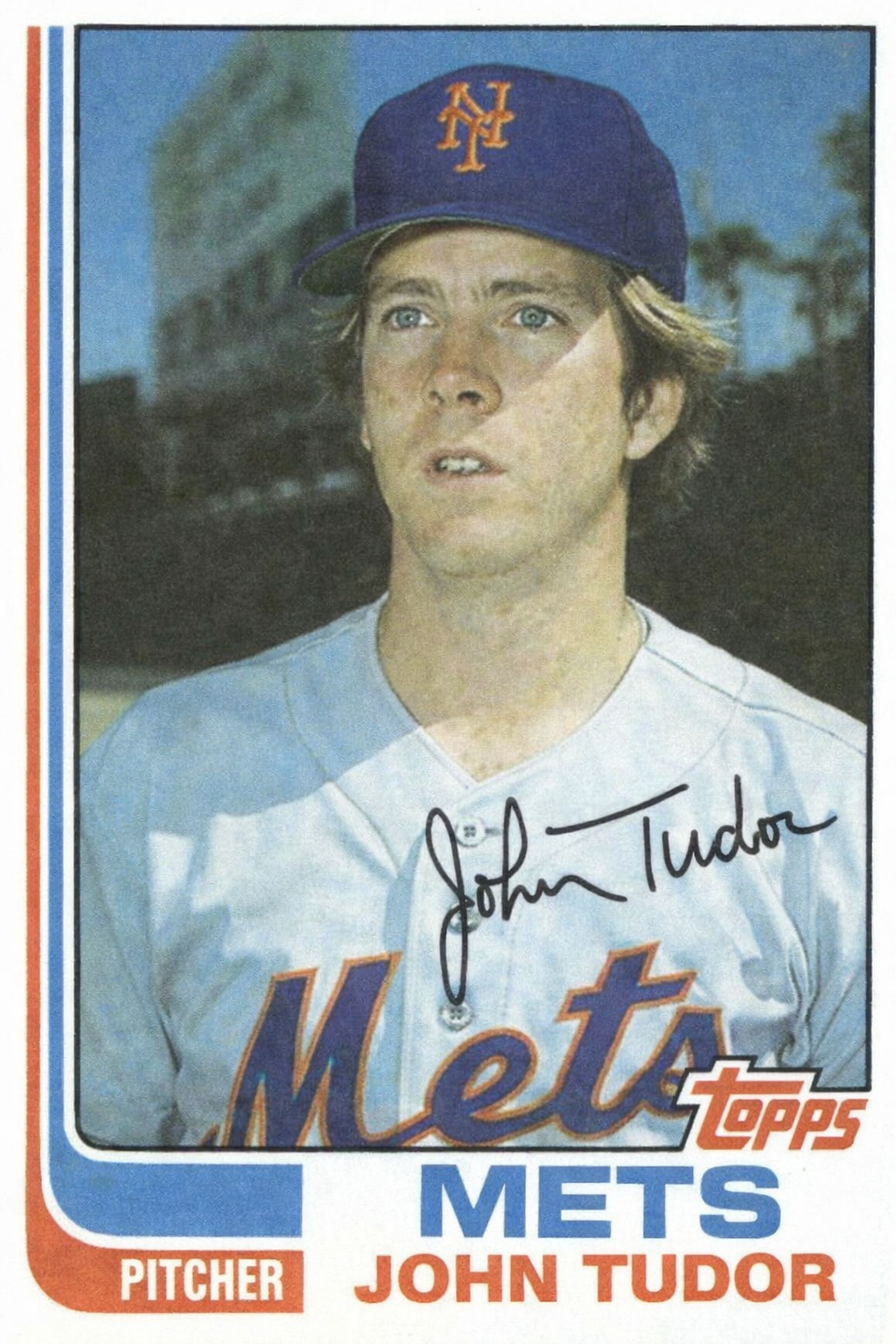
Sometimes the Mets didn’t just miss out on a player. Sometimes they held the door open, checked the watch, and still watched him walk somewhere else.
That was the case in 1975, when the Mets used a late round pick on a left handed pitcher from Georgia Southern University named John Tudor. He was a junior, a project, and very much a future idea rather than an immediate solution. The Mets liked him enough to draft him. They just didn’t like him quite enough to land him.
Tudor never signed. Instead, he reentered the draft the following year, where the Red Sox were more convincing. From there, Tudor went on to build a long, quietly excellent major league career that included stops in Boston, Pittsburgh, St. Louis, and a brief appearance in Los Angeles.
From the early to late 1980s, Tudor was the kind of pitcher every good team needs and every opposing lineup dreads. He logged heavy innings, limited runs, and delivered consistency season after season. Then came 1985, when everything peaked at once. Pitching for the Cardinals, Tudor won 21 games, posted an ERA under two, and turned in one of the most dominant seasons of the decade.
That same year, the Mets won ninety eight games and still managed to miss the postseason by three. History remembers those Mets rotations as stacked, and they were. Imagining John Tudor planted squarely in the middle of them is one of those thoughts best entertained briefly, then filed away for personal health reasons.
This is the essence of the almost Met. The Mets spotted the talent. They just never got the chance to keep it. And John Tudor went on to prove, repeatedly, that the miss was very real.
Lesson Two: Darin Erstad

A few years later, the Mets tried again, this time dipping into the high school ranks. In 1992, they used a 13th round pick on a lanky outfielder from North Dakota named Darin Erstad. Once again, the Mets identified the talent. Once again, they never sealed the deal. Erstad chose the college route, heading to the University of Nebraska at Lincoln instead of signing his name on a Mets contract.
Three productive years later, Erstad reemerged in the draft pool, this time as a more polished, more obvious prize. The Angels made sure there was no sequel to the Mets story, drafting and signing him in 1995 and promptly plugging him into what became one of the more quietly successful runs of the late 1990s and early 2000s.
Erstad turned into exactly the kind of player managers sleep well knowing they have. An elite defensive outfielder who could run, throw, hit enough to matter, and never stopped moving. With the Angels, he put together several strong all around seasons, combining steady offense with speed, durability, and glove work that turned fly balls into routine outs. He was not flashy in the traditional sense, but he was relentlessly useful.
Then came 2000, when “useful” no longer covered it. Erstad hit for average, got on base, drove the ball, stole bases, and played defense like it was a personal mission. It was one of those seasons that turns a good player into an indispensable one. That same year, the Mets came within three wins of a championship. Dropping a prime Darin Erstad into that lineup and outfield is another one of those mental exercises Mets fans are encouraged not to linger on too long.
It also would have brought some long term stability to an outfield that, during that era, felt like a revolving door with a batting order attached. The Mets cycled through names and roles, patches and platoons. Erstad would have been an answer, not a question. Instead, he became another reminder that sometimes the Mets were early to the idea, but late to the outcome.
Lesson Three: Matt Williams

In 1983, the Mets wandered out west and took a late round flyer on a powerful high school third baseman from Nevada named Matt Williams. He was selected deep in the draft, the kind of pick that usually earns a polite phone call and a scouting report filed away for later. Williams listened, nodded, and chose college instead.
Three years later, he came back into the draft as a very different proposition. The Giants grabbed him in the first round, signed him immediately, and watched him turn into one of the defining power hitters of the 1990s. Williams hit for average, hit for power, and played third base like it mattered. Over the course of the decade, he became a steady thirty home run presence with a glove good enough to collect multiple Gold Gloves along the way.
To be fair, the Mets were not exactly hurting at third base during their better years of that era. Howard Johnson had his power prime. Robin Ventura handled the position later with quiet professionalism. Still, having one of the most prolific home run hitters of the decade parked in Flushing would have added a different kind of thunder to Mets history. Williams did just fine without them. The Mets were left with another footnote that started with “We drafted him once.”
Lesson Four: Ron Cey

Nearly two decades earlier, the Mets found themselves circling a similar name. Ron Cey was a strong armed, power hitting third baseman out of Washington state, drafted by the Mets in 1966. Like many players of the era, he chose the college route, and the Mets moved on.
The Dodgers did not. Two years later, Los Angeles drafted and signed Cey, dropped him into their lineup, and watched him become a fixture for a decade. Cey hit for power, got on base, and provided steady defense at third during a long stretch of competitive baseball. He was not flashy, but he was productive in exactly the ways winning teams appreciate.
Cey’s prime did not perfectly overlap with the Mets’ most dramatic moments of the early 1970s, but it was close enough to invite speculation. Those teams won with pitching, defense, and timing. A little extra offense at third base might not have hurt. Instead, Cey became another reminder that sometimes the Mets identified the right skill set, just not at the right moment.
Lesson Five: Rafael Palmeiro

In 1982, the Mets took a swing at a smooth left handed hitting first baseman named Rafael Palmeiro. Drafted out of high school, Palmeiro opted for college at Mississippi State, setting off a chain of events that would eventually land him everywhere except Queens.
After reentering the draft, Palmeiro signed with the Cubs and later made his mark in Texas and Baltimore, becoming one of the most dangerous hitters of his generation. Year after year, he hit for average and power, drove in runs by the truckload, and quietly stacked numbers that placed him among the most productive first basemen the game has ever seen.
The Mets, to their credit, were rarely desperate at first base during the overlapping years. Keith Hernandez set the standard. John Olerud provided calm excellence. Others filled in capably. But none of them brought the relentless, middle of the order damage Palmeiro delivered for more than a decade. Imagining that kind of bat anchoring Mets lineups from the late 1980s into the early 2000s is one of those exercises that quickly turns from fun to dangerous.
Lesson Six: Roger Clemens

And then there is the one that still makes Mets fans sit up a little straighter.
In 1981, the Mets drafted a hard throwing right hander out of San Jacinto College named Roger Clemens. The selection was real. The interest was real. The money, unfortunately, was not. Clemens wanted more than the Mets were willing to offer, so he packed his bags, transferred to the University of Texas, and waited.
Two years later, the Red Sox drafted him in the first round and changed baseball history. Clemens became a dominant force almost immediately, piling up awards, strikeouts, wins, and headlines for more than two decades. By the mid 1980s, he was already a superstar, and by the end of his career, he was one of the most accomplished pitchers the game had ever seen.
Yes, the story comes with complications and controversy. Yes, it ends with asterisks and arguments. But there is no escaping the central truth. Roger Clemens was once close to being a Met. Close enough to make you wonder how different things might have been if a few thousand dollars and a little foresight had tilted the decision the other way.
And that’s really the lesson this week. Not that the Mets were careless, or clueless, or asleep at the switch. Quite the opposite. They saw the talent. They made the picks. They did the hard part. What they couldn’t always do was finish the sentence.
Like Jerry once explained, the Mets were great at taking the reservation. They just weren’t so good at keeping the reservation.
Each of these players passed briefly through the Mets’ orbit. Their names were called. Their rights were held. Their futures were imagined, if only for a moment. And then, for reasons ranging from money to timing to the eternal shrug of baseball fate, they slipped away and became stars somewhere else.
That’s what makes them the perfect subject for Sunday School. They never wore the uniform, never tipped a cap at Shea or Citi, never showed up on a Mets lineup card. Yet they remain unmistakably Mets-adjacent, living reminders that in this sport, almost counts for more than you’d like to admit.
Because Mets history isn’t just written by the players who stayed. It’s also shaped by the ones who didn’t, the ones who got away, and the ones whose baseball cards make you squint, tilt your head, and mutter, “How did that not happen?”
Class dismissed until next Sunday.


Comments