
Sunday School: Forgotten Faces of Flushing #63 : Double Identity Part One— The Two Mike Marshalls


Welcome back to Sunday School: Forgotten Faces of Flushing, our weekly stroll through the Mets attic — the place where the yearbooks are a little dusty, the bubble gum cards stick together, and every once in a while you stumble across a name that makes you stop and say, “Wait… I remember that guy.”
Last week we dusted off the file on John Buck, the catcher who spent most of his career being a solid, dependable big league backstop — until April of 2013, when he briefly turned into something resembling Babe Ruth wearing shin guards.
For one glorious month Buck was launching baseballs into orbit, leading the National League in home runs and RBIs, and causing Mets fans everywhere to stare at the box score and say, *“Wait… John Buck?”
It was one of those wonderful little pockets of Mets history — a flash of unexpected brilliance that reminds you why digging through the franchise attic is so much fun.
Which brings us to this week’s lesson.
Every once in a while, Mets history produces something even stranger than a catcher leading the league in home runs.
Sometimes… it produces two players with exactly the same name.
Now if you’ve ever scanned a box score quickly or flipped through an old Mets media guide, you know the moment. Your eyes land on a name and your brain says, *“Wait… wasn’t he on the team ten years earlier?”
And sometimes the answer is yes.
Just not the same guy.
So for the next few weeks here at Sunday School, we’re launching a short series we’re calling Double Identity — a look at Mets players who shared the same name but lived completely different baseball lives in Flushing.
Different eras.
Different roles.
Same name on the back of the jersey.
Over the next four weeks we’ll dig into some of the more curious cases of Mets name twins, including Bobby Jones, Bob Miller, and the confusingly similar duo of Shawn Green and Sean Green.
But today we begin with the Marshalls.

Because if you were a Mets fan in the 1970s or the early 1980s and someone mentioned Mike Marshall, you might have pictured one of two very different ballplayers.
One was a Cy Young Award–winning relief pitcher who once appeared in an almost unbelievable number of games in a single season.
The other was a power-hitting outfielder who briefly patrolled Shea Stadium’s outfield grass during the early 1980s.
Same name.
Two completely different baseball stories.
And both of them, at different moments, wore a Mets uniform.
So today’s class is officially in session.
Let’s meet the two Mike Marshalls of Mets history.
Let’s start with the first Mike Marshall, and if you’re expecting a normal baseball story, you might want to sit down.
Because normal was never really Mike Marshall’s thing.
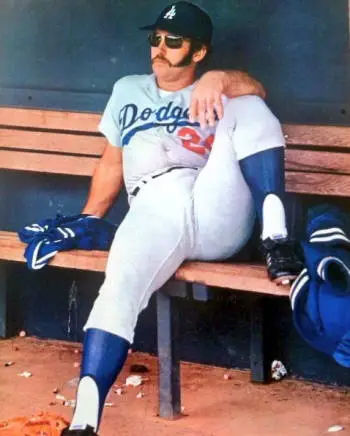
Marshall looked nothing like the traditional major league pitcher. He stood about 5 foot 8, built more like a middle aged bowling league MVP than a Cy Young winner. But what he lacked in height he made up for with something baseball has always struggled to understand: science.
While most pitchers were icing their arms and listening to pitching coaches, Marshall was studying kinesiology, the science of body mechanics. He eventually earned a Ph.D. while still an active player. He believed pitchers should throw more, not less. He ran long distances when other players ran sprints. He lifted weights back when baseball people thought weightlifting would turn pitchers into muscle bound statues.
And then there was his pitch of choice, the screwball, a pitch that moved in the opposite direction of a curveball and made old school pitching coaches break out in hives.
Marshall insisted it was actually safer for the arm.
Naturally, nobody believed him.
What they could not ignore, however, was what happened in 1974, when Marshall, pitching for the Dodgers, appeared in an almost unbelievable 106 games, a major league record that still looks like a typo in the media guide. He threw more than 200 innings out of the bullpen, which today would cause at least three front offices and a team trainer to faint at the same time.
For that effort he won the Cy Young Award, becoming the first true relief pitcher ever to do so.
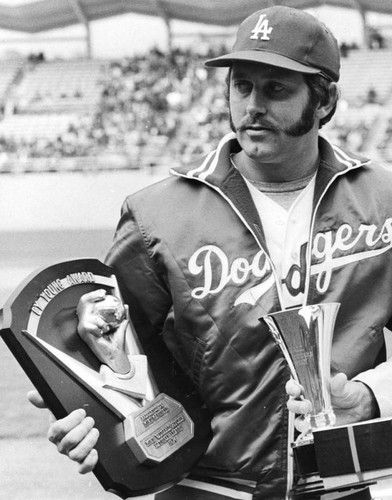
By the time the 1981 season rolled around, Marshall was 38 years old, a baseball philosopher with a doctorate, a reputation for arguing with authority, and very few teams eager to deal with either.
Enter the Mets.
The club signed Marshall late in the strike shortened 1981 season, giving the veteran reliever one last stop in a career that had already included more teams, theories, and debates than most pitchers experience in a lifetime.
Marshall appeared in 20 games for the Mets down the stretch, posting a 2.61 ERA while logging 31 innings out of the bullpen. On a team that finished 41 and 62 and was still a couple of years away from its next competitive cycle, the 38 year old Marshall provided something the roster did not have much of at the time.
Experience. And plenty of opinions.
His stay in Queens was brief. After the season the Mets released him, and his major league career came to an end with 725 games pitched and 188 saves, which at the time ranked among the highest totals in baseball history.
Still, the Mets chapter of Mike Marshall’s story feels oddly appropriate.
A brilliant and unconventional pitcher who spent his career insisting baseball had been thinking about pitching the wrong way ended his career with a franchise that has never exactly done things the conventional way either.
Of course, that was only one Mike Marshall.
And as Mets fans eventually discovered, the other one looked very different standing on the field at Shea Stadium. So let’s talk about the other Mike Marshall.
And if the first Mike Marshall looked like a bowling league MVP who secretly held a doctorate in pitching science, the second one looked exactly like what you’d expect a big league slugger to look like.
This Mike Marshall stood 6 foot 5, built like someone who could carry the team luggage from the bus to the clubhouse without breaking a sweat. His teammates called him “Moose,” which feels like the sort of nickname you earn simply by walking into the room.
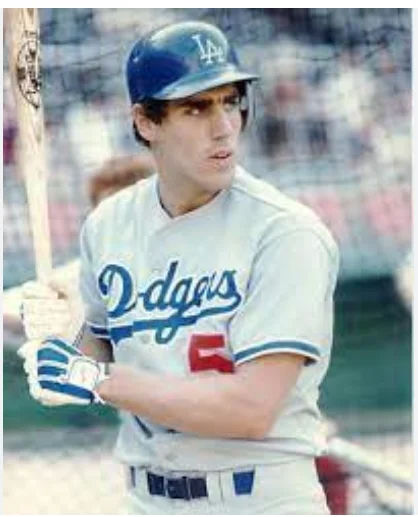
Marshall broke into the majors in 1981, the same year the Mets version of the other Mike Marshall was quietly wrapping up his career in New York. The two Marshalls were not related, never played together, and never faced each other.
But they did share one thing.
A baseball card that could confuse Mets fans a decade later.
Most of Moose Marshall’s career unfolded on the West Coast with the Los Angeles Dodgers, where he spent nearly a decade as a power hitting outfielder and occasional first baseman. Along the way he helped the Dodgers reach the postseason several times and even led the 1988 World Series champions in RBIs during the regular season.
He was a serious ballplayer with real power, although patience at the plate was not exactly his calling card. Pitchers knew that if the ball wandered anywhere near the strike zone, Marshall was probably going to swing at it.
Sometimes very hard.
By the winter of 1989, the Dodgers decided to shake things up and sent Marshall east in a trade with the Mets that brought speedy center fielder Juan Samuel to Los Angeles. Marshall arrived in Queens along with pitcher Alejandro Peña, giving the Mets another big bat they hoped could help anchor the lineup.
For a moment it looked promising.
Marshall opened the 1990 season as the Mets’ starting first baseman and even produced one of the more satisfying box score lines of the year on May 22 in Los Angeles, when he launched a grand slam against his former team and drove in six runs in an 8 to 3 Mets victory.

You can imagine that one felt pretty good.
But the honeymoon in Queens did not last very long.
Marshall appeared in 53 games for the Mets, hitting .239 with 6 home runs and 27 RBIs while splitting time between first base, the outfield, and occasional pinch hitting duties. Playing time became an issue as Dave Magadan began seeing more action at first base, and frustration started to build.
At one point Marshall reportedly told reporters he simply did not feel like he fit in with the club. Things boiled over in July during a heated argument with manager Bud Harrelson, a confrontation that ended with Marshall being hospitalized with a stress related stomach issue.
By the end of the month the Mets decided it was time to move on.
On July 27, 1990, Marshall was traded to the Boston Red Sox, bringing his brief New York chapter to a close before the season even reached August.
Marshall would finish his big league career a year later, eventually continuing his baseball journey in Japan before retiring and moving into coaching and independent league management.
And somewhere along the way he also became known around the clubhouse for another off field storyline. During his Mets days Marshall briefly dated Belinda Carlisle, the lead singer of the pop band The Go-Go's. For a short time the Mets first baseman found himself connected to one of the biggest names in 1980s pop music, which added an unexpected bit of celebrity crossover to his baseball life.
It was not exactly the kind of trivia you usually find on the back of a baseball card, but it certainly made for a good clubhouse story.
Which brings us back to our Double Identity lesson.
Two players.
Same name.
One was a Cy Young winning reliever who treated pitching like a physics experiment.
The other was a towering power hitter who helped the Dodgers win a World Series and briefly passed through Shea Stadium on his way across baseball’s map.
Both of them answered to Mike Marshall.
And both of them, at different moments in time, became part of Mets history.
Next week in Sunday School, we’ll open the yearbook again and meet another pair of Mets who shared a name that caused more than a few double takes in the box scores.
Before you close the yearbook and head out of class, come join the conversation in our Facebook group. Sunday School works best when Mets fans start digging through the attic together remembering the players, the characters and the names that make you say “I can’t believe I forgot about him.” Bring your memories, your trivia and the forgotten faces you think deserve their own lesson. Around here class participation is always encouraged.


Comments