
Thursday Trade Tracker: (Formerly) Oakland Athletics: The Glider, The Gambler, and Izzy


Mets and A's history has to begin with the 1973 World Series. Seaver, Matlack, Koosman, Rusty, and Cleon against Reggie, Campaneris, Rudi, Catfish, and Fingers. Should Yogi Berra have started George Stone in Game 6 so he'd have a rested Franchise in Game 7? Should the GOAT, Willie Mays, have even been on the roster at age 42? Should Wayne Garrett have been allowed to hit against fellow lefty Darold Knowles, who was appearing in his record-breaking seventh game? Can you imagine owner Charlie Finley basically firing his second baseman, Mike Andrews, for making errors?
Let's examine the most impactful trades and one purchase between these teams. Will the recent Jeff McNeil transaction one day be referred to the Yordan Rodriguez steal? Rodriguez is the 17 year old hurler the Mets got for the Squirrel.
May 10, 1967. Mets get 3B Ed Charles for OF Larry Elliot.

This trade with the Kansas City A's brought the Mets affable leader Charles. Charles lived in Queens for most of his life. The Glider played the last three years of his career at Shea. After hitting 15 homers with 53 RBI in 1968, is remembered as a key member of the 1969 Champions. Surprisingly, he only played 61 games that year and didn't even appear in the NLCS against Atlanta. Atlanta started 3 right handed pitchers and the Mets started Garrett in all three games. In the World Series, Charles started 4 of the 5 games due to Baltimore staring left handed pitchers Mike Cuellar and Dave McNally twice each. Charles only went 2-15 (.133) but the Miracle Mets won and no one cared about Ed's average. The final game of the World Series was Ed Charles's final game in the majors. Larry Elliot never appeared in another MLB game after this trade.
TEACHER SAYS A. When you help win a World Series, especially a Miracle one, you get an A.
July 28, 1975. Mets purchase RHP Skip Lockwood from Athletics.
This wasn't a trade, but Lockwood was a fascinating character and a dominant closer when closers pitched multiple innings.
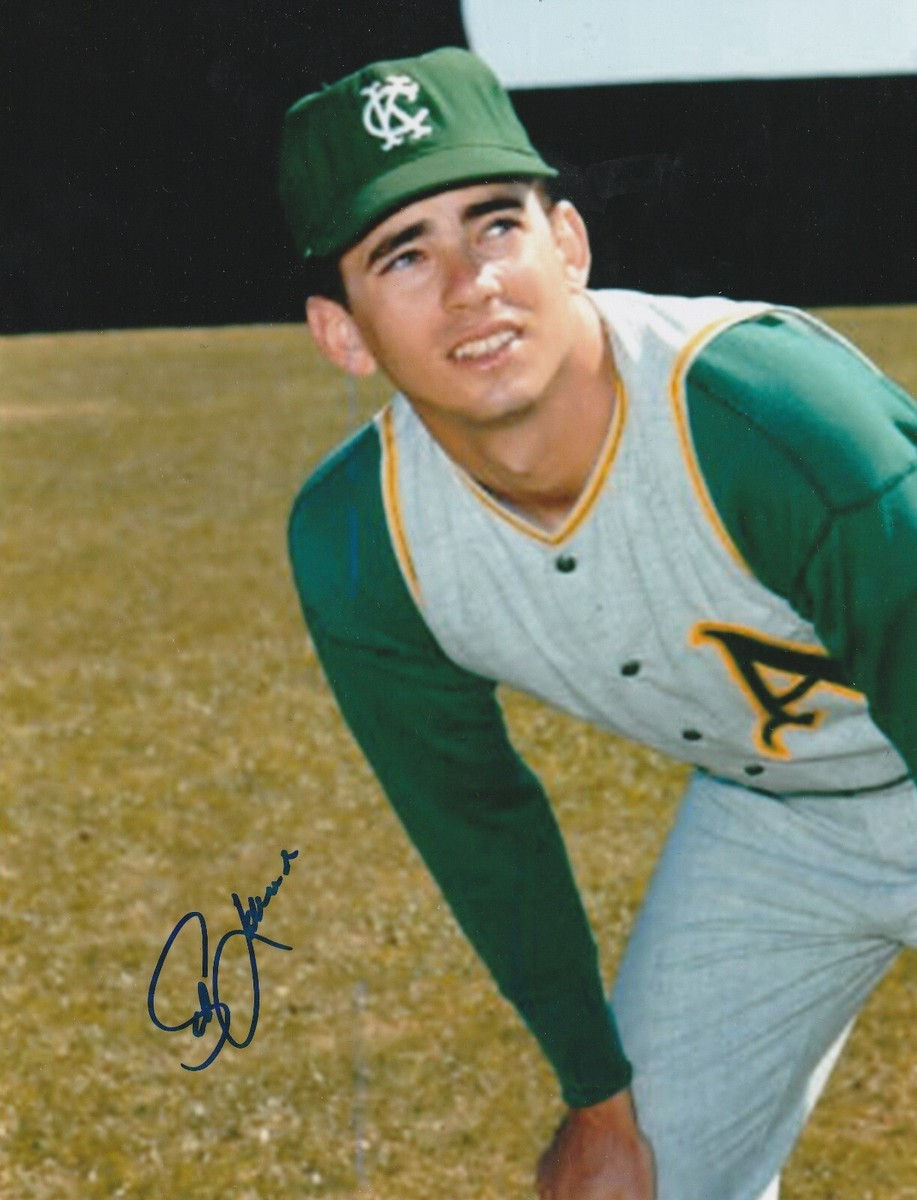
Lockwood was an original Seattle Pilot and was the last Pilot still with the franchise (as the Milwaukee Brewers ) when he was traded to the California angels in 1974. He came up as a third baseman, but it was as a relief pitcher that he found success. The Mets purchased him from Oakland in 1975 and he was prosperous immediately. In 24 games in 1975, Skip pitched 48 innings to a 1.48 ERA. Lockwood would average around two innings per game in his Mets career. In 1977, he set the record for most games pitched in a season for the Mets with 63. He pitched 104 innings with 20 saves. Perpetual Pedro Feliciano holds the present Mets record with 92 games pitched in 2010. (Is it just me, or did Pedro pitch them all against Utley and Howard?).
Lockwood attended several colleges during his career. The list includes Merrimack, Boston College, Marquette, and Carroll College. His bachelor's was from Emerson. He even has two Master's Degrees (like your friendly neighborhood Mets writer), one from Fairfield and one from MIT! In Lockwood's memoir, Insight Pitch, he supposedly did not use a ghost writer. It tells great stories. He lived in Greenwich CT, like many Mets throughout their history. He lived near Seaver and Dave Kingman. Once, he went over to Dave's, and numerous stewardesses answered the door! (It's good to be a MLB star). Dave worked for an airline in the off season and did commercials.
TEACHER SAYS A+. Lockwood was a spectacular closer during the very dark days of the late 1970's.
July 23, 1999. Mets get LHP Kenny Rogers for OF Terrence Long.
(Don't dwell on the bases loaded walk. Don't dwell on the bases loaded walk. Don't dwell on the bases loaded walk). Did I just think that or did I write that?

Let's start with T. Long. Long was an essential member of the Moneyball A's from 2000-2003. Two of those years, he played in all 162 games. Billy Bean certainly knew what he was doing. Long's first two years, he drove in 80 and 85 runs and finished second to the 2000 AL Rookie of the Year, Kaz Sasaki of Seattle.
Rogers, a 219 game winner in the majors, went 5-1 in his 12 games started in 1999 and , really, helped the Mets get to the post season. Once he got to the post season, HE WALKED IN THE WINNING RUN and the Mets post season run was over. (Breathe in, breathe out). By the way, in the Detroit Tigers World Series run in 2006, Rogers started three games in their post season. He won all three games, pitching 23 innings (out of a possible 27!) , allowing a total of 9 hits and NO RUNS! He got one Hall of Fame vote, too.
TEACHER SAYS D. Long wound up being a talented player.
July 31, 1999. Mets get RHP Billy Taylor for RHP Jason Isringhausen and RHP Greg McMichael.

Taylor was aready in his late 30's when he began saving games for the A's, even though he had high ERAs, from 3.58 to 4.33. The Mets thought he could help and gave up McMichael and Isringhausen. Taylor was simply a disaster as a Met. In 13 innings he gave up 20 hits with an 8.10 ERA!
McMichael was a bullpen setup man for Atlanta for four years, doing excellent work. He had two seasons with 19 and 21 saves, and two seasons throwing 80 and 86 innings. As a Met, he shined in 1997. He pitched 73 games, and 88 innings, with a sparkling 2.98 ERA.
Izzy was part of Generation K. Three young pitchers who would lead the Mets to a Championship. Bill Pulsipher, after a 17 game rookie season in which he went 5-7 with a 3.98 ERA, was soon injured and never reached his potential. Paul Wilson, the Number 1 Draft Pick in the nation, was injured after his rookie Mets season. He did not pitch for the Mets again. He resurfaced with Tampa and Cincinnati, but retired with a total of 40 victories.
Isringhausen started as the jewel. He went 9-2 with a 2.81 ERA in 1995. His next four seasons included ERAs of 4.77, 7.58, 6.41 and a year that he was injured the entire season (1998). Who knew what would happen next? He became an All-Star closer with 300 career saves with both Oakland and the Cardinals. By the time he returned to the Mets in 2011, he was merely taking a bow to an honored career.
TEACHER SAYS F. Can I go lower? Easily among the worst trades in Mets history.
March 12, 2022. Mets get RHP Chris Bassitt for RHP J.T. Ginn and RHP Adam Oller.
Bassitt was a valuable starter for a Mets team that won 101 games and made the post season. The 101 wins remains the second most in Mets history to the 108 of the World Champion 1986 legends. He went 15-9 with a 3.42 ERA. In 182 innings, he only gave up 159 hits with 167 strikeouts. His only post season start was a failure. He gave up three runs in four innings to the Padres in a game the Mets would lose, 6-0. It was the last game of the year for them. Juan Soto drove in 2 San Diego runs and Joe Musgrove's ear shined from CitiField to Alpha Centauri.

Ginn won 4 games for Sacramento last year. Oller is now pitching for Miami and has a career 6.54 ERA in 36 games. Unless either one of these guys turn into Bassitt (or Isringhausen), this was an excellent trade.
TEACHER SAYS A. Bassitt was a good contributor and remains a valuable arm. I would love the Mets to acquire him one more time.
Interesting names in Mets- A's transaction history: Paul Blackburn, Jeurys Familia, Tyler Clippard, David Justice, Kevin Tapani, Wally Whitehurst, and ralph Terry.


I heard one of your degrees is from MET. Great insight! Always fun to read especially when we long for warmer weather and some baseball.