
Sunday School: Forgotten Faces of Flushing #57 :Before Shea, Before St. Lucie, There Was St. Pete


Welcome back to Sunday School: Forgotten Faces of Flushing, our weekly stroll through Mets history, where we dust off the forgotten, squint at the overlooked, and remind ourselves that Mets lore is about far more than box scores and batting averages.
The last couple of lessons wandered slightly off the basepaths. First, we tipped our cap to Kathy Kersch, Miss Rheingold 1962, the smiling face of the Mets’ first major sponsor and the most photogenic rookie of their inaugural season. Then, last week, we raised a glass at the Rheingold Rest to Leon Janey, the original host of the show that walked so Kiner’s Korner could someday sprint.
This week, we stay right in that same sun-soaked, beer-sponsored, black-and-white-photo era but shift our attention from people to a place.
Because before the Mets had Shea Stadium, before they had Port St. Lucie, before they even had a winning record, they had St. Petersburg, Florida. (And if you listen closely, you can almost hear Bob Murphy clearing his throat and saying, “Live from beautiful St. Petersburg, Florida… it’s Mets spring training baseball.”)
This was the Mets’ very first spring training home. And for a quarter century, it was where Mets baseball shook off the New York winter, stretched its legs, and occasionally wandered into legend.
Long before the Mets arrived, St. Petersburg had already figured out baseball’s greatest secret: frozen Northeasterners will travel anywhere with sunshine. That lightbulb went on thanks to Al Lang, a businessman turned mayor who realized early in the 20th century that Florida could become baseball’s winter clubhouse. Lang lured teams south with promises of warm weather, hospitality, and enough palm trees to make February feel survivable.

By the time spring training became known as the Grapefruit League, St. Pete was its beating heart. Teams rotated through town like seasonal snowbirds, and baseball royalty followed. Babe Ruth, Lou Gehrig, Joe DiMaggio all passed through. The Yankees practiced there for decades. The Cardinals set up shop. Even the Giants stopped by.

When the Mets were born in 1962, they inherited that tradition along with their manager, Casey Stengel, who already knew the terrain. The Mets trained at what was then Crescent Lake Field, later renamed Huggins-Stengel Field, honoring both Miller Huggins and Stengel himself. Games were played a short drive away at Al Lang Stadium, right along the waterfront, and long before McCovey Cove became a tourist attraction, the Mets had their own version — a springtime waterfront where home runs sometimes disappeared into Tampa Bay and neighborhood kids turned baseball retrieval into a full-contact Olympic event.

It wasn’t glamorous. The lockers were wooden. The facilities were basic. The vibe felt more 1950s than Space Age. Tom Seaver later said the place had an innocence to it, which is a polite way of saying nobody was pretending this was cutting-edge.

But the stories came anyway.
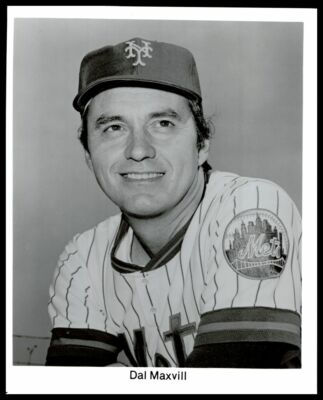
Whitey Herzog remembered a St. Petersburg so quiet that spotting a young woman under 50 caused a stir. Joe Garagiola joked that nightlife options were limited to the dog track, which explains why so many Mets suddenly became experts on greyhounds. Bud Harrelson arrived as a 19-year-old kid and got his first real lessons in big-league life, courtesy of veteran pitcher Tracy Stallard, who introduced him to Florida, dog racing, and adulthood, in roughly that order.
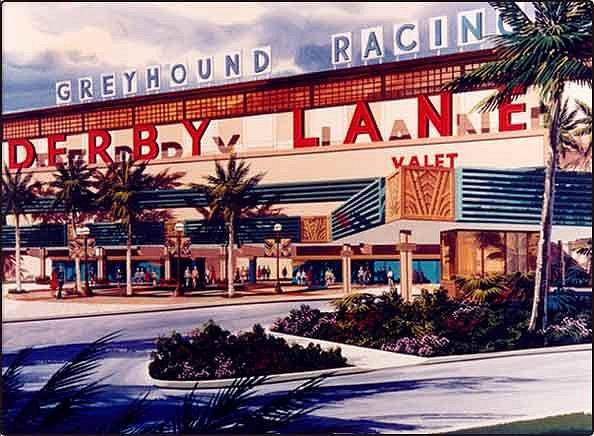
Yogi Berra, naturally, knew one of the dog track owners and even had a racing dog named after him, because of course he did.
This was also where the 1969 Mets quietly began their march toward the impossible. Countless publicity photos from that season show players posed in front of the modest clubhouse, blissfully unaware they were about to become legends.
The moments weren’t always charming. In 1975, St. Petersburg became the backdrop for the Cleon Jones saga, a messy episode that spiraled badly and ended with public apologies, private resentment, and careers unraveling. It was handled poorly, remembered awkwardly, and remains one of the darker footnotes of Mets history.

But the place also produced pop culture immortality.
This is where Chico Escuela famously told the world that “baseball been berry, berry good to me” during a 1979 Saturday Night Live Weekend Update segment.
This is where George Plimpton launched the fictional legend of Sid Finch, fooling half the baseball world in 1985. And this is where, in 1986, Mookie Wilson took a frightening throw to the eye during a drill.
Players remembered the dimensions. The wind. The lake beyond the outfield. It was said only two men ever hit a home run straight into Crescent Lake: Babe Ruth and Dave Kingman, which feels historically accurate even if physics disagrees.

By 1988, the Mets packed up and moved east to Port St. Lucie, trading waterfront breezes for modern amenities. St. Petersburg slowly faded from the Mets’ story, though the fields remain, still hosting amateur ball, still holding the same dirt and grass where legends once stretched and sweated.
Huggins-Stengel Field was added to the National Register of Historic Places in 2019, a formal recognition of what Mets fans already knew.
This place mattered.
It was where the Mets learned how to be a team. Where rookies became veterans. Where spring hope bloomed year after year, even when logic suggested otherwise.
And unlike so many Forgotten Faces of Flushing, this one didn’t wear a uniform.
But it shaped the franchise anyway.


Comments