
Sunday School: Forgotten Faces of Flushing #81: Dyar Miller: The Pitcher Who Refused to Let Baseball Tell Him "No"


Last week, we wrapped up our little tour through the Mets' unexpected parade of interim managers with Mike Cubbage, the quiet baseball lifer who walked into Shea Stadium expecting to coach third base and instead walked out managing the New York Mets for the final week of the 1991 season.
It was a fun detour through a forgotten corner of Mets history.
This week, we're shifting back to what this series has always celebrated best—those players whose names make longtime Mets fans smile, scratch their heads, or both at the same time.
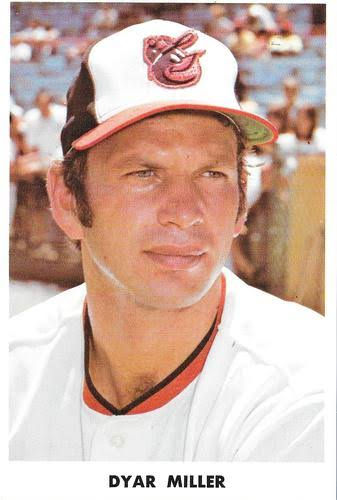
Today's Forgotten Face is Dyar Miller.
Now, if you're under 50, you may be asking, "Who?"
If you're over 50, you're probably saying, "Wait...I remember that name."
And if you're like me, you're wondering how a guy named Dyar wasn't starring in an old Western alongside John Wayne.
Or maybe you're disappointed his Mets career didn't overlap with Duffy Dyer. Because let's be honest, a battery of Dyar pitching to Dyer would have been worth the price of admission all by itself.
Can you imagine Ralph Kiner trying to call that inning?
"Now pitching, Dyar... throwing to Dyer... Dyar gets Dyer's sign... Dyar delivers to Dyer..."
By the third batter, Ralph would've looked into the camera and simply said, "You know what? Good luck, Lindsey."

The truth is, Dyar Miller's baseball story is far more interesting than the two seasons he spent wearing a Mets uniform. In fact, his journey might be one of the greatest examples of persistence you'll ever find in professional baseball.
Imagine getting your first professional baseball contract.
Now imagine being released almost immediately.
For most players, that's the end of the dream.
For Dyar Miller...
...it was basically Chapter One.
Originally signed as a catcher, Miller barely had enough time to unpack his equipment before he found himself making two errors in four games, then looking for another job. His bat nor his glove wasn't going to carry him to the major leagues, and baseball had essentially shown him the exit door.
Most people would've accepted reality.
Miller decided reality needed a rewrite.
He reinvented himself as a pitcher.
That decision changed everything.
The Baltimore Orioles gave him another opportunity, and Miller slowly worked his way through one of baseball's deepest farm systems. It wasn't a fast climb. It wasn't glamorous. Year after year he seemed to be the guy who was almost ready but never quite got the call.
He became the baseball equivalent of me picking the wrong Shake Shack line at Citi Field. No matter which line I choose, the one next to me always moves faster, someone orders for 37 people, and by the time I get my ShackBurger the seventh-inning stretch has become the eighth.
Finally, at age 29—an age when many pitchers are already established veterans—Miller made his major league debut with Baltimore.
Better late than never? In Dyar Miller's case, absolutely.
He quickly proved he belonged, becoming a dependable reliever with a lively fastball and a sharp slider. Over the next several seasons he pitched for the Orioles, Angels and Blue Jays before his journey eventually led him to Queens.
Frank Cashen signed Miller before the 1980 season, hoping the veteran right-hander could bring some stability to a young Mets bullpen that was still trying to figure out what it wanted to be when it grew up.
And stabilize it he did.
Miller wasn't the closer. He wasn't the headline.
He was something every manager loves—a pitcher you could trust.
After earning a midseason call-up from Triple-A Tidewater, Miller quietly became one of the Mets' most dependable relievers. In 31 appearances, he posted a sparkling 1.93 ERA, allowing just 37 hits in 42 innings while striking out 28 and issuing only 11 walks. Opposing hitters rarely squared him up, and his 1.14 WHIP reflected just how effective he was at putting out fires.
Yet because the 1980 Mets stumbled to a 67-95 finish, Miller's outstanding work was largely lost in the standings. There weren't many bright spots during that rebuilding season, but Dyar Miller was unquestionably one of them.

He returned for the strike-shortened 1981 campaign, appearing in 23 more games and finishing his Mets career with a combined 54 appearances, a 2-2 record, a 2.58 ERA, one save, and 50 strikeouts in just over 80 innings.
It wasn't Cooperstown material.
But for two seasons in Queens, Dyar Miller gave the Mets exactly what they needed—a veteran who took the ball, got outs, and never asked for the spotlight.
But baseball wasn't finished with him.
Not even close.
Many former players leave the game after retirement.
Dyar Miller practically moved into the clubhouse.
For nearly three decades after hanging up his spikes, he became one of baseball's most respected pitching instructors, helping develop young arms throughout the minor leagues before eventually reaching the major league coaching ranks. His fingerprints wound up on generations of pitchers, particularly in the Cardinals organization, where he earned a reputation as one of the game's finest teachers.

Think about that for a second.
A player who was cut almost immediately after signing his first professional contract...
...went on to spend more than half a century in professional baseball.
That's not luck.
That's persistence.
That's resilience.
That's refusing to let someone else decide when your baseball story ends.
Statistics will tell you Dyar Miller won 23 major league games and saved 22 others.
But those numbers barely begin to tell his story.
His greatest accomplishment wasn't a save.
It wasn't a strikeout.
It wasn't even reaching the major leagues.
It was proving that setbacks don't have to become endings.
Sometimes they're simply the first chapter.
That's why Dyar Miller deserves his place among the Forgotten Faces of Flushing—not because he spent only two seasons with the Mets, but because he reminded us that baseball, like life, has a funny way of rewarding those stubborn enough to keep showing up.
And honestly...
Baseball could use a few more Dyar Millers.


What an amazing story and full baseball life! …reminds me of Dad! Speaking of Dad, I cannot wait to show this to him! It was a funny mention and yet another fun, extremely entertaining, informative and warm “real” baseball read!