
The Clock is Ticking: How the Mets Can Spend Smart in 2026


The calendar has officially flipped to 2026, which in Mets terms means two things.
First, we are now legally allowed to worry about a season that has not started yet.
Second, the excuses have expired.
This is the point on the baseball calendar where optimism either matures into strategy or sits on the couch in sweatpants, scrolling through old box scores and whispering, “Trust the plan. There is definitely a plan.”
I have maintained all along, often loudly, that David Stearns did not wander into the Mets front office without a master plan, a position that has reliably earned me several nasty comments on social media from people whose profile pictures are either sunglasses in a car or a cartoon frog. You do not hire a guy like that to freestyle a 300 million dollar payroll like it is fantasy baseball with a credit card. Stearns is not guessing. He is not winging it. He is not waking up at three in the morning asking, “Mirror mirror on the wall what would Omar Minaya do?”

This has always been a multi year blueprint, and 2026 is the page where the real writing begins.
As of today, the Mets sit with roughly 294 million dollars already committed to players under contract for 2026. That number alone makes other fanbases break out in hives. Then Steve Cohen did what Steve Cohen does on December 19, 2025. He logged onto Twitter and calmly dropped reality on the internet like a piano.
Translated from Billionaire to English, that means this.
There is still about 46 million dollars left to spend.
Which sounds great. Fantastic, even. Forty six million dollars. That is a frontline starter, a middle of the order bat, or roughly eight relievers who will all need Tommy John by July.
But here is the problem.
Money only matters if you spend it before the music stops.
Right now, the Mets are playing a high stakes version of musical chairs. The music is free agency. The chairs are competent baseball players. Everyone else in the room also has money and fewer emotional scars. Waiting too long does not make you smart. It makes you the person standing there holding 46 million dollars and nowhere to sit.
At some point, due diligence turns into paralysis. Flexibility turns into missed opportunity. Having room to maneuver does not help if you wait so long that you are walking into an all you can eat buffet at nine thirty and being told the kitchen closed half an hour ago.
The good news is the Mets needs are clear.
The bad news is the clock is too.
And now that the calendar says 2026, it is time for David Stearns to stop drawing the blueprint and start pouring the concrete.
Next, where the Mets actually need to spend and which chairs they had better grab before someone else does.
Let's go around the diamond.
Let’s start behind the plate, because for once, and please take a moment to enjoy this, the Mets do not need to worry about catching.
Francisco Álvarez is not a free agent until 2030, which in baseball years is roughly the next ice age. Luis Torrens is under contract for 2026, gives you solid defense, and knows his role. For a Mets fan, this qualifies as stability. We will take it and move on quickly before something happens.
Now we head to first base, which is where things get interesting.
In my opinion, Jorge Polanco is not the Mets everyday first baseman, and that is not a criticism. It is a description. Polanco is best viewed as a Swiss Army knife who just happens to own a first baseman’s glove. Yes, David Stearns has said Polanco will see a lot of time at first base, and that may well be true. But it is also worth remembering that a week or two before Jeff McNeil was traded for a 17 year old pitcher, Stearns publicly described McNeil as an important part of the 2026 Mets. Front office statements are often accurate right up until the moment they are not.
On this roster, Polanco makes the most sense as a sometime first baseman, a most of the time designated hitter in a platoon with Mark Vientos, a sometime third baseman in a platoon with Brett Baty, and a sometime second baseman spelling Marcus Semien. That versatility has real value. It just does not eliminate the need to improve at first base.
And when you look at what is actually available, the case becomes clearer. The rest of the free agent class is thin, to put it kindly. Carlos Santana, Nathaniel Lowe, Luis Arraez (and while I may be in the minority, I would not be averse to signing him—.300 still has value to me, no matter what the analytics say), Paul Goldschmidt, Rhys Hoskins, Justin Turner, Donovan Solano, Dominic Smith, Ty France, LaMonte Wade Jr., Rowdy Tellez, Wilmer Flores, Michael Toglia, and Lewin Díaz are all names you recognize, but none of them scream solution. This is a list that inspires shrugs, not excitement, and it reads more like a contingency plan than a vision.
Which brings me to Kazuma Okamoto.

Okamoto, now 29, was posted by his NPB club on November 21, which means the clock is ticking loudly. He has to sign by Sunday. Munetaka Murakami was always the bigger name of the two, and even he landed a surprisingly modest two year, 34 million dollar deal. That naturally raises a very reasonable question. If Murakami costs that, can Okamoto be had for something like two years and 28 million dollars even throw in some opt outs if need be ?
If the answer is yes, the Mets should already be acting like the buffet doors are about to close.
Okamoto projects as a 20 to 25 home run hitter, a strong average bat, and an above average defender at first base. He fills a clear need, fits the roster, and comes at a moment when the music is slowing and the chairs are down to just a few.
If you take the remaining 46 million dollars and allocate roughly 14 million per year to Okamoto, you still leave yourself with 32 million dollars to address other holes on the roster. That is not panic spending. That is using the clock to your advantage.
And this is exactly how you stop talking about flexibility and start turning it into wins.
Second base is simpler. Marcus Semien is the starter, and Jorge Polanco will continue to see some reps as a versatile option. With McNeil traded, you don’t have to worry about exposing Luisangel Acuña to waivers, so you are covered there. That flexibility is exactly the kind of chess move that makes you wonder if Stearns is quietly smiling while the rest of us panic about the clock.
Shortstop is equally straightforward. Francisco Lindor is locked in, and Acuña remains under contract as his backup, not a free agent until 2029, which means the Mets do not need to chase a shortstop in this market either. Stability is underrated, and the Mets have it here.
Third base is another area where the front office can breathe easy. Brett Baty, Mark Vientos, and Ronny Mauricio are all under contract through 2030, so there is no urgency to bring in a third baseman. That trio provides a mix of youth, upside, and organizational depth, and gives the Mets plenty of room to focus their resources elsewhere.
The infield, outside of first base, is solid, well covered, and for once does not require late-night panic calls or overpaying someone just to fill a gap. The need is defined, the roster is clear, and the flexibility the Mets have built into the middle infield is exactly the type of leverage you want when the free agent market is closing in.
Moving on to the outfield..
Right field is simple. Juan Soto. Need I say more?
Center field is where things get interesting. My sense is the plan is to go with Carson Benge and Tyrone Taylor, or possibly address the position via a trade, and for me Luis Robert Jr. remains the number one target, and if the Mets do pursue a trade, my expectation is that it would need to involve offsetting money. That, to me, is the key.
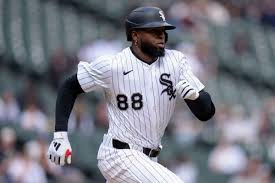
Remember the McNeil trade? That was about more than just a 17-year-old pitcher. It was about strategy. First, it safeguarded Luisangel Acuña from being exposed. Second, it freed up roughly 10 million dollars in salary. That 10 million is exactly the kind of wiggle room you need to make moves in the outfield without panicking or paying over market value.
Which brings us neatly to left field, where the Mets have no options at this point. This is the spot where the remaining flexibility and our remaining 32 million dollar budget will really start to matter.
Left field is where the Mets still have some decisions to make, and it is also where that remaining payroll flexibility really starts to matter. Kyle Tucker and Cody Bellinger are the two biggest names available. Tucker is expected to command a mega-deal in the neighborhood of 11 years and $360–418 million—roughly $35–38 million per year. Bellinger, by contrast, is projected for a shorter deal, maybe six years at $25–30 million per year. Either option would fill a clear need in left field, but given Stearns’ fixation on roster flexibility—and the fact that Bellinger can play all three outfield positions as well as first base—he is by far the better fit. With the calendar turning to 2026, this is exactly when the music starts slowing and the chairs are down to the final handful.

Of course, left field is only part of the puzzle. The Mets could also use another starter. They could use some bullpen pieces. But if history is any guide, Stearns is not going to hand out a long‑term, big‑ticket contract to a high-profile starting pitcher. What I can see is a trade for a solid second or third starter on a controllable deal, maybe something along the lines of what Kodai Senga brings—high quality, cost-controlled innings. That gives the Mets a rotation that looks something like this: Clay Holmes, Nolan McLane, Sean Manaea, David Peterson, Kodai Senga (or whoever is acquired in a trade), with Jonah Tong and Brandon Sproat joining the staff midseason or possibly out of the gate depending on spring training.
The bullpen needs work, no question, but the Mets are not starting from scratch. Devin Williams, Luke Weaver, Brooks Raley, Huascar Brazobán, A.J. Minter, and Richard (don't call me Dicky) Lovelady are all in place. That is a solid foundation, and with the remaining budget the front office can target one or two high-leverage pieces to fill out the late innings without overpaying or panicking.
Taken together, the left field decision, the rotation, and the bullpen upgrades are all areas where the Mets can use that $46 million strategically. Sign Okamoto at first base for roughly $14 million per year, and you still have $32 million to cover these other needs. That is exactly the type of flexibility that separates a plan from improvisation.
So here we are, standing at the start of 2026 with a roster that has clarity in some spots and questions in others. First base is urgent in my opinion , left field is critical, the rotation could use a tweak, and the bullpen needs a little seasoning. David Stearns has shown he is not a man to act without a blueprint, and the Mets have the resources to make meaningful improvements. But make no mistake, the clock is ticking, the music is slowing down, and the chairs are dwindling. This is the moment to act decisively, because when the dust settles, the teams that waited too long are left standing, empty-handed, staring at the buffet as the lights go out.


Comments